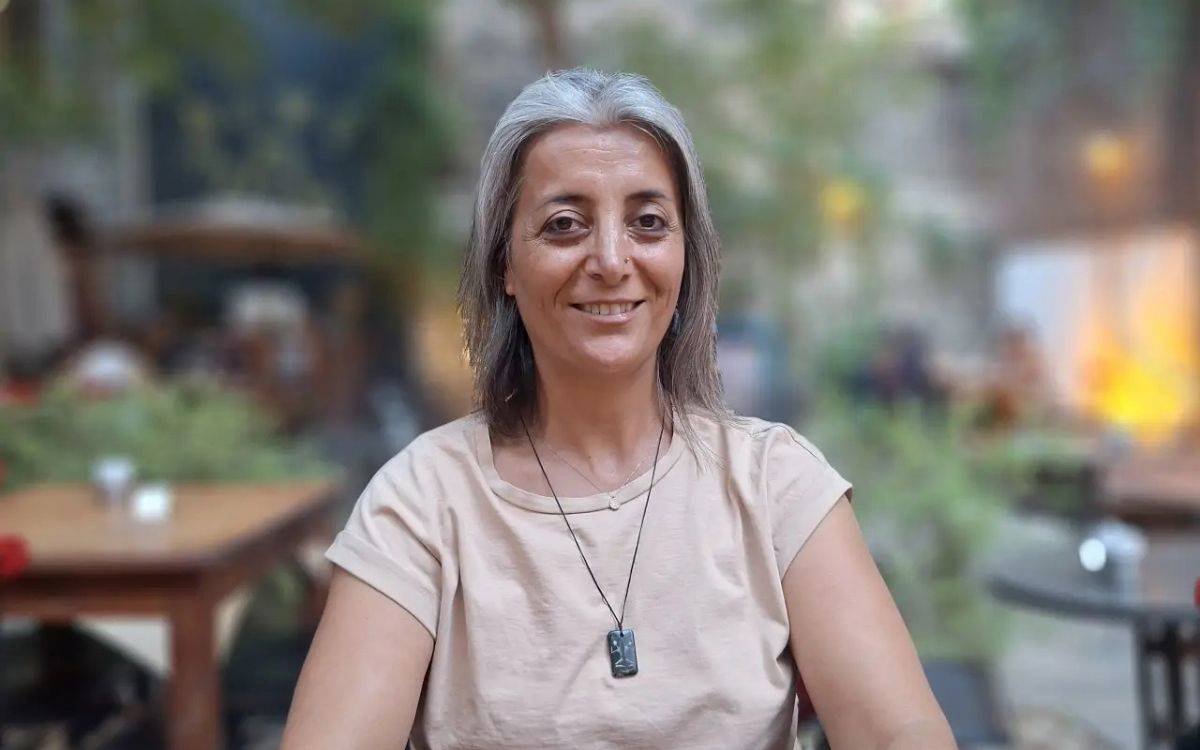
Turkish filmmakers have accused the Culture and Tourism Ministry of censorship after it demanded that director Bingöl Elmas repay with interest government funding awarded to her documentary, the Evrensel daily reported.
The repayment demand prompted a group of film industry organizations, directors, producers, actors and film critics to issue a joint statement accusing the ministry of using ostensibly technical grounds to conceal censorship.
The controversy stems from the ministry’s decision to revoke production support already granted to “Şiirli Oda’nın İzinde” (In Pursuit of the Room with Poetry), a documentary about cultural memory, local history and environmental activism in Cappadocia, a region in central Turkey known for its distinctive rock formations and cultural heritage. The ministry said the completed film did not conform to the original script and failed to meet technical requirements.
According to Elmas, ministry officials said in phone conversations that the documentary was considered political because it included criticism of the ministry over environmental destruction in Cappadocia.
The statement was signed by 10 film and arts organizations as well as scores of directors, documentary filmmakers, producers, actors, academics and film critics.
The signatories said the case had renewed concerns about the impartiality and transparency of government film funding and the alleged blacklisting of filmmakers for political reasons. They argued that demanding the repayment of public funding with interest on political grounds amounted to economic pressure that could push filmmakers toward self-censorship.
They called on the ministry to explain the discrepancy between the reasons Elmas was given by phone and those cited in its official decision, questioning whether political criticism was being used as a criterion in evaluating films.
The statement also cited previous restrictions on films including “Rojbash,” “Kanun Hükmü” (The Decree) and “Oy’una Geldik,” saying filmmakers in Turkey had long faced censorship through classification decisions and outright screening bans.
In 2024 the Culture and Tourism Ministry banned the release of “Rojbash,” a Kurdish-language film about a group of Kurdish actors reuniting after 25 years, with its classification board finding it unsuitable for commercial circulation. The filmmakers challenged the decision in court.
“Kanun Hükmü,” a documentary about a doctor and a teacher dismissed from public service under emergency decrees issued after a 2016 coup attempt, was removed from the 2023 Antalya Golden Orange Film Festival, triggering the resignation of jury members and the withdrawal of dozens of filmmakers in protest. The film was briefly reinstated, prompting the Culture Ministry to withdraw its support for the festival and accuse the documentary of promoting the faith-based Gülen movement, before organizers removed it again. The documentary faced another ban in Antalya the following year, with the governor’s office citing national unity and public order.