A Turkish court has ordered that dozens of X and Instagram accounts belonging to rights groups, journalists, academics and LGBTQ activists be blocked on grounds of national security and public order amid a growing wave of online censorship.
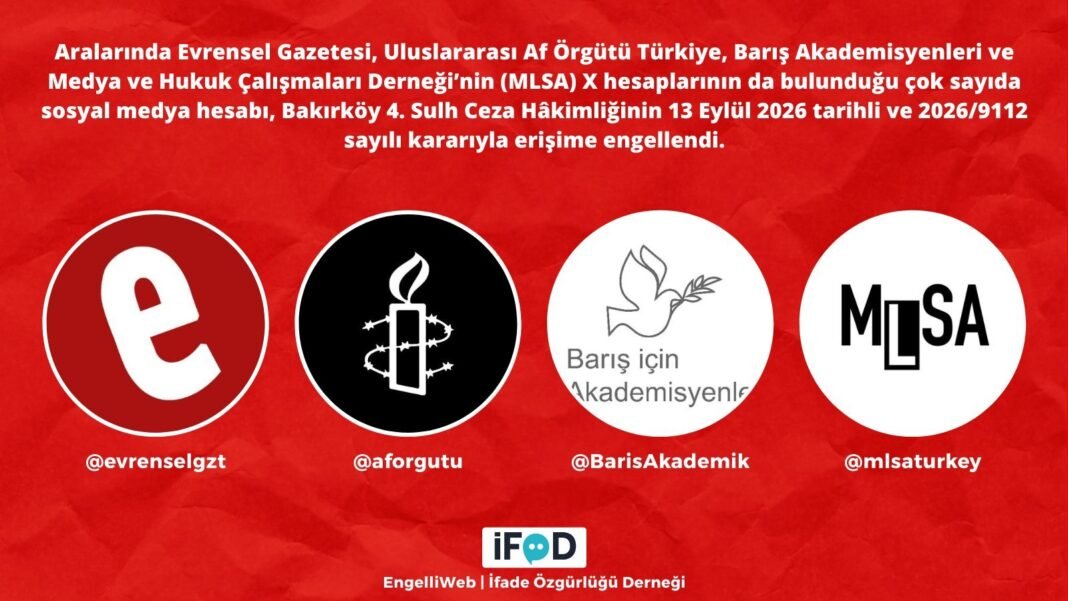
The Bakırköy 4th Criminal Court of Peace issued the order on Sunday under Article 8/A of Turkey’s Internet Law No. 5651, according to the Freedom of Expression Association’s (İFÖD) EngelliWeb monitoring project.
The court cited national security and public order, two of the grounds on which Article 8/A permits online content to be restricted.
The order covers accounts belonging to Amnesty International’s Turkey branch, the left-wing Evrensel newspaper, the Media and Law Studies Association (MLSA), a nonprofit defending freedom of expression and journalists’ rights, and Academics for Peace.
The accounts of Sky News special correspondent Alex Crawford, journalists Fırat Fıstık and Özlem Akarsu Çelik and Kaos GL editor-in-chief Yıldız Tar were also targeted, along with those of women’s organizations, labor groups, lawyers and LGBTQ activists.
X had already made the accounts of Amnesty International’s Turkey branch and MLSA inaccessible in Turkey, İFÖD co-founder Yaman Akdeniz said on Monday. Evrensel’s account remained accessible in the country at the time of publication.
Evrensel Editor-in-Chief Hakkı Özdal said X had informed the newspaper that the Cybersecurity Presidency had requested the blocking of its @evrenselgzt account.
“For now, the @evrenselgzt account remains accessible from inside the country,” Özdal said. “However, if the censorship is actually implemented, we will announce our new accounts.”
Academics for Peace is a network formed around a 2016 petition signed by 2,212 academics calling for an end to military operations in Turkey’s predominantly Kurdish southeast. According to the group, 406 signatories were dismissed from public service under emergency decrees.
The latest order follows restrictions imposed on September 12 on the social media accounts of more than a dozen LGBTQ organizations and activists, including Kaos GL and lawyer Levent Pişkin.
The accounts, some of which had tens of thousands of followers, were inaccessible in Turkey without a virtual private network (VPN) connection, according to Agence France-Presse.
Another 32 X accounts, including those belonging to LGBTQ and gender studies groups at several universities, were blocked and made inaccessible in Turkey by X on September 13, according to İFÖD.
The restrictions came as authorities carried out nationwide law enforcement operations dubbed “Ailem Güvende” (My Family Is Safe), which included raids on LGBTQ associations, gay bars and the homes of activists.
More than 60 people were detained in the operations, according to rights groups and local media.
On Monday, a court in İzmir put 16 of 18 detainees in pretrial detention on allegations including obscenity and facilitating prostitution.
Two were released under judicial supervision while six other suspects remained at large. Police procedures for 21 people detained in Ankara in the investigation targeting Kaos GL were continuing.
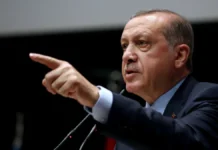
The operations were carried out as part of the “Decade of the Family,” an initiative announced by President Recep Tayyip Erdoğan that the government says is intended to protect children, the family and public order.
Same-sex relations are not illegal in Turkey. However, authorities have frequently targeted the LGBTQ community, with Erdoğan describing it as a “deviant movement” and its members as “perverts” while making the promotion of what he calls the traditional family a government priority.
The inclusion of Amnesty International’s Turkey branch comes three months after it joined 21 other rights organizations in condemning the blocking of around 40 X accounts linked to feminist and LGBTQ groups.
The organizations called the restrictions an “unacceptable practice” that obstructed the exercise of LGBTQ rights during Pride Month.
The latest measures are part of a broader pattern of online censorship in Turkey. Following the detention of İstanbul’s opposition mayor, Ekrem İmamoğlu, in March 2025, authorities sought the blocking of more than 700 X accounts belonging to news organizations, journalists, politicians, students and others.
X called those orders “unlawful” and subsequently filed an application with Turkey’s Constitutional Court challenging orders targeting 126 accounts.
This article is republished from Turkish Minute.