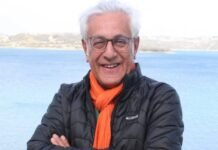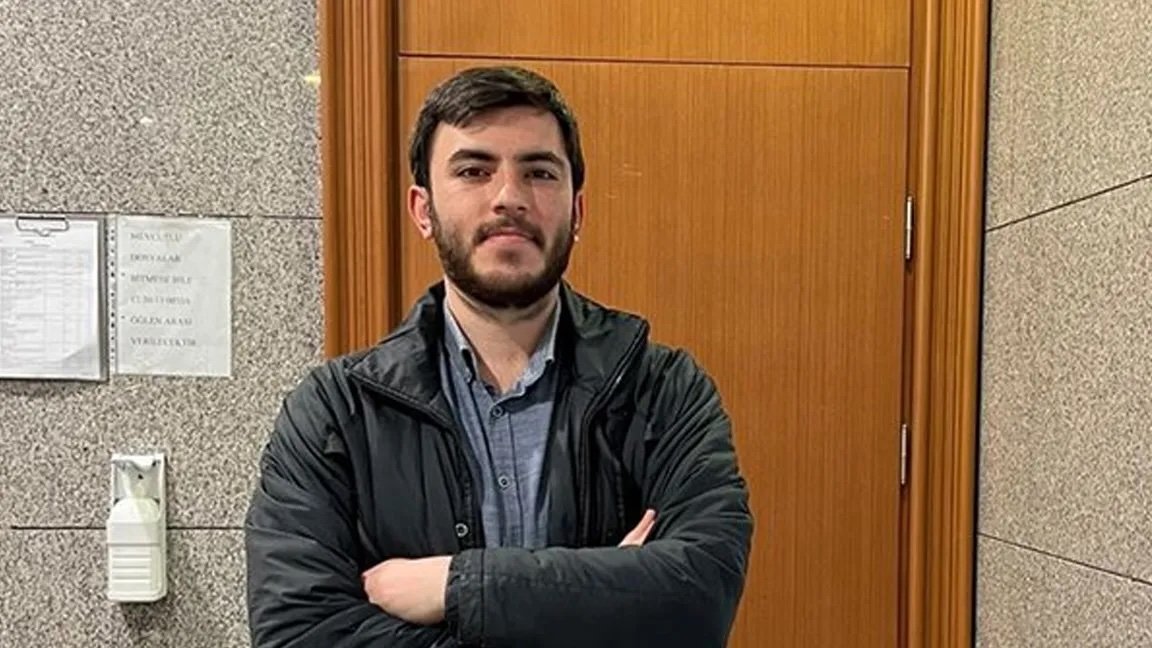
A Turkish court on Sunday ordered the arrest of journalist İsmail Arı of the BirGün daily on charges of “publicly disseminating misleading information,” Turkish media reported.
An Ankara magistrate court of peace ordered Arı jailed pending trial at the request of the Ankara Chief Public Prosecutor’s Office, without taking his statement. He was detained on Saturday evening in the northern province of Tokat.
In a message conveyed through his lawyers, Arı said he was detained over a video broadcast three months ago. “They have been looking for a pretext to arrest me for the past year,” he added.
During his interrogation at the Ankara Police Department, Arı was asked about four of his news reports and social media posts, including a video about foundations linked to family members of President Recep Tayyip Erdoğan, alleged irregularities at the state-run Yunus Emre Institute, the construction of a dormitory on a cultural heritage site near the imam hatip religious school from which President Erdoğan graduated and judicial appointments.
Arı was recently indicted after his report on alleged corruption at the Yunus Emre Institute on charges of “creating the perception of involvement in corruption,” following a complaint by former deputy chairman of the institute Rahmi Göktaş, the husband of Family and Social Services Minister Mahinur Göktaş.
Arı denied the accusations, saying the information he shared was based on open sources and that his reporting should be considered within the scope of freedom of the press and expression.
His arrest attracted widespread criticism. The Turkish Journalists Union (TGS) said such practices against journalists had reached a level that “hardly differs from a system of hostile law,” urging the authorities to respect press freedom, end practices undermining the public’s right to information and release all imprisoned journalists.
Reporters Without Borders (RSF) said the detention reflected the continuation of “a political project aimed at dismantling investigative journalism through judicial means.”
The Committee to Protect Journalists (CPJ) urged Turkish authorities to immediately release Arı and stop misusing the disinformation law.
Celal Fırat, a lawmaker from the opposition Peoples’ Equality and Democracy Party (DEM Party), submitted a parliamentary question to Justice Minister Akın Gürlek, asking what specific acts formed the basis of the investigation into Arı, why they were not considered within the scope of journalistic activity and on what grounds his reporting on alleged corruption involving the Yunus Emre Institute was included in the probe.
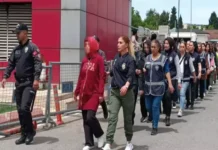
Protests were held in İstanbul and Ankara, with journalists, press organizations and opposition politicians publicly demanding his release.
According to Expression Interrupted, a press freedom monitoring group, 29 journalists are currently behind bars in Turkey. The country’s deteriorating media landscape was also highlighted in the 2025 World Press Freedom Index published by Reporters Without Borders (RSF), which ranked Turkey 159th out of 180 nations.