
Turkey is building a huge new courtroom inside its largest prison complex on the outskirts of İstanbul that can accommodate the mass trials of hundreds of defendants, Turkish Minute reported.
Officials say the hall, now under construction at the Marmara Prison Complex near the town of Silivri west of İstanbul, will seat 2,295 people and will be the largest courtroom in the country when it opens. The complex, long known by its old name, Silivri Prison, already holds many political prisoners, journalists and people jailed under Turkey’s broad counterterrorism laws.
According to reports in the pro-government media based on a briefing from the justice ministry, the project was launched after Bakırköy Chief Public Prosecutor Barış Duman inspected existing courtrooms at Marmara Prison and reported “capacity and security” problems. After consultations with İstanbul Chief Public Prosecutor Akın Gürlek, the justice ministry asked Turkey’s state Housing Development Administration (TOKİ) to build a new hall on the prison grounds.
The new building will have about 11,000 square meters of enclosed space. The main courtroom will cover 3,240 square meters and is designed to hold 555 defendants, 1,268 lawyers and 472 members of the public and press at the same time. Plans also include separate dining halls, work rooms for prosecutors and judges and digital infrastructure for accessing case files during hearings.
Security is central to the design. Authorities say up to 500 military police from the gendarmerie will work during hearings. Defendants will move between prison blocks and the courtroom through underground tunnels without contact with the outside world.
Officials present the project as a technical response to Turkey’s growing number of trials with hundreds of defendants.
The Marmara Prison Complex opened in 2008 as a high security site west of İstanbul. It holds several thousand inmates in multiple blocks and has become a symbol of President Recep Tayyip Erdoğan’s rule.
The complex became a center for cases against followers of the faith-based Gülen movement and Kurdish activists in the last decade.
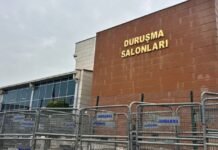
More recently, authorities moved sensitive hearings away from İstanbul’s main Çağlayan Courthouse and on to the prison campus. The ongoing forgery case against İstanbul Mayor Ekrem İmamoğlu, accused of using a fake university diploma, is being heard there. So is a criminal case concerning the leadership of the İstanbul Bar Association over a statement that criticized Turkey’s military operations in Syria.
Critics argue that holding trials in a prison rather than a regular courthouse makes it harder for the public, foreign diplomats and journalists to attend hearings.
The timing and size of the new courtroom have attracted special attention because prosecutors have recently filed a sweeping “corruption” indictment against the opposition-run İstanbul Metropolitan Municipality. That case reportedly names hundreds of municipal employees and contractors and could require space for many defendants, lawyers, relatives and observers on days of the hearings.
Observers have linked the urgent construction schedule to that indictment and to other expected mega cases, suggesting that the state is preparing for new waves of mass trials tied to opposition, business circles and media.
Human rights groups have documented allegations of overcrowding and abuse at Marmara Prison over the past decade. Former inmates and lawyers describe poor conditions, limited hot water, frequent strip-searches and punishment cells. International organizations, including United Nations experts and the Council of Europe, have raised concern about the use of counterterrorism laws to jail journalists, opposition politicians and students on the basis of nonviolent activity.
Construction is taking place on an accelerated schedule for the new courtroom, with officials speaking of a target completion window of 60 to 120 days. If that timetable holds, it could be ready in early 2026, in time for the İstanbul Municipality case and other large trials that are likely to shape Turkey’s political landscape in the coming years.