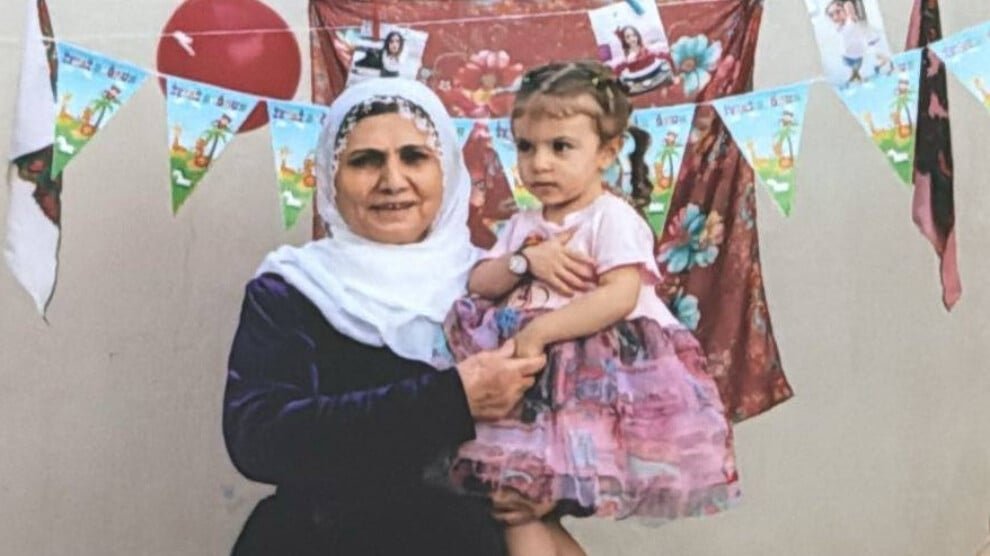
Turkey’s Council of Forensic Medicine (ATK) has concluded that a 66-year-old Kurdish prisoner suffering from serious health problems, including two recent heart attacks, is fit to remain behind bars.
According to the pro-Kurdish Fırat News Agency (ANF), Şefika Kandar, who suffers from high blood pressure and chronic heart problems, has a metal implant in her leg that limits her mobility and has undergone several surgical procedures while in prison, still has not been granted release on medical grounds.
The ATK frequently comes under criticism over its questionable reports that find ailing inmates fit to remain in prison. Rights advocates slam the agency over its lack of independence from political influence and its role in compounding the persecution of political prisoners.
Kandar was arrested in 2016 in Şanlıurfa province on charges of being a member of the “Peace Mothers,” a group of Kurdish women advocating a peaceful resolution to the conflict between the state and the Kurdistan Workers’ Party (PKK), which launched an armed insurgency in 1984 and is designated as a terrorist organization by Turkey and its Western allies.
Released pending trial, she was sentenced in 2021 to more than seven years in prison on charges of membership in a terrorist organization, with the verdict subsequently upheld. To avoid serving her sentence, she fled Turkey but was detained by Greek border police in June 2021 and returned to Turkey. Following her return Kandar was imprisoned at the Diyarbakır Women’s Prison to serve her sentence.
She reportedly declined a transfer to İzmir Menemen Prison for treatment, not wanting to be separated from her family in Şanlıurfa.
Under Turkey’s Law on the Execution of Sentences and Security Measures, courts may suspend the sentence of a prisoner who, due to a serious illness or disability, cannot sustain life under prison conditions and who is not considered a serious or concrete danger to society. Rights groups say the provision is very rarely applied in practice.
According to the Human Rights Association (İHD), at least 1,412 sick prisoners are currently being held in Turkish prisons, 335 of them in serious condition, 230 unable to manage daily life independently and 105 requiring constant care.