
Turkey, widely criticized for abusing INTERPOL’s notice system to target political opponents abroad, has emerged as a frontrunner for the organization’s presidency, raising concerns over the future credibility and integrity of the international policing body.
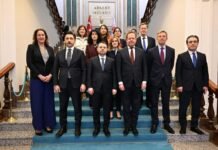
Mustafa Serkan Sabanca, Ankara’s candidate, is running for president at INTERPOL’s 93rd General Assembly, held this week in Marrakech. Policing experts and human rights advocates warn that elevating Turkey to the organization’s top post could give Ankara greater influence over internal committees and reform processes, potentially threatening the impartiality of INTERPOL’s alert mechanisms and undermine confidence among member states.
In a recent article by The Telegraph, an extradition lawyer likened the possibility of a Turkish police chief being appointed as INTERPOL president to “sitting the North Koreans on the UN Human Rights Council.”
Although INTERPOL’s constitution prohibits involvement in political, military, religious or racial matters, Turkey has repeatedly tried to bypass this rule by packaging politically driven cases as ordinary criminal offenses. The government of President Recep Tayyip Erdoğan has used the International Notice System, such as Red Notices — intended for high-profile criminals such as terrorists, drug lords and human traffickers — to pursue political opponents, journalists and people living in exile whose only “crime” was criticizing the government.
Since a coup attempt in July 2016, Turkey’s repression of political dissidents has expanded into a global campaign, marked by systematic efforts to silence critics and dissidents abroad, with particular focus on individuals associated with the faith-based Gülen movement, inspired by the late Muslim cleric Fethullah Gülen.
President Erdoğan has been targeting followers of the Gülen movement since corruption investigations revealed in 2013 implicated then-prime minister Erdoğan as well as some of his family members and inner circle.
Dismissing the investigations as a Gülenist coup and a conspiracy against his government, Erdoğan began to target the movement’s members. He designated the movement as a terrorist organization in May 2016 and intensified the crackdown on it following the abortive putsch in July of the same year that he accused Gülen of masterminding. The movement strongly denies involvement in the coup attempt or any terrorist activity.
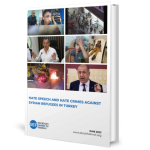
Turkish government’s abusive tactics to manipulate INTERPOL’s system were documented in a report by the Stockholm Center for Freedom (SCF). Nordic Monitor also recently disclosed a classified Security Directorate General memo dated June 18, 2025, instructing prosecutors to avoid any reference to terrorism charges or links to government critics when preparing Red Notice requests. Instead, it recommended relying on ordinary offenses such as “unlawfully acquiring or disseminating personal data” to pass INTERPOL’s screening process.
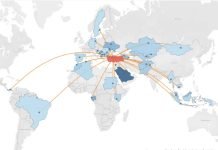
Since 2016 the Turkish government has submitted 3,579 Red Notice requests to INTERPOL targeting individuals allegedly linked to the Gülen movement. In July 2024 Turkish Justice Minister Yılmaz Tunç revealed that the government had also submitted 1,774 extradition requests to 119 countries. While Red Notices are issued by INTERPOL, extradition requests are made by governments; the vast majority of Ankara’s requests have reportedly been rejected.
Turkey has also been accused of abusing INTERPOL’s Stolen and Lost Travel Documents Database by filing tens of thousands of notifications against critics who, in many instances, were not even aware that their passports had been invalidated. Some of these people were stranded at international airports or put in detention before they were released or, in the worst cases, were handed over to Turkish operatives and ended up in Turkish prisons.
A UK parliamentary report, published on July 30 by the Joint Committee on Human Rights, identified Turkey as among the most prolific abusers of INTERPOL’s notice system, citing evidence of Turkey conducting transnational repression activities on UK soil, along with China, Russia, Iran and others.
The report also mentions that Ankara’s campaign of transnational repression has expanded since the coup attempt, relying on international policing tools to silence political dissidents abroad. As of 2025 Turkey’s National Intelligence Organization (MİT) has publicly acknowledged carrying out 128 operations for the forcible return of individuals with alleged links to the Gülen movement.
Concerns over Turkey’s candidacy are heightened by country’s growing entanglement with organized crime. Turkey, ranking 10th out of 193 nations in the 2025 Global Organized Crime Index, has increasingly become both a transit hub for illegal trade and a center for organized crime networks. Analysts point to deepening links between political elites, elements of the judiciary and criminal networks involved in human trafficking, arms smuggling and mafia-style activities.
Sabanca, currently heading Turkey’s National Central Bureau at INTERPOL–Europolis, is competing against candidates from France, Namibia and Ethiopia.
Observers caution that electing a candidate from a government that is alleged to be weaponizing international policing mechanisms as well as overseeing a significant hub of organized crime could erode INTERPOL’s impartiality, placing political exiles, journalists and human rights defenders worldwide at greater risk.
(SCF with reporting by Nordic Monitor)