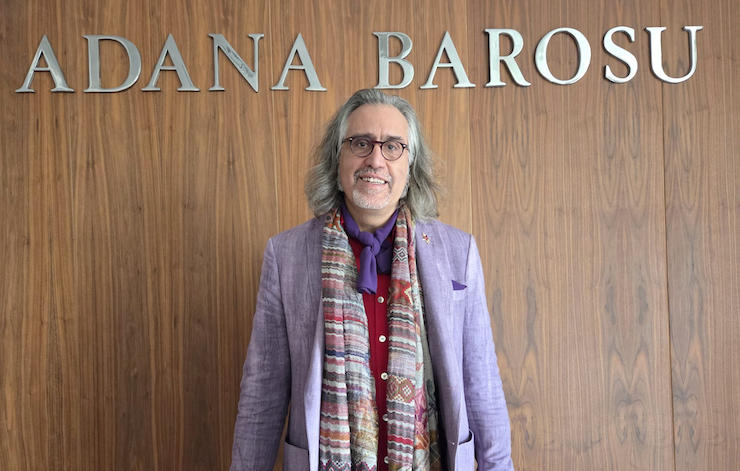
A Turkish prosecutor has sought a prison sentence for lawyer Şiar Rişvanoğlu on charges of “membership in a terrorist organization,” pressing ahead with the case despite a key witness retracting his earlier statement.
The demand was made on Monday during the second hearing at the Adana 11th High Criminal Court, the Media and Law Studies Association (MLSA) reported. Merdan Rüştü Ovalıoğlu, who had testified against Rişvanoğlu and is currently in detention in a separate case, recanted his earlier statement during the first hearing.
The indictment alleges that Rişvanoğlu was involved in the outlawed Kurdistan Workers’ Party’s (PKK) so-called “civilian area structuring,” citing witness statements, call detail records and reports from Turkey’s Financial Crimes Investigation Board (MASAK) as evidence.
The PKK is designated as a terrorist organization by Turkey and its Western allies, including the European Union and the United States.
Rişvanoğlu, a member of the Progressive Lawyers Association (ÇHD), was detained on November 26, 2024, and later released under judicial supervision.
In his defense Rişvanoğlu said he has been repeatedly targeted due to his socialist identity and position on the Kurdish issue, referring to the Kurdish population’s demand for equal rights and recognition. He denied any links to the PKK and instead identified himself as a founding member of the Revolutionary Workers Party (DİP). He said he was targeted after his speech at the Adana Bar Association’s general assembly on October 12, 2024.
Following the general assembly, Rişvanoğlu’s office was vandalized and his car’s tires were slashed, on October 16, 2024. A threatening note signed by the “Turkish Revenge Brigade” was also left in his car.
The third hearing in the case is scheduled for April 10.
Turkey frequently brings terrorism-related charges against journalists, human rights advocates and lawyers, most commonly alleging links to the PKK. Human rights and press freedom groups say such cases often target activities that fall under freedom of expression or press freedom rather than involvement in violence and are used to deter dissenting voices on the Kurdish issue.