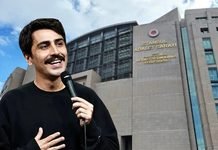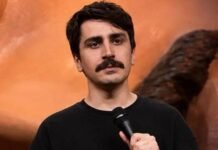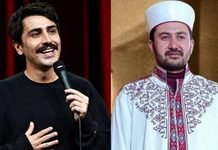
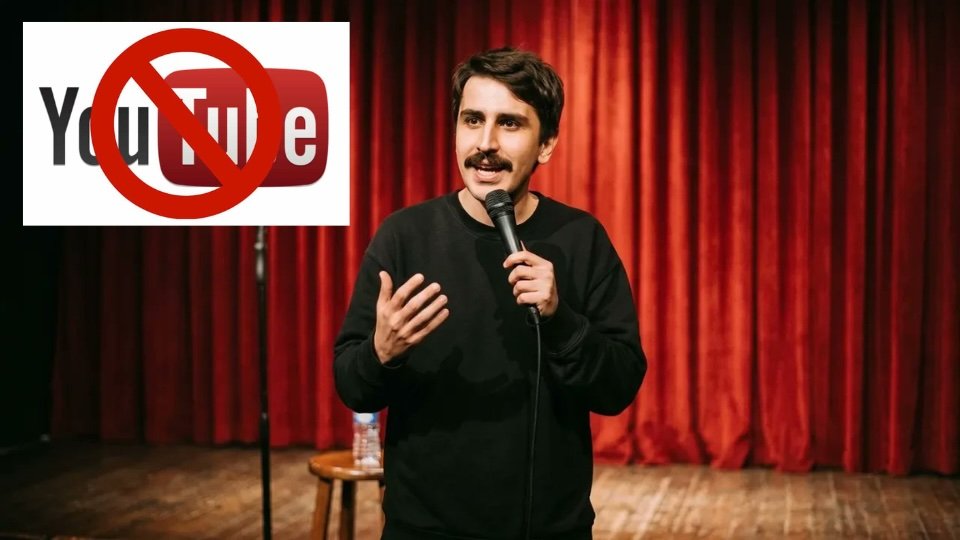
A Turkish court has ordered access blocked to a YouTube video of jailed comedian Deniz Göktaş’s stand-up show “Ölü Deniz,” citing national security and public order concerns, Turkish Minute reported, citing the Freedom of Expression Association (İFÖD).
The video, which had been watched some 12.7 million times, was still accessible on YouTube in Turkey at the time of İFÖD’s announcement, meaning the platform had not yet implemented the court order.
İFÖD said the access ban was imposed under Law No. 5651, which allows authorities to seek the removal of online content or block access to it in urgent cases involving national security, public order, public safety, the prevention of crime, public health or the protection of life and property.
Earlier, X posts containing clips from Göktaş’s stand-up show were also blocked on the grounds of protecting national security and public order and later made unavailable in Turkey by X.
Göktaş, 32, was arrested by an İstanbul court on July 3 and jailed pending trial after prosecutors accused him of insulting President Recep Tayyip Erdoğan and religious values in the same show.
He was detained at İstanbul Airport during passport control after returning from a previously planned vacation abroad.
Prosecutors are investigating him on charges of “insulting the president” and “publicly insulting religious values adopted by a segment of the public.”
The 90-minute performance, uploaded to YouTube on June 24, includes satirical comments on Turkish politics, Erdoğan, jailed İstanbul Mayor Ekrem İmamoğlu, universities, public protests, nationalism and the secular children of conservative families.
In his police statement, published by Turkish media, Göktaş denied intending to insult religious people or Erdoğan, saying the show had been performed for about three years in cities across Turkey and seen by more than 100,000 people before being uploaded to YouTube.
“I absolutely had no intention of publicly insulting the religious values adopted by a certain segment of society,” he said.
He also defended his use of the word “dictator” for President Erdoğan, saying it was a political description and “just a word like democrat or autocrat.”
The case has sparked criticism from free speech advocates, opposition politicians and fellow performers, who say comedians should not face criminal prosecution over stage performances.
The move adds to growing concerns over online censorship in Turkey, where courts and administrative bodies frequently order access bans on social media posts, news reports, videos and entire websites under Law No. 5651.
Rights groups say the law is often used to suppress criticism and restrict public debate, while Turkish authorities argue that such measures are necessary to protect national security, public order and individual rights.
Turkey has long faced criticism over restrictions on freedom of expression, with artists, journalists, academics and social media users frequently targeted in criminal investigations over their remarks.
Online censorship in the country has expanded sharply in recent years. According to İFÖD’s EngelliWeb 2024 report, access to more than 1.26 million domain names and websites had been blocked in Turkey by the end of 2024, while hundreds of thousands of URLs, news reports, social media posts and accounts were also subject to access bans or removal orders.
İFÖD has long warned that Turkey’s internet law, Law No. 5651, has become one of the main tools used to restrict online expression and public access to information.
The US-based democracy watchdog Freedom House’s “2025 Freedom on the Net” report placed Turkey among the five countries with the steepest long-term declines in internet freedom. The organization cited broad censorship practices and intensified digital controls over the past 15 years, giving Turkey a score of 31 out of 100, putting it in the bottom tier of the 72 countries assessed.