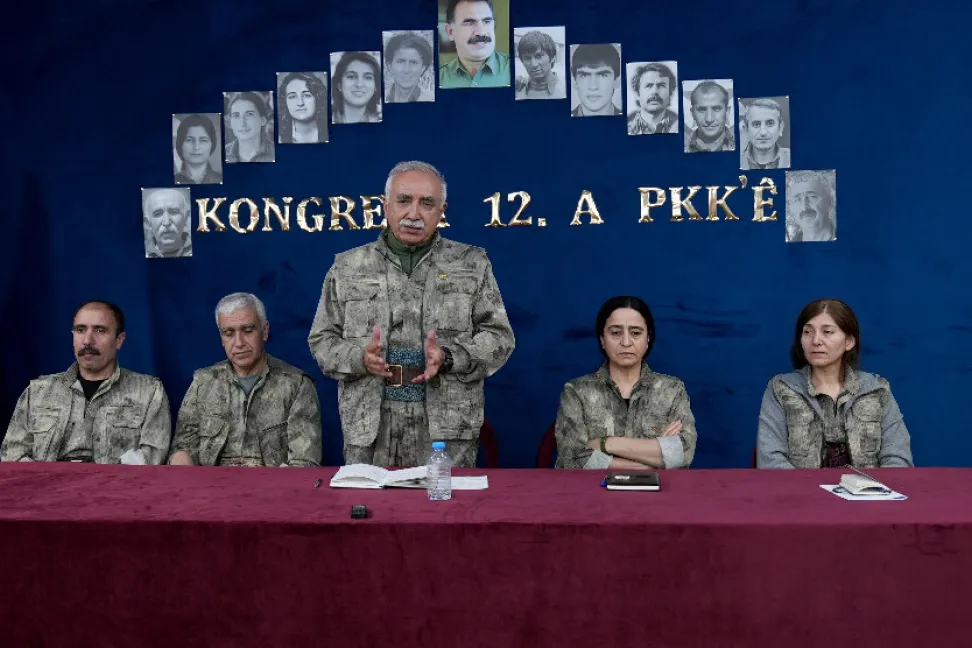
Turkey’s ruling party is working on an amendment to a law regulating sentence enforcement that would cut the mandatory time served for some people convicted of terrorism offenses in order to release thousands convicted of membership in the Kurdistan Workers’ Party (PKK) as part of renewed peace talks, Turkish Minute reported, citing the Sözcü daily.
Citing anonymous sources Sözcü described the draft as “equal treatment in sentence enforcement,” a term used in Turkey for proposals that aim to standardize how much of a prison sentence must be served before conditional release. The proposal would extend rules common in non-terror cases to terrorism convictions, allowing release after serving half a sentence rather than three-quarters of it.
Eligibility would depend on whether the prisoner’s organization has disbanded, a condition the paper said would allow PKK convicts to benefit while excluding people imprisoned for alleged links to the faith-based Gülen movement as well as other groups.
The idea has been discussed in the parliamentary commission set up to advance the peace efforts, with the pro-Kurdish People’s Equality and Democracy Party (DEM Party) and its delegation that visits imprisoned PKK leader Abdullah Öcalan previously raising such a proposal.
There has been no official announcement confirming Sözcü’s report. The Turkish Justice Ministry issued a statement on Friday denying another news outlet’s claim that the ministry was preparing a broad new early release plan, saying it had no such draft or work underway.
The PKK, which has fought the Turkish state since 1984, announced in May 2025 that it would disband as part of the peace initiative after a call from Öcalan, who has been imprisoned since 1999.
Previous reports concerning plans to limit a possible amnesty for PKK convicts had sparked strong criticism from legal experts and human rights defenders, who said limiting legal reforms to PKK members would further expose the government’s selective and politicized use of justice.
Turkey has long been criticized for its broad application of counterterrorism laws, which rights groups say have turned political dissent into a criminal act. Since a failed coup in 2016, tens of thousands of people, including journalists, activists and opposition members, have been jailed on terrorism charges widely seen as politically motivated.