
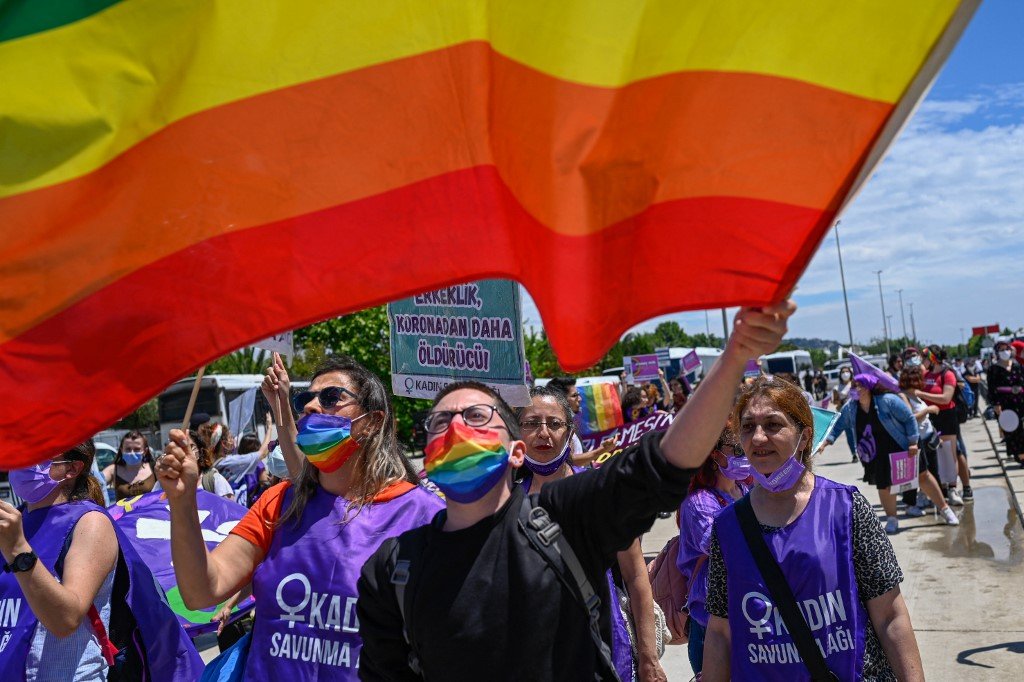
Turkish authorities in 2025 expanded censorship of LGBT-related content, imposing bans, access blocks, fines and launching criminal investigations affecting film festivals, journalism, books, digital platforms and cultural institutions, the İlke TV news website reported.
In January authorities banned Pembe Hayat KuirFest, one of Turkey’s longest-running queer film festivals. Police stopped the screening of a documentary at Ankara’s Mülkiyeliler Birliği, a cultural venue run by an alumni association of Ankara University’s faculty of political sciences, and later notified organizers that the entire festival had been prohibited by the Ankara Governor’s Office. Officials cited public order, general morality and the protection of the family as grounds for the ban.
Later that month representatives of Netflix told Turkey’s parliamentary Digital Media Committee that the company worked with partners familiar with local sensitivities when reviewing content. During the session lawmakers from the ruling Justice and Development Party (AKP) criticized LGBT-themed productions.
In March the İstanbul Foundation for Culture and Arts (IKSV) removed its queer film selection, “Where Are You My Love?” from the Istanbul Film Festival program. The section had been part of the festival since 2014. Organizers said they were unable to secure a sufficient number of films. LGBT organizations rejected the explanation and called for a boycott.
In April Turkey’s Trade Ministry fined eyewear retailer Sunglass Hut and ordered the suspension of an advertising campaign that featured a same-sex couple. The decision followed complaints from pro-government groups. Authorities said the images violated general morality regulations.
Restrictions increased during Pride month in June. Authorities classified Cem Akaş’s novel “The Shortest Moment of Time” as a harmful publication, a designation that restricts its sale and distribution. Officials cited obscenity provisions.
Several concerts by prominent singers, including Yalın, Hadise, Mabel Matiz, Melek Mosso, Sertab Erener, Melike Şahin and Cem Adrian, were also canceled that month. Pro-government media outlets said the cancellations were linked to the artists’ support for LGBT causes. Journalists reported that some performers were informally barred from venues.
Social media companies also restricted LGBT-related accounts. Meta, the parent company of Instagram, shut down the official account of Istanbul’s Trans Pride Week, scheduled to run from June 16 to June 22, days before planned events, citing violations of community standards. Organizers said they were not given a detailed explanation.
Days later a court ordered nationwide access blocked to KaosGL.org, an LGBT-focused news website. Judges said several articles contained criminal content, including reports on Pride events and violence against transgender people. The outlet’s social media accounts were later restricted. Appeals are pending.
In July censorship extended to public demonstrations. The Human Rights Association (İHD) said police in Istanbul did not allow a banner reading “We have opposed homophobia and transphobia for 39 years” during a news conference in Sultanahmet Square marking the group’s anniversary. İHD Co-chair Eren Keskin criticized the restriction and said LGBT rights are human rights. Ümit Efe, Istanbul representative of the Human Rights Foundation of Turkey (TİHV), described the incident as censorship.
In September Turkey’s broadcasting regulator, the Radio and Television Supreme Council (RTÜK), fined streaming platforms and ordered the removal of multiple LGBT-themed productions from services including Netflix, Prime Video, Disney+ and HBO Max. RTÜK said the content violated laws protecting family values and public morality. Opposition members of the council said all sanctioned titles included LGBT characters or same-sex relationships.
That same month, singer Mabel Matiz had his song “Perperişan” removed from digital platforms after complaints were filed through the state’s online petition system. Prosecutors later sought a prison sentence on obscenity-related charges. The case is ongoing.
In November a court ordered the closure of the Youth LGBT Association in the western city of Izmir. Prosecutors cited social media posts they said promoted homosexuality and violated constitutional provisions on the protection of the family. Criminal cases were also opened against association members.
In December RTÜK imposed its highest fine on the HBO Max series “Jasmine” and ordered it removed from the platform. The series centers on a transgender sex worker living with heart disease. RTÜK said the content violated morality and family protection rules.
Senior government officials have increasingly linked cultural regulation to family values and morality in public statements. LGBT organizations say the measures have reduced visibility across media and public life.