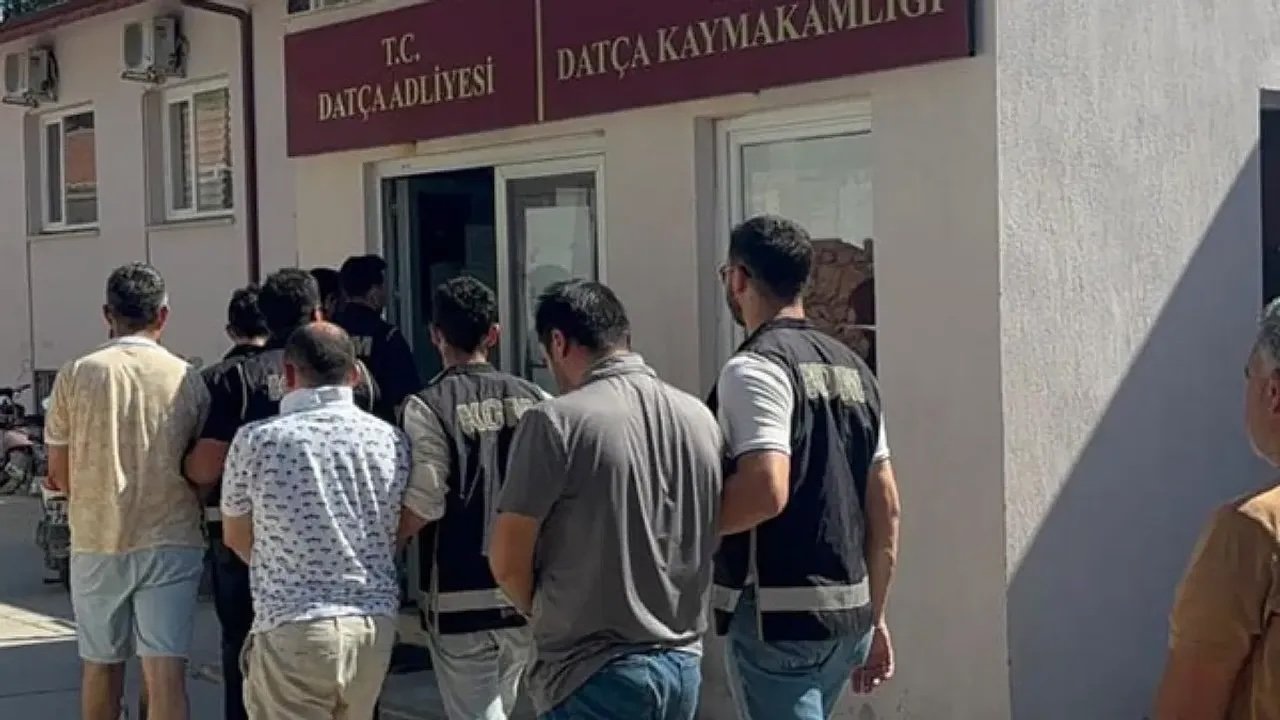
Turkish police have detained 20 people in raids across six provinces over alleged links to the faith-based Gülen movement, the state-run TRT Haber reported Friday.
The operation was carried out at 21 locations under the coordination of the İstanbul Chief Public Prosecutor’s Office as part of an investigation into what Turkish authorities describe as the movement’s covert network within the police. Those detained comprise five currently serving civil servants, three who had previously been dismissed from public service and 12 private-sector employees.
Turkish President Recep Tayyip Erdoğan has targeted the faith-based Gülen movement, inspired by Muslim cleric Fethullah Gülen, who died in 2024, since corruption investigations in December 2013 implicated him as well as some members of his family and inner circle. He dismissed the probes as a Gülenist conspiracy and designated the movement as a terrorist organization in May 2016, intensifying a sweeping crackdown after a coup attempt in July of the same year that he accused Gülen of orchestrating. The movement denies involvement in the attempted coup or any terrorist activity.
Authorities said the suspects were identified in data stored on an SD card provided by a secret witness codenamed “Garson” (waiter). Investigators also cited alleged contacts with members of the movement, accounts or increased deposits at the now-shuttered Bank Asya and records of sequential payphone calls. Prosecutors allege the suspects operated at a supervisory level in the movement’s purported network within the police.
The files supplied by Garson have been used in numerous criminal and administrative cases involving police officers accused of Gülen links. Turkey’s Constitutional Court ruled in June that authorities had failed to sufficiently verify and explain the use of the files in the dismissal of a former police officer and ordered a retrial in the case.
The so-called “payphone investigations” are based on call records. The prosecutors allege that a member of the Gülen movement used a single payphone to consecutively call all his contacts. Based on that assumption, when an alleged member of the movement is found in call records, it is assumed that other numbers called right before or after the primary call also belong to people with Gülen links. The authorities do not possess the content of the calls in question. The supposition of guilt is solely based on the order of the calls made from the phone.
Since the coup attempt in 2016, the Turkish government has accepted such activities as having an account at the now-shuttered Bank Asya, one of Turkey’s largest commercial banks at the time; using the ByLock messaging application, an encrypted messaging app that was available on Apple’s App Store and Google Play; and subscribing to the now-shut-down Zaman daily or other publications affiliated with members of the movement as benchmarks for identifying and arresting alleged followers of the Gülen movement on charges of membership in a terrorist organization.