
Turkish authorities detained eight journalists and arrested five in February, while reporters appeared in court at least 50 times during the month, according to a press freedom report released by a lawmaker from the country’s main opposition party.
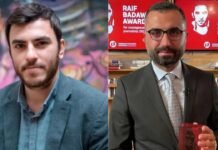
According to the Cumhuriyet daily, the monthly report was published by Utku Çakırözer, a former journalist and a member of parliament from the Republican People’s Party (CHP).
Among those arrested was Alican Uludağ, the Ankara correspondent for the Deutsche Welle Turkish service. Uludağ was detained at his home in Ankara over social media posts and later transferred to Istanbul, where he was jailed in Silivri Prison.
According to the report, Uludağ has frequently been targeted over his reporting and social media activity. In February alone, he also faced three additional investigations and court proceedings related to his posts.
The report said journalists appeared before judges at least 50 times during the month, including the Karar newspaper’s Feyza Nur Çalıkoğlu and Nisanur Yıldırım from the Nefes daily.
Four journalists working for the Etkin News Agency (ETHA), a left-wing news outlet, were also arrested as part of an investigation targeting the Socialist Party of the Oppressed (ESP) and affiliated organizations. The journalists — Nadiye Gürbüz, Pınar Gayıp, Elif Bayburt and Müslüm Koyun — were jailed pending trial, while another journalist, Züleyha Müldür, was released under judicial supervision.
According to the report, prosecutors cited payments made by the journalists to obtain international press cards as possible evidence of “terrorist financing.”
In another case, journalist Ömer Ödemiş was sentenced to more than six years in prison in a case in which he had previously been acquitted.
Seven journalists who were covering a hearing in the so-called Kobani trial were also given suspended sentences of 18 days in prison each for recording audio and video in the courtroom. The Kobani trial concerns dozens of Kurdish politicians and activists accused of inciting violence during protests in 2014 related to the siege of the Syrian Kurdish town of Kobani by the Islamic State in Iraq and the Levant (ISIL).
The report said journalists detained included Ali Türk Aslan and Mehmet Ali Ertaş, who were questioned by authorities over their reporting and social media posts.
Journalist İsmail Arı was also summoned to give a statement following a complaint by Ebubekir Şahin, chief executive officer of Türk Telekom, Turkey’s biggest telecommunications operator, and a former head of the Radio and Television Supreme Council (RTÜK), Turkey’s broadcast regulator.
The report also documented new investigations into journalists. Öznur Değer, news director of JinNews, a pro-Kurdish news outlet, faced an investigation over a social media post about a protest related to Rojava, the Kurdish-administered region in northern Syria that was attacked by Syrian government forces in January.
The report also cited incidents involving obstruction and threats against journalists. Reporters covering an event attended by Environment, Urbanization and Climate Change Minister Murat Kurum in the northwestern province of Kocaeli said members of the minister’s security team prevented them from covering the event and physically intervened against journalist Serkan Üldeş during an altercation.
In the eastern town of Tatvan, journalist Mücahit Tarlan said he was threatened by Mayor Mümin Erol after criticizing municipal snow removal efforts and was later assaulted by the mayor’s bodyguard.
The report also pointed to regulatory pressure on broadcasters. RTÜK imposed an administrative fine on Halk TV over comments made during a program hosted by veteran journalist Uğur Dündar.
According to the report, court orders blocking access to online content also continued during the month. Deputy Family and Social Services Minister Zafer Tarıkdaroğlu obtained rulings blocking access to 258 news reports and social media posts in a single day, including articles alleging that his nephew had been appointed to a civil service position without taking Turkey’s nationwide public service exam.
The report said social media accounts belonging to the pro-Kurdish Mezopotamya Agency, the Yeni Yaşam newspaper and JinNews were also blocked in February.