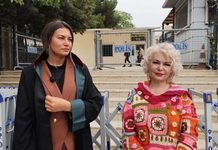

Two senior editors at Turkey’s opposition Sözcü newspaper were briefly detained in an investigation reportedly over an article that mistakenly identified two jailed university students as high school students, Turkish media reported.
Ercüment İşleyen, editor-in-chief of Sözcü’s website, and Tuğba Nur Çelik, its responsible managing editor, were taken to İstanbul police headquarters late Monday and released after giving statements to police early Tuesday.
The investigation reportedly concerned an October 26 Sözcü article headlined “Two high school students arrested for protesting Minister Tekin.” The article has since been removed from the newspaper’s website.
The article referred to Nevin Tekin, a student at İstanbul University, and Nehir Dizdar, a student at Galatasaray University, who were jailed pending trial over a banner calling for Education Minister Yusuf Tekin’s resignation that authorities alleged constituted a threat against him.
Other news outlets made the same error in their October 26 headlines, some citing the ANKA news agency.
Journalist Seyhan Avşar said on X that police took the two editors from their homes and that authorities were reportedly treating the reporting error as an offense of publicly disseminating misleading information.
Avşar criticized the detentions, saying the error should have been addressed through a correction or the right of reply rather than police action.
Lawyer and opposition lawmaker Mahmut Tanal called the detentions an attack on press freedom.
Tanal said the error did not constitute an offense under Article 217/A of the Turkish Penal Code, particularly because it lacked the required intent to cause public anxiety, fear or panic.
Article 217/A, introduced in 2022 as part of Turkey’s disinformation law, provides for prison sentences of one to three years for publicly spreading false information concerning national security, public order or public health with the specific intention of causing fear, panic or anxiety and in a manner capable of disturbing the public peace.
Former Supreme Court of Appeals prosecutor Mehmet Ruşen Gültekin told the Yeniçağ newspaper that a reporting error alone could not constitute the offense and questioned why the editors were detained rather than summoned to give statements.
Prosecutors had not publicly explained the grounds for the investigation or how the reporting error allegedly met the requirements of Article 217/A.
According to Expression Interrupted, a press freedom monitoring group, 27 journalists are currently behind bars in Turkey. The country’s deteriorating media landscape was further pointed out in the 2026 World Press Freedom Index published by Reporters Without Borders (RSF), where it was ranked 163rd out of 180 nations.