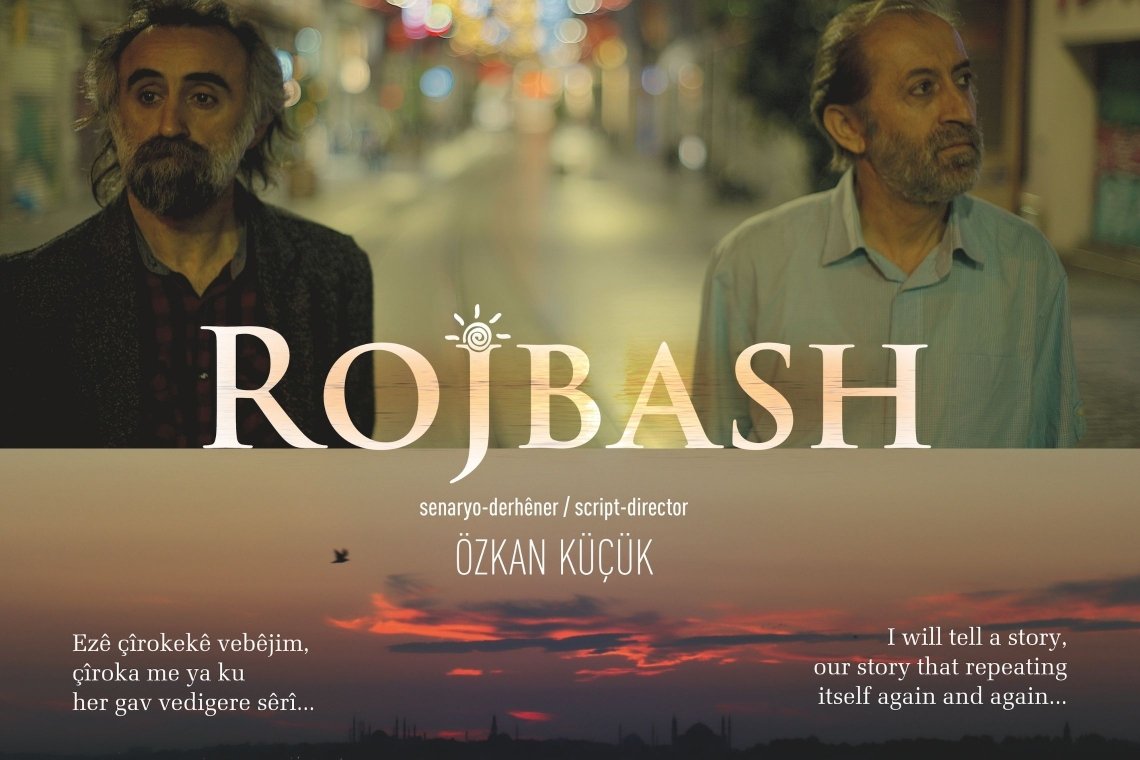
Turkey’s Culture and Tourism Ministry has appealed a court ruling that lifted a ban on the Kurdish film “Rojbash,” in a move that critics say shows the continued suppression of Kurdish cultural expression despite renewed public talk of peace and democratic reform.
According to the Media and Law Studies Association (MLSA), in its appeal the ministry said the Ankara 3rd Administrative Court’s ruling was based on an incomplete examination and lacked legal grounds, claiming the expert report cited by the court failed to adequately assess the film in terms of constitutional principles and public order.
The court had ruled in February that the ban was unlawful and lifted it, saying authorities could have used less restrictive measures such as age classification rather than prohibiting the film from being shown.
The ministry banned the film from being screened in theaters across Turkey in October 2024, arguing that it was “not suitable for commercial circulation.
“Rojbash” tells the story of a Kurdish actor who dedicated his career to Kurdish theater and seeks to restage a play of the same name after 25 years, highlighting longstanding restrictions on use of the Kurdish language in Turkey.
The case is now before the Ankara Regional Administrative Court, which has yet to rule on the appeal. The court said it would consider the ministry’s request to suspend the lower court’s decision after receiving the plaintiff’s defense.
Director Özkan Küçük criticized the ministry’s continued effort to ban the film, saying it was a scandal that fundamental constitutional rights had been opened to debate.
The appeal comes amid renewed public debate in Turkey over resolving the decades-long conflict with the outlawed Kurdistan Workers’ Party (PKK), which is designated as a terrorist organization by Turkey and its Western allies.
In May 2025 the PKK announced that it would lay down its arms to pursue a democratic struggle to defend the rights of the Kurdish minority, in line with a call by its jailed leader Abdullah Öcalan. The Turkish Parliament in August established a special parliamentary commission to oversee the peace efforts.
However, Kurdish civil society groups say state pressure on language and cultural institutions has continued, raising concerns about the sincerity and scope of any normalization efforts.
Kurds in Turkey are often pressured not to speak their mother tongue. Authorities frequently claim that people speaking in Kurdish are chanting slogans in support of the PKK.
Prohibitions against the use of Kurdish in Turkey go back many years. Kurdish language, clothing, folklore and names were banned in 1937. The words “Kurds,” “Kurdistan” and “Kurdish” were among those officially prohibited. After a military coup in 1980, speaking Kurdish was formally forbidden, even in private life.