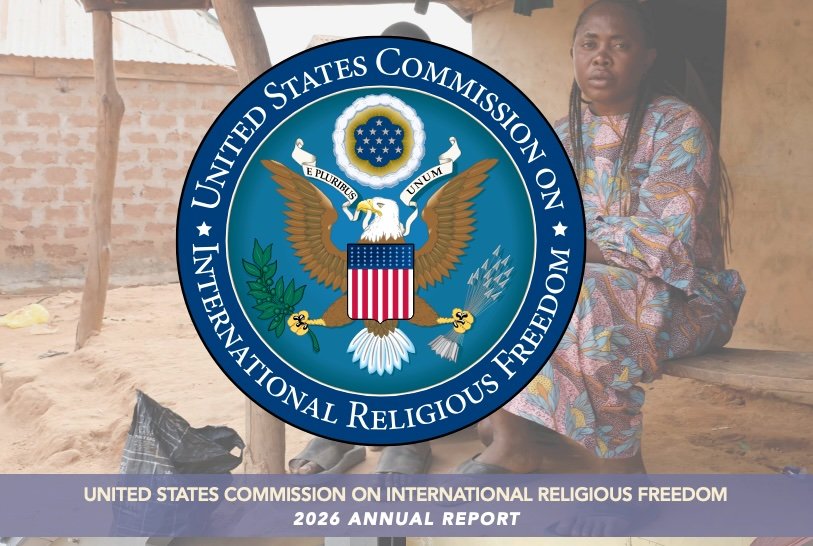
Religious communities in Turkey face systematic and severe violations of their religious freedom, the United States Commission on International Religious Freedom said in its 2026 annual report, recommending that the country be put on the US State Department’s Special Watch List.
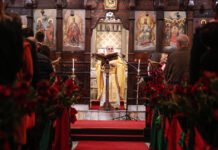
The report documents continuing barriers faced by religious communities, including Alevis, Protestants and Jehovah’s Witnesses, citing obstacles to legal recognition and registration, the construction or restoration of houses of worship and the renewal of residence permits for foreign-born clergy.
The report said the Turkish government continued to hinder the renewal of residence permits and the reentry of foreign Christian clergy and their families by using immigration codes to designate them as security threats.
According to the commission, Turkey also played a destabilizing role in Syria with respect to religious freedom through military operations and support for militant factions accused of harassing or attacking religious minorities, including Yazidis and Christians.
Concerns within the Alevi community also persisted, particularly over the Directorate of Religious Affairs’ (Diyanet) focus on Sunni Islam, which leaves Alevi religious practices and institutions largely unrecognized and unsupported.
According to the report, the Turkish government also punished expressions of secular sentiment during its broader crackdown on political opposition. Five newly commissioned lieutenants and three commanding officers were dismissed from the army for choosing a secularist oath for their swearing-in ceremony.
The report also said prison authorities restricted inmates’ access to Qurans and other religious literature as well as to facilities for Islamic ablutions. It cited the case of Aysu Öztaş Bayram, who was prosecuted in a case known as the “Girls’ Trial,” in which women and girls, including high school students, faced terrorism charges over alleged ties to the faith-based Gülen movement.
Turkish President Recep Tayyip Erdoğan has targeted followers of the Gülen movement, inspired by the late Muslim cleric Fethullah Gülen, since corruption investigations in December 2013 implicated him as well as some members of his family and inner circle. He dismissed the probes as a Gülenist conspiracy and later designated the movement a terrorist organization in May 2016, intensifying a sweeping crackdown after a failed coup attempt in July of the same year that he accused Gülen of orchestrating. The movement denies involvement in the coup attempt or any terrorist activity.
The report also cited the authorities’ use of the Turkish Penal Code (TCK) to prosecute perceived insults to Islam. Six staff members of satirical magazine LeMan were prosecuted over a cartoon and five were put in pretrial detention before later being released under judicial supervision. YouTube host Boğaç Soydemir and his guest Enes Akgündüz, were also arrested over a joke about a saying attributed to the Prophet Muhammad and accused of inciting hatred and enmity or insulting a segment of the public.
The commission urged the US administration to condition security and trade relations with Turkey on improvements in religious freedom. It recommended lifting national security bans on foreign-born clergy, easing restrictions on clergy training programs and facilitating the registration of religious groups and access to places of worship.
Turkey was among nine other countries — Egypt, Indonesia, Iraq, Kazakhstan, Kyrgyzstan, Malaysia, Sri Lanka, Syria and Uzbekistan — recommended for inclusion on the Special Watch List. The commission also recommended maintaining the existing designation for Algeria and Azerbaijan.
The United States Commission on International Religious Freedom is an independent, bipartisan federal body established by the US Congress to monitor, analyze and report on threats to religious freedom abroad. The commission makes foreign policy recommendations to the president, secretary of state and Congress aimed at deterring religious persecution and promote freedom of religion and belief.