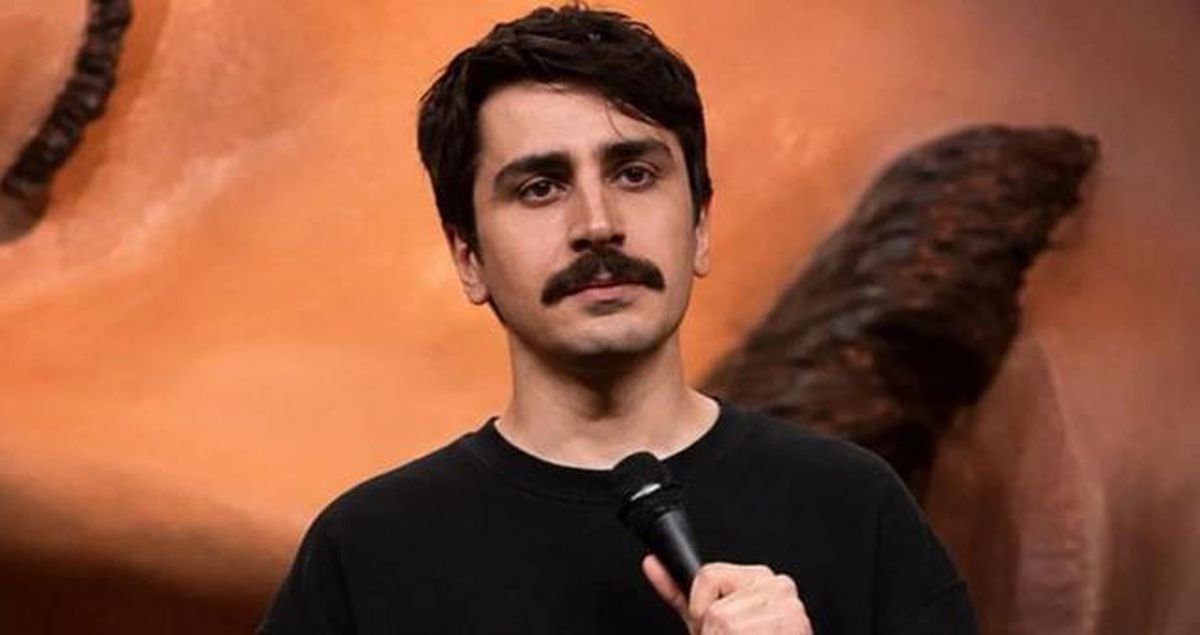
Rights groups, opposition leaders and figures from Turkey’s arts scene rallied behind comedian Deniz Göktaş on Friday, accusing authorities of using pretrial detention to punish jokes and political satire.
The backlash came after Göktaş was jailed pending trial over his stand-up show “Ölü Deniz,” a performance that drew millions of views on YouTube and included political satire and remarks prosecutors say insulted President Recep Tayyip Erdoğan and publicly degraded religious values. The court decision turned a dispute over the show into a wider debate over free expression and the limits placed on satire in Turkey.
Özgür Özel, leader of the main opposition Republican People’s Party (CHP), said Göktaş had not killed anyone, attacked anyone, stolen anything or taken public money but had been jailed because he performed under what Özel called the ruling Justice and Development Party’s (AKP) “dark order.”
Göktaş returned to Turkey despite the investigation but was jailed on grounds of posing a flight risk, Özel said in a social media post.
“What we face is a regime that treats those who are not on its side with hatred,” Özel said, adding, “Autocracy or democracy.”
Amnesty International’s Turkey branch called Göktaş’s jailing over allegations of insulting the president and degrading religious values the latest example of the misuse of the criminal justice system to suppress free expression.
The rights group said his detention was arbitrary and therefore unlawful, calling for his immediate release.
The Actors Union also condemned the case, with actor Cem Yiğit Üzümoğlu speaking on behalf of the union outside İstanbul’s Çağlayan Courthouse.
“We demand that our colleague Deniz Göktaş be released as soon as possible and that the process be conducted in accordance with the law,” Üzümoğlu said. “We will continue to stand with solidarity, law and freedom. Deniz Göktaş is not alone.”
Üzümoğlu said freedom of expression is a right protected by the constitution and that artists should not face judicial pressure over critical speech and humor.
Hundreds of people, including members of political parties, professional groups and civil society organizations, gathered outside the Çağlayan Courthouse in support of Göktaş. Members of the Workers’ Party of Turkey (TİP), the pro-Kurdish Peoples’ Equality and Democracy Party (DEM Party), the Labor Party (EMEP), the CHP, the Actors Union, Uykusuz magazine and the TuzBiber stand-up group were among those present.
Protesters at the courthouse chanted slogans including “Deniz Göktaş is not alone,” “Detentions, arrests and pressure cannot intimidate us” and “Together against fascism.”. They also carried signs reading “Freedom for nature, art and humanity,” “Freedom for art and artists” and “The bans are yours, the humor is ours.”
TuzBiber, the stand-up collective where Göktaş has performed, said the ruling targeted not only one comedian but also the space available for humor.
“A comedian’s place is not prison, but the stage,” the group said.
It also said Göktaş was their friend and that they would continue to stand by him, adding,“Humor has a memory. That memory cannot be handcuffed.”
Actors, comedians, musicians and journalists posted messages of support on social media after the court decision, including celebrities such as Gonca Vuslateri, Armağan Çağlayan, Emre Aydın, Funda Eryiğit and Leman Sam.
Actor Selin Şekerci, who went to the courthouse to support Göktaş, said she saw no legitimate reason for him to be there. “Deniz is a friend I love very much. He is an artist and a colleague I stand behind,” Şekerci said.
DEM Party Co-chair Tülay Hatimoğulları said the case showed that even laughter and jokes were no longer protected.
“Laughter and making people laugh are banned,” Hatimoğulları said, describing the case as a sign that freedom of expression and legal guarantees had been suspended, according to Onedio.
Hatimoğulları had earlier said a stage is not a crime scene, a joke is not evidence and laughter is not a threat.
TİP said it stood with those who show courage against what it called efforts by the presidential system to intimidate people who voice criticism and use humor. The party said the government had no tolerance for critical thought or satire.
EMEP said the case showed that the government could not tolerate thought, humor or criticism, while actor Şevket Çoruh wrote that in Turkey, “laughing is allowed, making people laugh is suspicious,” adding that the country had reached a point where even laughter was written up in an official report in a criminal case.
Several critics focused on the court’s reported reasoning, especially the claim that Göktaş posed a flight risk even though he had returned to Turkey after learning of the investigation.
One widely shared reaction noted that the show was already on YouTube, asking what evidence Göktaş could tamper with when the video was public.
Göktaş denied both accusations in his statement. He said his show had been performed for about three years in different Turkish cities and had been watched live by more than 100,000 people, adding that he had not received complaints from viewers saying their religious feelings were hurt.
Göktaş also said he had no intention of insulting Erdoğan, describing his use of the word “dictator” as a political characterization and a subject of public debate.
Turkey’s Directorate of Religious Affairs (Diyanet) also joined the debate in a Friday sermon that criticized the mocking of sacred values “under the name of humor.”
The case followed 185 complaints filed with Turkey’s presidential communication center, according to a Justice Ministry note. The İstanbul Chief Public Prosecutor’s Office launched an investigation into Göktaş over alleged public denigration of religious values, while the case later included the charge of insulting the president.
The reactions turned Göktaş’s case into a symbol for critics who say Turkey’s courts use insult laws and pretrial detention to punish speech before trial.