
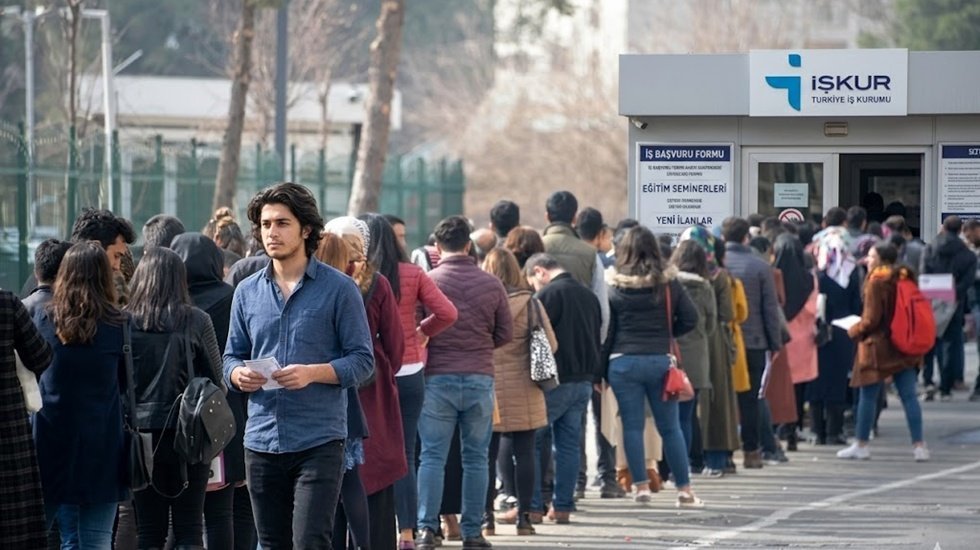
Nearly one in four young people in Turkey were neither in education nor employment in 2025, with the rate rising to 30.9 percent among young women, official data showed on Thursday, pointing to a labor market gap that remains one of the country’s main youth problems, Turkish Minute reported.
The Turkish Statistical Institute (TurkStat) released the figures as part of its “Youth in Statistics, 2025” report, published before May 19, a national holiday in Turkey that is dedicated to youth and sports.
The report defines youth according to the United Nations category of people ages 15 to 24.
Turkey had 12.7 million young people in 2025, accounting for 14.8 percent of the country’s population of 86.1 million, TurkStat data showed.
That share was higher than every European Union member state and above the EU average of 10.7 percent, but below the global average of 15.6 percent.
Turkey’s youth share has fallen from 20.8 percent in 1950 and is projected to decline to 12.2 percent by 2040 and 10.3 percent by 2060 under TurkStat’s main population scenario.
The data underscore a demographic shift in Turkey, where the youth population remains large by European standards but is shrinking as fertility declines and the population ages.
The province with the highest youth share was Şırnak, a southeastern province near the Iraqi and Syrian borders, at 20.4 percent, followed by Hakkari at 20 percent and Siirt at 19.8 percent.
The lowest share was in Balıkesir, a western province on the Marmara and Aegean coasts, at 11.7 percent, followed by Ordu at 11.9 percent and Muğla at 12 percent.
The labor force participation rate among young people rose to 47.6 percent in 2025 from 47.2 percent in 2024, while youth unemployment fell to 15.3 percent from 16.3 percent.
The gender gap remained large.
The labor force participation rate was 60.1 percent for young men and 34.3 percent for young women, while unemployment was 11.7 percent among young men and 22.1 percent among young women.
The share of young people neither in education nor employment rose to 23.3 percent in 2025 from 22.9 percent in 2024.
The rate was 16.3 percent for young men and 30.9 percent for young women.
Employment among young people increased to 40.3 percent in 2025 from 39.5 percent the previous year.
Among employed young people, 57.9 percent worked in services, 30.5 percent in industry and 11.6 percent in agriculture.
TurkStat also reported that the net enrollment rate in higher education was 46.3 percent in the 2024-25 academic year, with the rate at 53 percent for women and 39.9 percent for men.
Education was the leading reason for internal migration among people ages 15 to 24 in 2024, with 448,826 young people moving between provinces for schooling.
A 15-year-old in Turkey was expected to live an additional 64.3 years on average, according to 2022-2024 life tables.
The remaining life expectancy at age 15 was 66.9 years for young women and 61.7 years for young men.
TurkStat said 10.7 percent of young women were married in 2025, compared with 3.1 percent of young men.
In a separate life satisfaction section, 54.4 percent of people ages 18 to 24 described themselves as happy in 2025, slightly above the 53.3 percent rate for the adult population.
Health was the top source of happiness for young people, cited by 38.8 percent, followed by success at 22.8 percent and money at 16.6 percent.
The report also included data on artificial intelligence use, showing that 39.4 percent of internet users ages 16 to 24 used generative artificial intelligence in 2025.