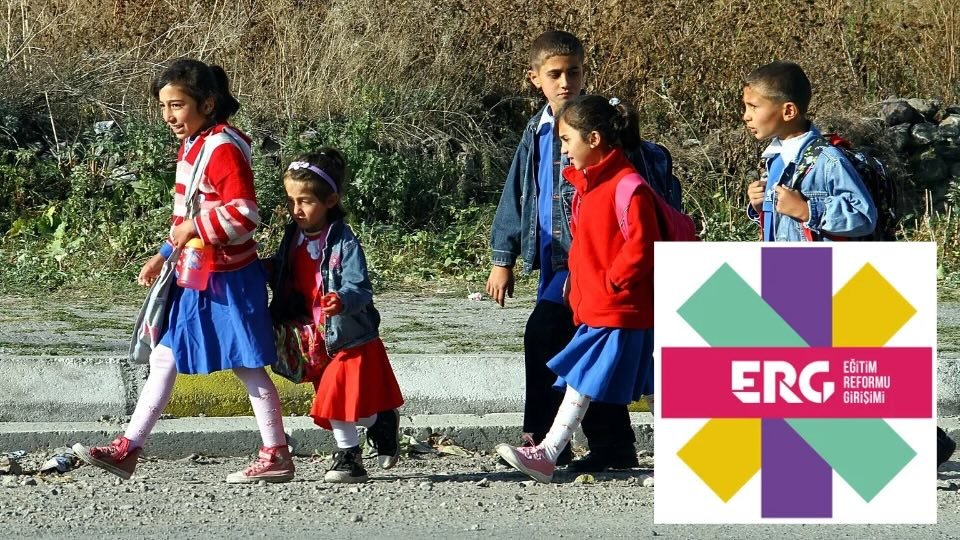
Nearly 580,000 Turkish children of compulsory school age did not attend school in the 2025-26 academic year, with poverty and economic inequality remaining major barriers to education, according to an annual report released by the Education Reform Initiative (ERG), an independent education policy organization.
ERG’s 2026 Education Monitoring Report estimated that 579,903 Turkish citizens aged 6 to 17, or 3.8 percent of children in that age group, were not enrolled in school. About 70 percent of them were aged 14 to 17.
The report found that the number of students aged 18 or younger enrolled in open high schools, which offer distance learning rather than regular classroom instruction, rose by 17.3 percent to 320,897.
In the 2025-26 academic year, 57,357 students were transferred from conventional high schools to open high schools after repeating a grade twice, getting married or being expelled for disciplinary reasons, a 34 percent increase over the previous year.
ERG warned that open high schools and vocational training centers lack the child protection mechanisms available in conventional schools for identifying children at risk of abuse, neglect, child labor and early marriage.
The report also documented wide disparities in household spending on education, with the wealthiest 20 percent of households spending 81 times as much on education as the poorest 20 percent in 2024. The ERG identified household poverty as a barrier to school attendance and a factor pushing children into the labor market.
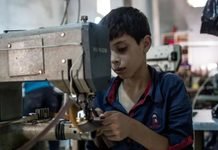
ERG also linked rising enrollment in Turkey’s state-run vocational training program (MESEM) to household poverty and child labor. Enrollment in the program increased by more than 72,000 over the previous academic year, reaching 494,297.
Under the program, students ages 15 to 18 attend school one day a week and work four days at workplaces such as factories, auto repair shops and construction sites. Education Minister Yusuf Tekin said in September that 37 students had died and 9,950 workplace accidents had been recorded in the program since the beginning of 2025. Labor unions and rights groups have long criticized MESEM for exposing children to hazardous working conditions and providing businesses with cheap labor.
One in four children aged 15 to 17 in Turkey was in the labor force in 2025, according to the report, while at least 75 child workers died in work-related incidents in the first 10 months of 2026, according to the figures compiled by the Health and Safety Labor Watch (İSİG).
The report also found that more than 210,000 of the approximately 1 million foreign-national children aged 5 to 17 in Turkey were not enrolled in school.
Regional disparities in girls’ access to education also persisted. Secondary school enrollment rates among girls aged 14 to 17 did not exceed 80 percent in 11 provinces in eastern and southeastern Turkey, with the lowest rates recorded as 60 percent in Şanlıurfa and 64.4 percent in Muş.
ERG is an İstanbul-based, independent nonprofit organization founded in 2003 at Sabancı University. It has published annual education monitoring reports since 2007.