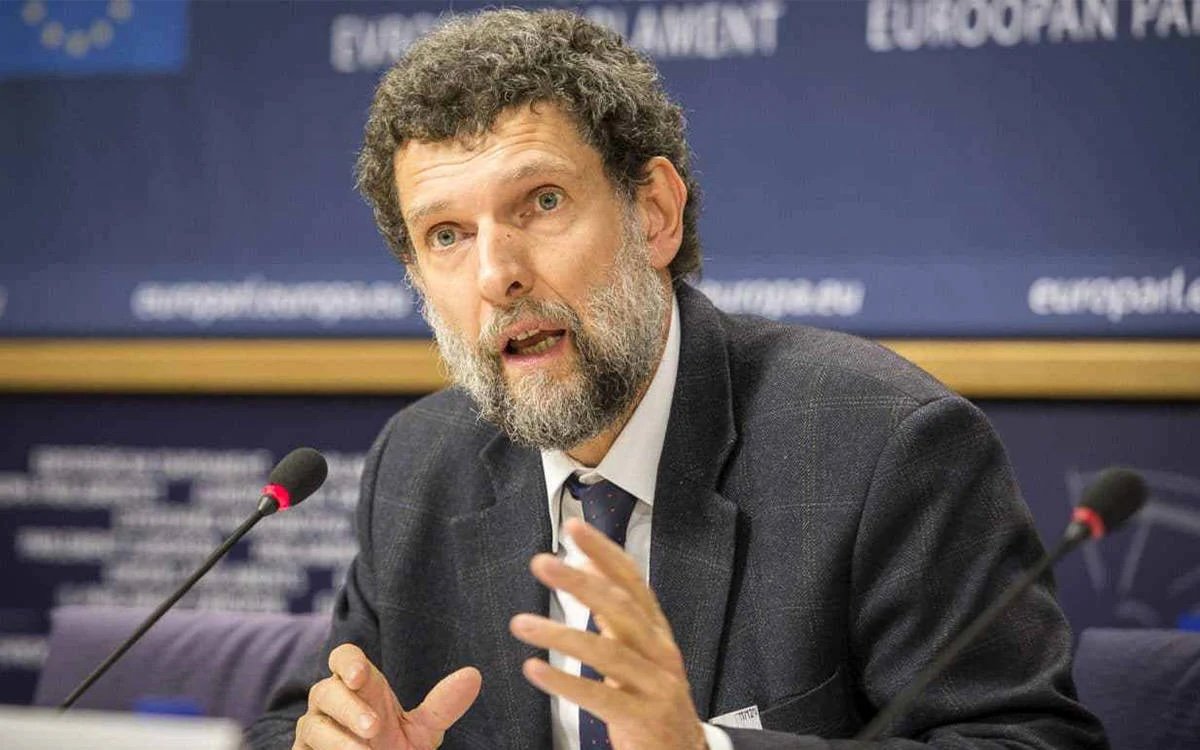
Lawyers for imprisoned Turkish businessman and civil society figure Osman Kavala told the European Court of Human Rights (ECtHR) on Wednesday that Turkey has kept him behind bars on the same evidence the Strasbourg court had already found to be insufficient, urging the court’s Grand Chamber to order his release, Turkish Minute reported.
The hearing concerned Kavala’s second application over his continued detention and conviction after earlier European court rulings in his favor.
Kavala’s legal team said the case centers on new and ongoing rights violations committed after the European court’s 2019 judgment, which found his detention arbitrary and politically motivated, and the court’s 2022 ruling that Turkey had failed to comply with that decision.
Lawyer Ben Emmerson Leach told the court that “nothing of substance changed” after 2019 and that Turkish authorities relied on the same facts and no meaningful new evidence while pressing ahead with fresh charges and, later, an aggravated life sentence.
Turkey’s government asked the court to reject the case, arguing that two applications are still pending before Turkey’s Constitutional Court and that domestic remedies have therefore not been exhausted.
Government representatives also defended Kavala’s conviction, saying the 2013 Gezi Park protests were not ordinary demonstrations but an “insurrectionary movement” aimed at undermining the elected government, and argued that Kavala was convicted as a co-perpetrator who allegedly helped organize and direct events rather than as someone who personally used violence.
Kavala’s lawyers rejected that account, saying his prosecution criminalized lawful civic activity such as discussing the protests, criticizing police force and raising rights concerns with European institutions. They also argued that his trial was unfair, pointing to judges who were disciplined after acquitting him, the appointment of a former ruling party candidate to the bench and the refusal to fully examine or test key evidence.
Council of Europe Commissioner for Human Rights Michael O’Flaherty used his intervention to put the case in a wider context, saying it reflects continued pressure in Turkey on human rights defenders, lawyers, journalists and opposition politicians. He also raised concerns about the broad use of criminal and counterterrorism laws, problems with judicial independence and delays in Turkey’s Constitutional Court, where two of Kavala’s applications remain pending.
The hearing ended without an immediate ruling. The Grand Chamber will issue its judgment at a later date.