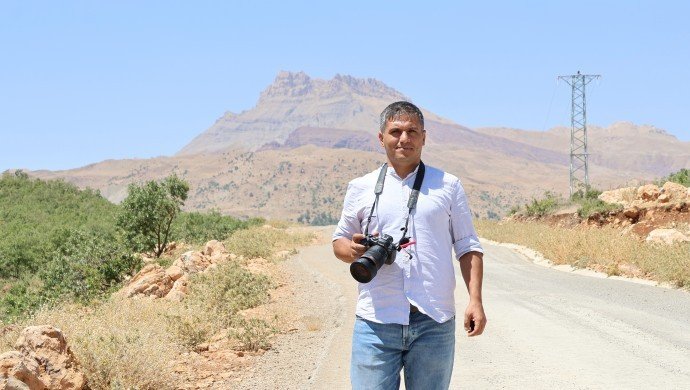
Turkish prosecutors have indicted journalist Nedim Oruç from the pro-Kurdish Ajansa Welat news agency on terrorism-related charges over his reporting and social media posts, the Free Press Monitor reported.
The Şırnak Chief Public Prosecutor’s Office accuses Oruç of multiple offenses, including disseminating terrorist propaganda, concealing his identity during demonstrations, unlawful possession of dangerous materials and obstructing the performance of official duties.
Oruç was arrested on January 19 after being detained while covering demonstrations in the Cizre district of Şırnak province, where residents were protesting attacks on Kurdish neighborhoods in the Syrian city of Aleppo.
Evidence cited in the indictment included footage he recorded while covering the January 14 demonstrations showing armored vehicles; his coverage of a ceremony in Kandil, Iraq, where the outlawed Kurdistan Workers’ Party (PKK) announced its withdrawal from Turkey on October 26, 2025; his reporting on damaged cemeteries of PKK militants and his social media posts. Prosecutors also cited his fingerprints found on a banned magazine during a 2016 raid on the pro-Kurdish Peoples’ Democratic Party’s (HDP) office in Cizre.
The Şırnak 1st High Criminal Court has accepted the indictment, with the first hearing scheduled for April 24.
Turkey frequently brings terrorism-related charges against journalists and media workers, most commonly alleging links to the outlawed PKK, which is designated as a terrorist organization by Turkey and its Western allies.
Press freedom and human rights groups say such cases often rely on reporting activity, sources or published content rather than evidence of involvement in violence and are used to deter critical coverage of the Kurdish issue.
The Kurdish issue, a term prevalent in Turkey’s public discourse, refers to the demand for equal rights by the country’s Kurdish population and their struggle for recognition.
According to Expression Interrupted, a press freedom monitoring group, 27 journalists are currently behind bars in Turkey. The country’s deteriorating media landscape was further pointed out in the 2025 World Press Freedom Index published by Reporters Without Borders (RSF), where it was ranked 159th out of 180 nations.