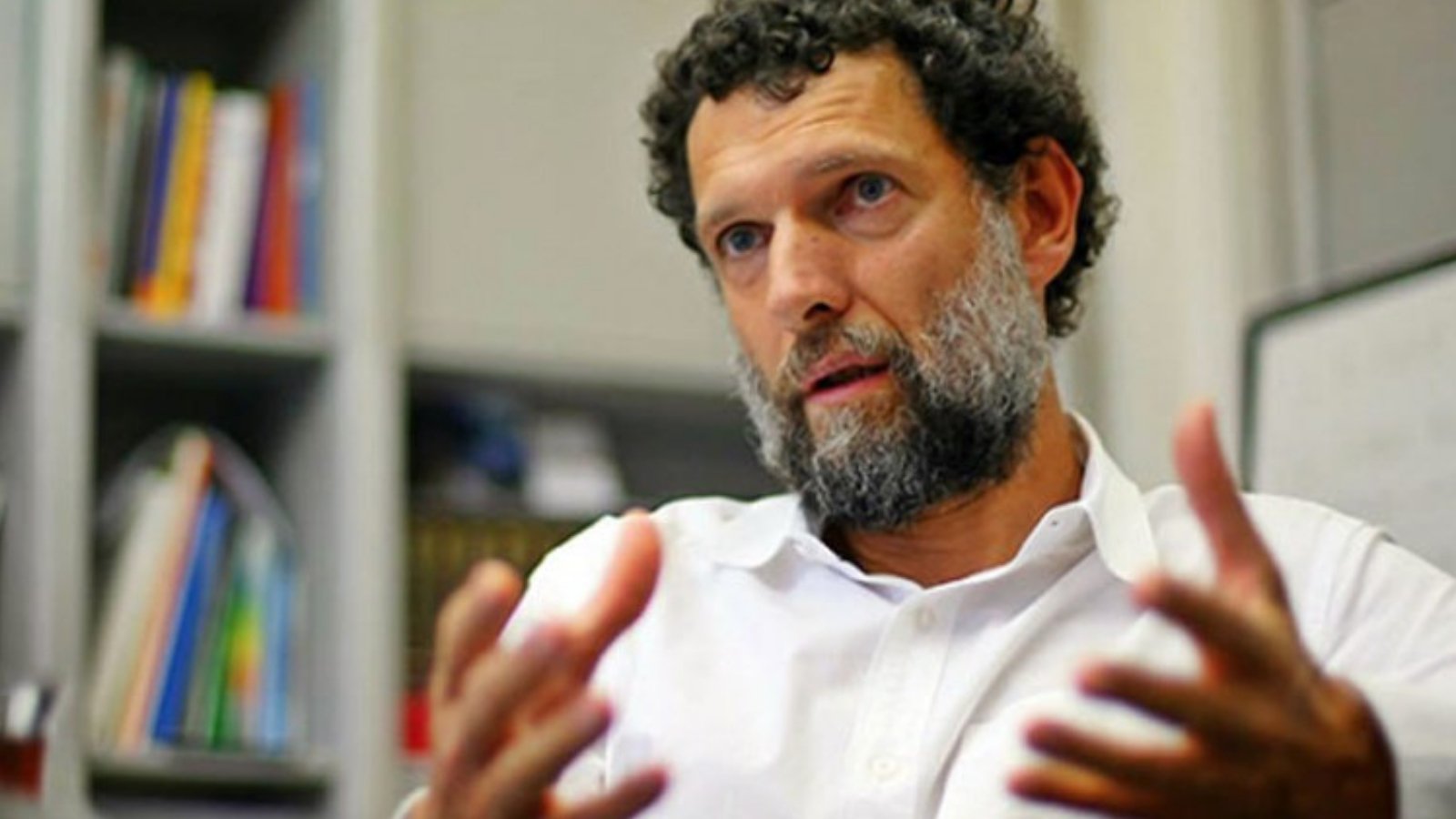
Imprisoned Turkish businessman and civil society figure Osman Kavala said Turkey is constitutionally required to comply with rulings from the European Court of Human Rights (ECtHR) and Turkey’s Constitutional Court after the top European rights court held a new hearing on his long-running case this week, Turkish Minute reported.
In a statement released a day after Wednesday’s hearing before the Grand Chamber of the ECtHR, Kavala said compliance with judgments from both courts was “a constitutional obligation.” He added that the more important issue was respect for the legal principle behind those rulings.
“The right to live freely cannot be restricted without reliable and accurate evidence showing that a crime has been committed,” he said.
The hearing in Strasbourg concerned Kavala’s second application to the European court. The case focuses on his detention after the court’s 2019 judgment and the criminal proceedings that later ended with an aggravated life sentence. The court held the hearing on March 25 but did not issue a ruling that day.
Kavala has been in prison since 2017. In its 2019 judgment the ECtHR found that his detention violated his rights and said Turkey should secure his immediate release. In a 2022 infringement judgment, the court ruled that Turkey had failed to comply with that earlier decision.
Turkish courts later convicted Kavala in connection with the 2013 Gezi Park protests, a wave of anti-government demonstrations that began over a redevelopment plan for a central İstanbul park and grew into nationwide unrest. Turkish authorities accused him of attempting to overthrow the government, while rights groups have long said the case is politically motivated.
Kavala said in his latest statement that the new Strasbourg judgment is expected to address not only his detention but also the conviction itself and the appeals process that upheld it. He described his continued imprisonment as a serious rights violation.
Council of Europe Commissioner for Human Rights Michael O’Flaherty also intervened in the Grand Chamber hearing, telling the court that the case reflects broader pressure in Turkey on civil society, lawyers, journalists and opposition politicians.