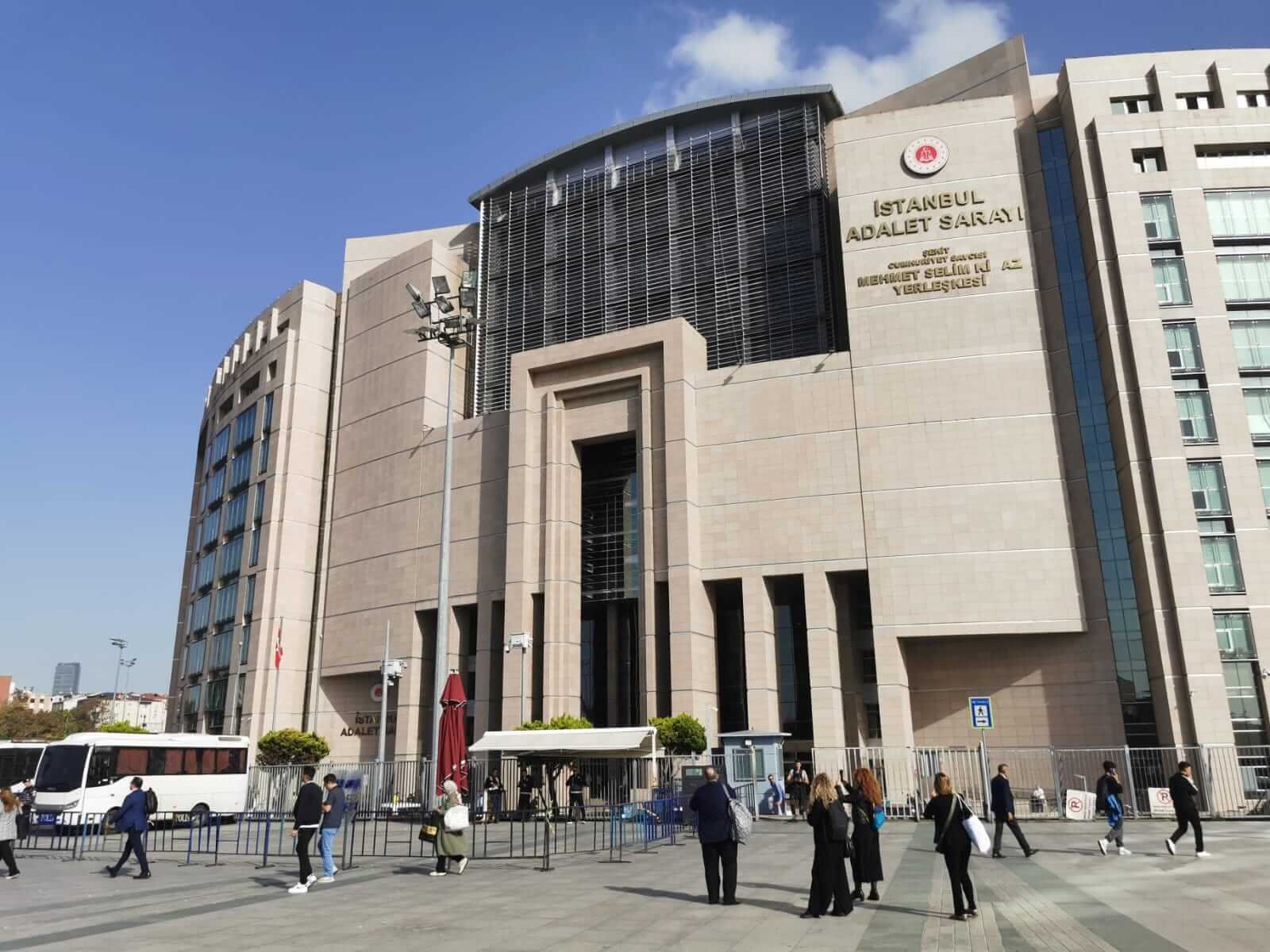
A court in İstanbul jailed nine people pending trial on Wednesday on charges of disseminating propaganda for the outlawed Kurdistan Workers’ Party (PKK) during Nevruz celebrations held in the city on March 22, the latest legal action in a broader crackdown tied to this year’s Kurdish spring festival celebrations, Turkish Minute reported.
Prosecutors had referred 38 detainees to court after police questioned them in the investigation, of whom 29 were released.
The case is part of a larger sweep launched by Turkish authorities over Nevruz events across the country. Turkish police detained 170 people in operations tied to this year’s celebrations, with authorities accusing them mainly of spreading propaganda for the PKK during or around festival gatherings rather than alleging direct militant activity.
Police said 72 people were detained between March 17 and 22 in nine provinces, while another 98 were detained on March 24 in six provinces.
Nevruz, the spring festival marked across the Middle East and Central Asia, carries political meaning in Turkey’s Kurdish-majority southeast and in large western cities with Kurdish populations. In Turkey the annual gatherings often serve both as cultural celebrations and as public displays of Kurdish identity, with crowds sometimes carrying banners or chanting slogans linked to jailed PKK founder Abdullah Öcalan.
The arrests come amid Turkey’s renewed peace initiative with the PKK.
Last month a parliamentary commission approved a roadmap calling for legal reforms to proceed alongside the PKK’s laying down of arms and militants’ reintegration, a move seen as one of the clearest institutional steps in years toward ending a conflict that has killed more than 40,000 people since 1984. The PKK is designated as a terrorist organization by Turkey and its Western allies.
Kurdish political leaders have since pressed the government to match that roadmap with concrete legal measures. During Nevruz events this week, pro-Kurdish Peoples’ Equality and Democracy Party (DEM Party) officials called for a “peace law,” broader steps toward democratization and freedom for Öcalan, arguing that a lasting settlement would require legal guarantees.
However, the latest detentions and arrests show that the government continues to crack down on Kurdish political expression as terrorist propaganda.