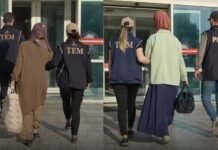
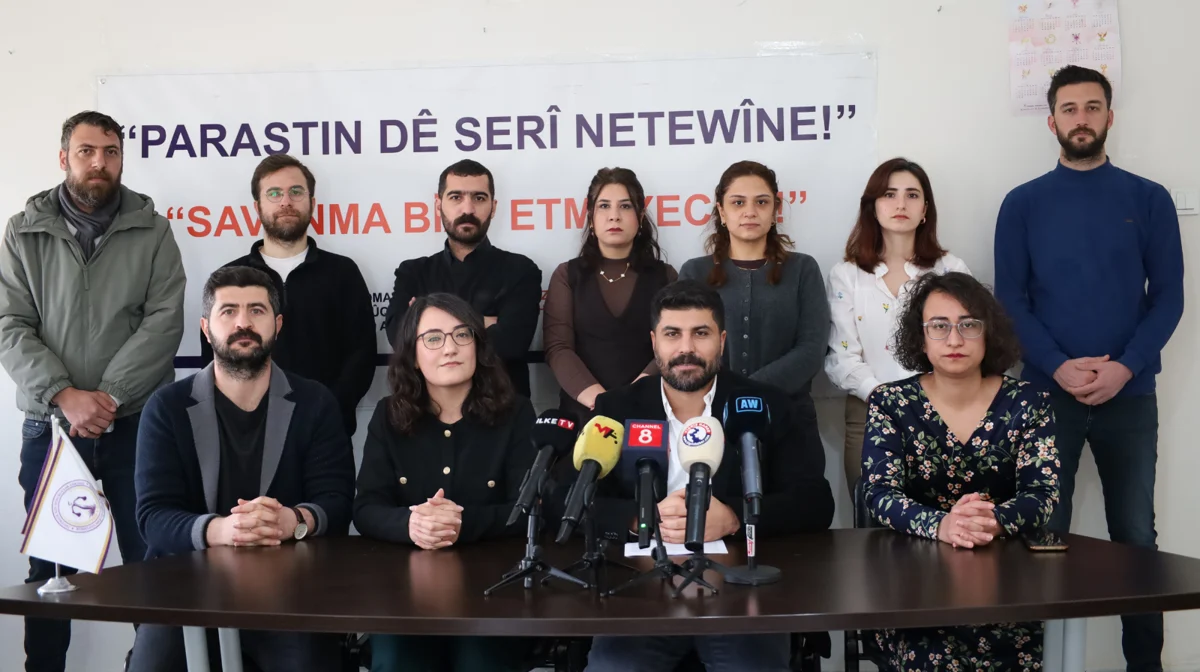
At least 842 people were detained and 118 arrested during demonstrations held across Turkey to protest Damascus’s military campaign against Kurdish-led forces in the Rojava region of northeastern Syria, the Association for the Freedom of Lawyers (ÖHD) said on Monday.
According to the ÖHD report, which documented 49 separate protests across 19 provinces between January 1 and February 2, 133 detainees were released under judicial supervision, while 106 individuals reported being subjected to ill treatment during detention.
At least 99 of those detained and 25 of those arrested were minors, raising serious concerns over violations of the best interests of the child principle and international conventions on the rights of the child, the report says.
Speaking at a press conference, ÖHD executive board member Mehmet Öner said detainees were accused of “disseminating terrorist propaganda,” “participating in an unlawful assembly” or “resisting a public officer.”
Öner said detentions were carried out arbitrarily and without concrete evidence, with custody periods unlawfully extended and pretrial detention increasingly used as a punitive measure. He also noted that lawyers and journalists covering the protests were also detained and that some were physically assaulted.
The ÖHD called for an end to bans on peaceful assemblies, an immediate halt to arbitrary detentions and arrests, and independent investigations into allegations of torture and ill-treatment.
Fifteen Turkish bar associations had previously issued a joint statement on January 26 criticizing police interventions and detentions linked to those protests.
Northeastern Syria is largely controlled by the Kurdish-led Syrian Democratic Forces (SDF), which have been a key US ally in the fight against Islamic State in Iraq and the Levant (ISIL).
Ankara views the Kurdish People’s Protection Units (YPG), which dominate the SDF, as an offshoot of the outlawed Kurdistan Workers’ Party (PKK), which has waged a decades-long insurgency against the Turkish state in 1984 and is designated as a terrorist organization by Turkey and its Western allies.
In May the PKK announced that it would lay down its arms to pursue a democratic struggle to defend the rights of the Kurdish minority, in line with a call by its jailed leader Abdullah Öcalan. The Turkish Parliament in August established a special parliamentary commission to oversee the peace efforts. However, Kurdish civil society groups argue that structural reforms safeguarding fundamental rights have yet to be implemented, raising concerns about the sincerity and scope of any efforts at normalization.