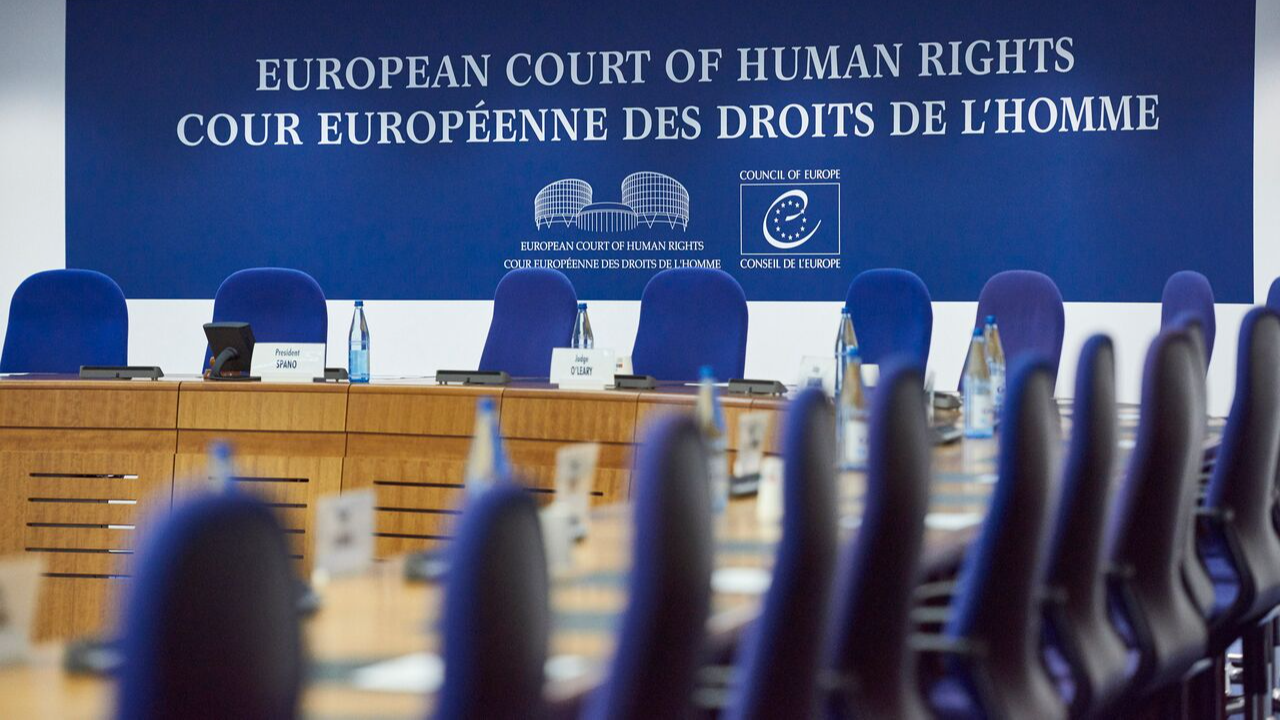
A former human rights commissioner at the Council of Europe said the European Court of Human Rights (ECtHR) had weakened its own credibility by refusing to confront the broad pattern of democratic backsliding in Turkey, Turkish Minute reported.
Nils Muižnieks, who served as commissioner for human rights from 2012 to 2018 and is currently the UN special rapporteur on the human rights situation in Belarus, made the remarks in a video interview released by the Arrested Lawyers Initiative, a group founded by Turkish lawyers living in exile that documents prosecutions and intimidation targeting their colleagues.
Muižnieks argued that the ECtHR focused on individual cases while the government carried out a years-long campaign against civil society, political opponents and the legal profession.
Muižnieks said Turkey remains more open than Belarus, with bar associations and civil society organizations still active, but warned that the “trend in Turkey is quite bad.” He said the government has relied on what he called an “authoritarian toolbox,” including jailing opposition politicians and creating fear among lawyers who take politically sensitive cases.
He said the pressure on lawyers in Turkey resembles developments in Russia, where defending political opponents has become increasingly dangerous. Russia, he said, is further along the same path.
Muižnieks criticized the ECtHR and the Council of Europe’s Committee of Ministers, which oversees the enforcement of the court’s rulings. He said both bodies had failed to act on the deeper structural problems behind Turkey’s rights violations.
He argued that the court’s case-by-case approach allowed Turkey to remain “a member in good standing” even as the government imposed long states of emergency, used terrorism charges against critics and narrowed space for dissent. He said the court “did not want to see the broader pattern” even as violations mounted.
Muižnieks also called for a stronger role from the Council of Europe’s Parliamentary Assembly and said the secretary-general has never used Article 52, a legal tool that allows for a formal inquiry when a member state fails to meet its human rights obligations.
He said these bodies must “ask for much more from Turkey” if the Council of Europe is to restore its credibility in the country.
Turkey has been experiencing a deepening human rights crisis, especially since an abortive putsch in 2016 that President Recep Tayyip Erdoğan’s government blames on the faith-based Gülen movement.
President Erdoğan has been targeting followers of the movement, inspired by the late Muslim cleric Fethullah Gülen, since corruption investigations in December 2013 implicated him as well as some members of his family and inner circle.
Dismissing the investigations as a Gülenist coup and a conspiracy against his government, Erdoğan began to target the movement’s members. He designated the movement as a terrorist organization in May 2016 and intensified the crackdown on it following the abortive putsch in July of the same year that he accused Gülen of masterminding. The movement strongly denies involvement in the coup attempt or any terrorist activity.
In the aftermath, Turkish authorities convicted Gülen supporters of membership in a terrorist organization based on activities that Turkish courts consider indicative of Gülen movement affiliation, including working at a private school affiliated with the faith-based Gülen movement, depositing money in the now-shuttered Bank Asya, witness testimonies and using ByLock, an encrypted messaging application once widely available on Apple’s App Store and Google Play that Turkish authorities claim served as a secret communication tool for Gülen supporters.
Many prosecuted over alleged membership in the movement had to flee Turkey to avoid government’s crackdown.
In recent years Turks living in exile have gathered to protest the CoE and the ECtHR amid growing frustration with these bodies’ failure to hold Turkey accountable for continued defiance of the ECtHR judgments in landmark cases such as those of philanthropist Osman Kavala, Kurdish politician Selahattin Demirtaş and former teacher Yüksel Yalçınkaya.
At the heart of the Yalçınkaya case is the Turkish government’s crackdown on the Gülen movement.
Despite the ECtHR’s 2023 ruling in favor of Yalçınkaya, who was convicted based on evidence linking him to the Gülen movement, a Turkish court reimposed his sentence in 2024. The CoE’s Committee of Ministers has yet to initiate infringement proceedings over the case, prompting criticism from human rights monitors and lawmakers.
Thousands of people have been detained in Turkey since the ECtHR issued the Yalçınkaya judgment on similar allegations such as downloading the ByLock messaging app or having accounts at Bank Asya.