
A forged report submitted by the Turkish Gendarmerie in an investigation into the killing of a Kurdish man in eastern Turkey has brought attention to a series of irregularities in the case, the Mezopotamya News Agency reported.
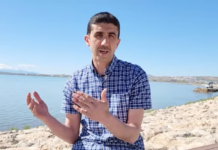
The case concerns the killing of Seyithan Durdu, who was shot on December 28, 2024, in Van’s Saray district when gendarmes opened fire from a military vehicle, according to court documents and media reports.
On February 12, 2025, the provincial gendarmerie command submitted a report to the prosecutor’s office intended to force the victim’s wife to drop a complaint she had filed. The report, which was later sent to the İpekyolu Municipality for verification, was prepared by a gendarmerie anti-smuggling and organized crime unit despite the matter falling outside its jurisdiction. Authorities later determined that the report bore the document number of a closed file in which a decision of non-prosecution had already been issued and that the report was forged.
The forged document has attracted renewed scrutiny to other alleged irregularities in the investigation. These include changes to map of the area where Durdu was killed to designate it as a military zone, the bullets removed from Durdu’s body being swapped with different ones and the deletion of internal communications between the gendarmes involved.
According to the victim’s wife, Nejla Durdu, the report was used to pressure her into withdrawing from the case. She also alleged that her home has been under surveillance since the killing.
Durdu’s wife has said her husband was followed before the shooting and that he was killed outside the gendarmerie’s area of responsibility.
As part of the investigation, the commander of a border outpost was arrested on December 31, 2024, while a lieutenant and a corporal were later granted non-prosecution decisions. The detained commander was released pending trial on January 7, 2025, as the court found there was “insufficient evidence” to justify his continued detention.
A police forensic report found that the cartridge casings recovered from the scene matched the commander’s weapon, while the bullets that killed Durdu did not. Following the forensic report, the family’s lawyer objected to the decisions of non-prosecution issued for the two soldiers.
The trial of the outpost commander on charges of “manslaughter with possible intent” will begin at the Van 1st High Criminal Court on May 21.
The case adds to longstanding concerns over impunity in Turkey, particularly in investigations involving the killing of Kurds by security forces, where human rights groups say flawed probes, non-prosecution decisions and delays in judicial proceedings have repeatedly prevented accountability.