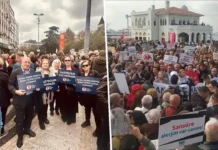
A group of 54 lawmakers, legal experts, academics and human rights advocates has urged Turkey to ensure that any amnesty connected to its renewed Kurdish peace initiative covers everyone they consider a political prisoner, including people accused of links to the faith-based Gülen movement.
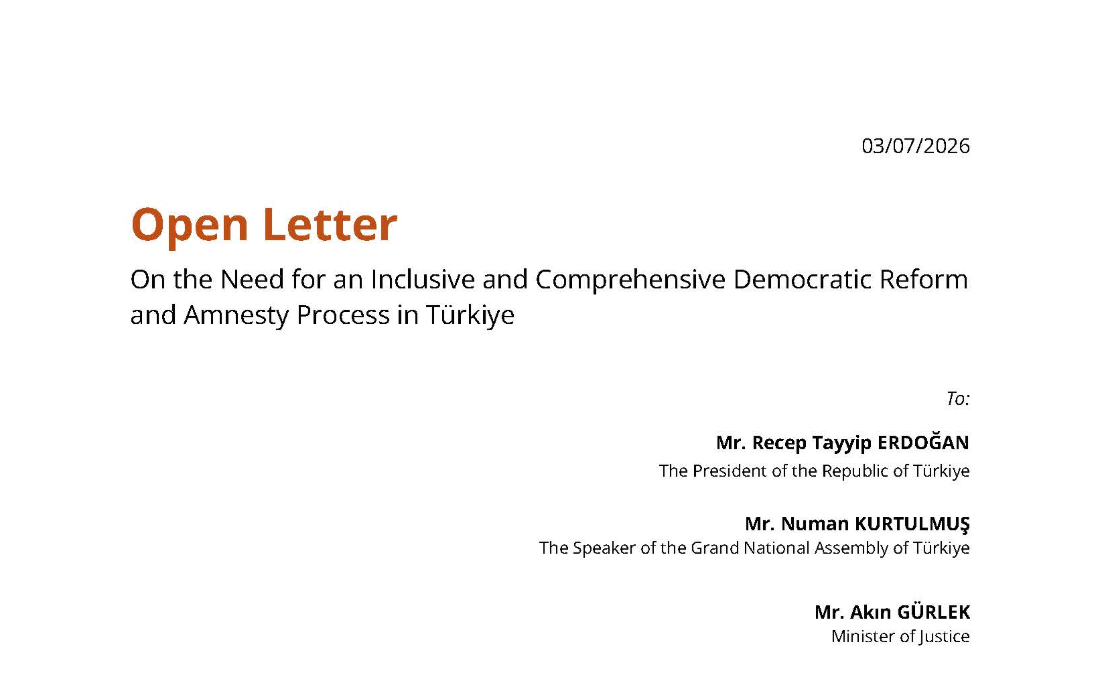
In a July 3 open letter, made available online on July 15, to President Recep Tayyip Erdoğan, Parliament Speaker Numan Kurtulmuş and Justice Minister Akın Gürlek, the signatories warned that measures benefiting only selected groups could deepen divisions and undermine public trust. They called for an end to the use of counterterrorism laws against peaceful dissent, implementation of European human rights court rulings, restoration of judicial independence and a nationwide dialogue involving communities affected by rights violations.
The letter welcomed renewed efforts to resolve Turkey’s longstanding conflict with the Kurdish political movement through dialogue but argued that lasting peace could not be achieved through selective or politically motivated measures.
It said reports in Turkey suggested the government could introduce an amnesty limited to certain groups. The letter did not identify the reports or describe a specific government proposal.
The signatories included 10 members of the European Parliament: Nathalie Loiseau, Brando Benifei, Kathleen Van Brempt, Lucia Yar, Reinier van Lanschot, Anna Strolenberg, Leoluca Orlando, Hanna Gedin, Jonas Sjöstedt and Verena Mertens. Three members of the Parliamentary Assembly of the Council of Europe — Emmanuel Fernandes, Garret Ahearn and James MacClear — also signed the letter.
They also included former Kenyan Chief Justice Willy Mutunga and the London-based civil liberties organization Statewatch.
The appeal said any credible amnesty or normalization process should cover “all political prisoners without exception,” regardless of the groups with which authorities believe they are associated.
The signatories said Kurdish politicians, journalists and activists had been arbitrarily detained and elected mayors replaced by government-appointed trustees. They also said more than 100,000 public employees had been dismissed through emergency decrees without due process and that thousands of associations, foundations and educational institutions had been closed over alleged Gülen movement links.
Turkish President Recep Tayyip Erdoğan has targeted followers of the Gülen movement, inspired by the late Muslim cleric Fethullah Gülen, since corruption investigations in December 2013 implicated him as well as some members of his family and inner circle. He dismissed the probes as a Gülenist conspiracy and designated the movement as a terrorist organization in May 2016, intensifying a sweeping crackdown after a coup attempt in July of the same year that he accused Gülen of orchestrating. The movement denies involvement in the coup attempt or any terrorist activity.
Following the coup attempt, the Turkish government declared a state of emergency (OHAL) that remained in effect until July 19, 2018. During this period, the government carried out a purge of state institutions under the pretext of an anti-coup fight by issuing a number of government decrees, known as KHKs. Over 130,000 public servants, including 4,156 judges and prosecutors, as well as more than 24,000 members of the armed forces were summarily removed from their jobs for alleged membership in or relationships with “terrorist organizations” by emergency decree-laws subject to neither judicial nor parliamentary scrutiny.
The open letter comes as Turkey considers legislation intended to advance a peace initiative with the Kurdistan Workers’ Party (PKK). A parliamentary commission in February approved recommendations for legal reforms alongside the group’s laying down of weapons, including a temporary mechanism to reintegrate members who renounce violence.
The commission’s report, however, explicitly stopped short of proposing a general amnesty. It said legal measures should not create a perception of amnesty or impunity and recommended that cases involving former militants be assessed individually.
The PKK, designated a terrorist organization by Turkey and its Western allies, announced in 2025 that it would disband and end its armed campaign following an appeal from its imprisoned leader, Abdullah Öcalan. The conflict, which began in 1984, has killed tens of thousands of people.
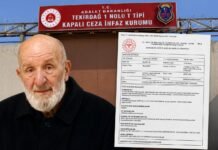
The signatories also urged Turkey to implement European Court of Human Rights (ECtHR) judgments involving imprisoned civil society figure Osman Kavala, former pro-Kurdish political leader Selahattin Demirtaş and former teacher Yüksel Yalçınkaya.
The European court has called for the release of Kavala and Demirtaş. In Yalçınkaya’s case, it found violations of fair-trial and other rights and said Turkey needed to address systemic problems in terrorism convictions involving evidence from the encrypted ByLock messaging application.
Turkish authorities have considered ByLock to be a secret tool of communication among supporters of the Gülen movement since a coup attempt on July 15, 2016, despite a lack of evidence that ByLock messages were related to the abortive putsch.
Although the ECtHR has in many cases made clear that use of the ByLock messaging app does not constitute a criminal offense, detentions and arrests of individuals continue in Turkey for their alleged use of the ByLock application.
The letter called on the European Union, the Council of Europe and national parliaments to support a peace process based on equal treatment, human rights and democratic principles.