
European Parliament Turkey rapporteur Nacho Sánchez Amor pushed back Tuesday against Turkish Foreign Minister Hakan Fidan’s claim that the European Union is blocking Turkey’s membership bid because of “identity politics,” saying the impasse is rooted in Turkey’s democratic backsliding and rule of law problems, Turkish Minute reported.
Speaking at the debriefing of a European Parliament Subcommittee on Human Rights mission to Turkey earlier this month, Sánchez Amor said Fidan’s argument misstates why Turkey’s accession track has stalled. “The problem with Turkey is not religion. The problem with Turkey is democracy,” he said.
Fidan made his remarks in a Sky News Arabia interview published late Sunday and widely reported Monday, saying Turkey cannot join the bloc as long as the EU approaches Ankara through “identity, religion and civilization,” describing it as “identity politics.”
Sánchez Amor said he recognizes that anti-Muslim and anti-Turkey currents exist in European politics but argued they have not been the driver of the EU’s official position on Turkey in recent years. He noted that the EU already has “25 million Muslims,” rejecting the idea that religion is the decisive barrier for membership.
Turkey has been an official candidate for European Union membership since 1999 and began accession negotiations in 2005. The process has been effectively frozen since 2018, with EU institutions repeatedly citing concerns about democratic standards, rule of law and fundamental rights.
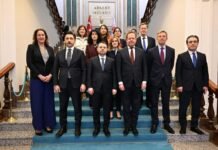
Sánchez Amor delivered his comments after a Subcommittee on Human Rights delegation visited Ankara and İstanbul January 7-9 to discuss human rights and the rule of law with Turkish officials, lawmakers, civil society groups and independent media representatives.
In his remarks, Sánchez Amor said the Turkish government has sought to portray European Parliament criticism as biased, including during meetings with officials and members of the ruling alliance. He singled out what he described as aggressive pushback from representatives of the Nationalist Movement Party (MHP), a key partner of President Recep Tayyip Erdoğan’s Justice and Development Party (AKP) in parliament.
He said discussions repeatedly returned to Turkey’s practice of removing elected mayors and replacing them with state appointed officials, a policy Turkish authorities defend as necessary to combat terrorism. Sánchez Amor said the justification offered to the delegation lacked “legal certainty” and amounted to political decision-making, including when authorities refuse to appoint a replacement from the same party that won the election.
Sánchez Amor also criticized what he called a lack of political will in Ankara to advance reforms tied to EU membership, arguing that reform packages and policy documents do not translate into changes on the ground. He pointed to Turkey’s repeated “judiciary reform” packages and said the state of the judiciary has not improved.
He described Turkey’s human rights picture as “as dark as it has been for the last years,” citing pressure on the main opposition Republican People’s Party (CHP), nongovernmental organizations, journalists and lawyers. He said the trend has deepened and is increasingly framed by authorities as counterterrorism policy.
Sánchez Amor also faulted the European Commission and the European External Action Service for what he called silence on democratic deterioration in Turkey, saying it damages the EU’s credibility with pro-democracy constituencies in the country. He said the European Parliament has remained vocal while the executive institutions focus on issues such as energy.
His comments come as EU institutions continue to frame Turkey’s accession path as blocked by democratic shortcomings, even as both sides pursue selective cooperation on migration, trade and security. In its most recent annual position, the European Parliament said Turkey’s accession process “must remain frozen,” pointing to unresolved democratic deficits.