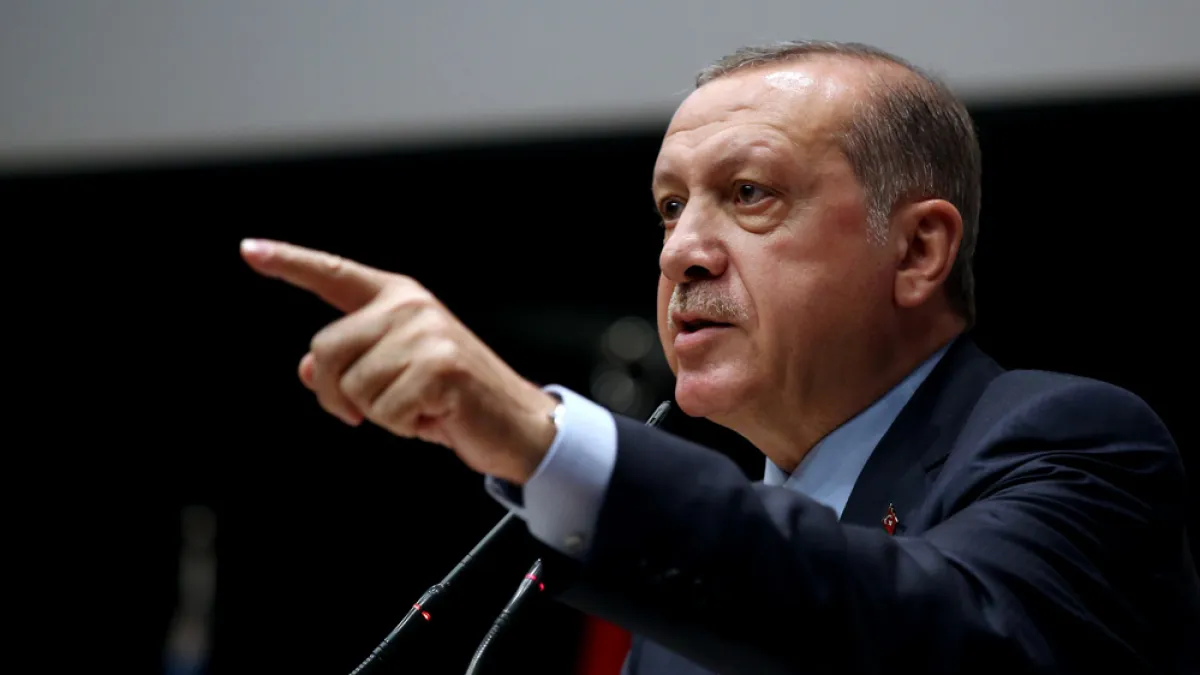
Turkish President Recep Tayyip Erdoğan has criticized a manifesto titled “We Defend Secularism Together,” signed by 168 writers, artists, academics, journalists and professional association representatives, saying he would not allow it to polarize the public during Ramadan, Turkish Minute reported.
The manifesto was published on Tuesday, on the occasion of the 100th anniversary of Turkey’s adoption of its civil code, and was opened for public signature online.
It says Turkey is under a “reactionary, pro-sharia siege” and claims that the country faces pressure to be “Talibanized,” blaming what it calls US-led plans and naming US President Donald Trump and Israel. It accuses the government of steps that weaken secular education, the secular legal order and secular public life and says defenders of the secular republic are being treated as criminals.
Erdoğan responded on Wednesday during a meeting in Ankara with governors from Turkey’s 81 provinces, saying there is no “secularism problem” in Turkey and accusing the manifesto’s backers of trying to sow division during Ramadan.
The dispute involves a long-running divide over religion and the state in Turkey. The republic was founded in 1923, and secularism became a constitutional principle in 1926, while the civil code modeled on European states’ laws helped shift family and personal status rules from religious to civil law.
Turkey’s version of secularism differs from the US model of the separation of church and state. The Turkish state regulates much of Sunni religious life through the Directorate of Religious Affairs, a state institution that oversees mosques and issues religious guidance, a structure critics say allows governments to shape public religion.
Erdoğan’s Justice and Development Party (AKP), in power since 2002, has often argued that earlier state policies restricted religious conservatives, while critics say AKP-era policy expanded the role of religion in schools and public institutions. The manifesto reflects that broader dispute, using language that casts current policy as a rollback of the secular foundations of the republic.
The initial list of signatories included economist Korkut Boratav, historian Taner Timur, former lawmaker İlhan Cihaner, novelist Ayşe Kulin, actor Müjde Ar and journalist Timur Soykan.
The online signature campaign drew thousands of signatures after it went live.