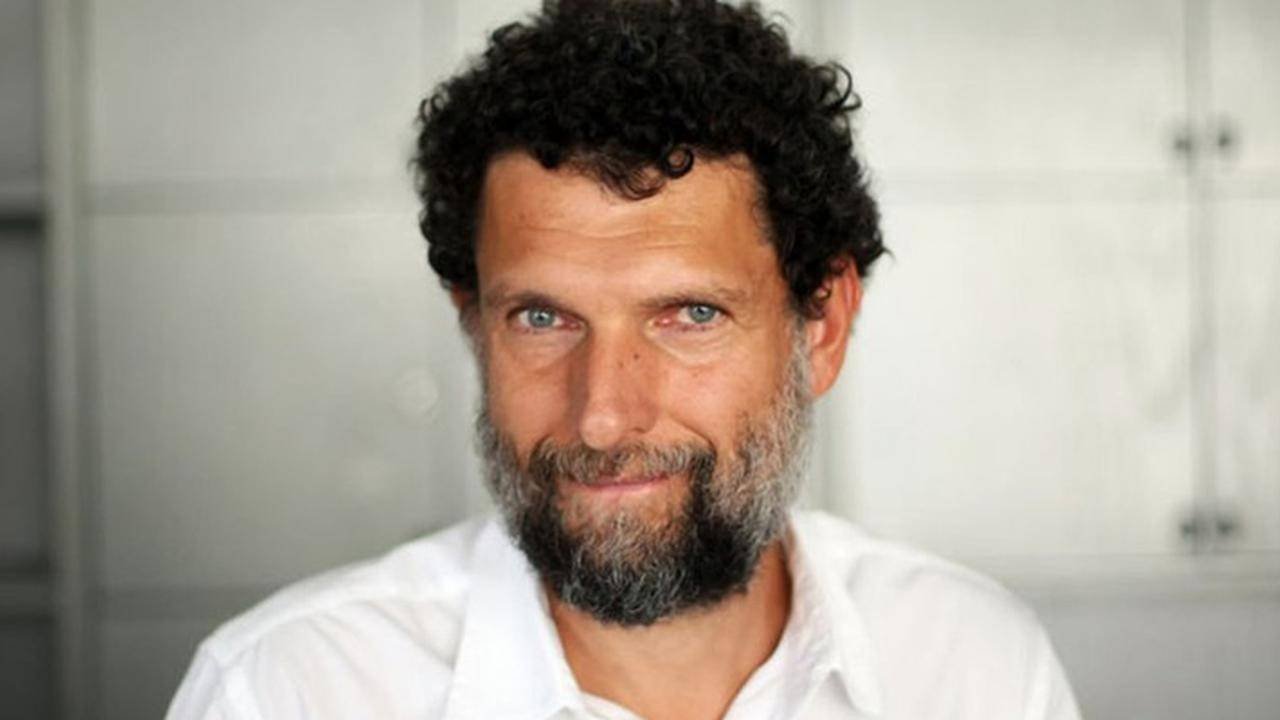
The European Court of Human Rights (ECtHR) has set a six-week deadline for third-party interventions ahead of a hearing scheduled for March in the case of jailed Turkish businessman and rights defender Osman Kavala, Turkish Minute reported.
The chamber handling the case decided on December 16 to refer it to the Grand Chamber, the ECtHR’s highest body, which will examine the new case concerning the continued detention of Kavala following a 2019 ruling that ordered his immediate release.
The case concerns Kavala’s detention after the ECtHR’s landmark ruling on December 10, 2019, which found that Turkey had violated his rights and was obliged to end his detention immediately. It also covers the criminal proceedings that later resulted in Kavala being sentenced to aggravated life imprisonment.
The 68-year-old was arrested in November 2017 on charges of attempting to overthrow the constitutional order due to his alleged role in the anti-government Gezi Park protests of 2013.
Although the ECtHR ruled in 2019 that his detention lacked reasonable grounds and ordered his release, Turkish courts have refused to comply.
According to a press release from the court on Tuesday, the hearing in Kavala v. Turkey (No. 2) will take place on March 25, 2026. The court invited the parties to submit written observations by January 26, 2026.
In a departure from the standard 12-week period, the court shortened the deadline for third-party intervention requests to six weeks, setting January 29, 2026, as the final date for applications to participate in the case. The decision was taken due to scheduling constraints ahead of the hearing, the court said.
Any state party to the European Convention on Human Rights (ECHR) or other interested individuals or organizations seeking to intervene as third parties must apply for authorization by that date. If permission is granted, written submissions must be filed by February 12, 2026.
Kavala was sentenced to life in prison in 2022 for allegedly attempting to overthrow the government of then-prime minister and current president Recep Tayyip Erdoğan.
His conviction, seen by some as politically motivated, was upheld by the Supreme Court of Appeals in September 2023. The Justice Ministry rejected a request for retrial in July 2024.
The Gezi Park protests, which began over an urban development plan in central İstanbul in the summer of 2013 and spread to other cities in Turkey, posed a serious challenge to Erdoğan’s rule. They were violently suppressed by the government of Erdoğan, who later labelled the protests as a “coup attempt” against him.
In February 2022 the Council of Europe’s Committee of Ministers referred the matter back to the court, triggering infringement proceedings to determine whether Turkey had failed to comply with the 2019 judgment.
In July 2022 the ECtHR ruled that Turkey had indeed violated its obligation to comply with the original judgment.
The new application before the Grand Chamber focuses on Kavala’s continued deprivation of liberty after the 2019 ruling and the domestic criminal process that led to his life sentence.
In its 2019 judgment the court ruled that Kavala’s pretrial detention violated his right to liberty and security under Article 5 of the ECHR as well as Article 18, which prohibits restrictions on rights for purposes other than those prescribed by the convention.
The court held that his detention pursued an ulterior political motive — that of silencing him as a human rights defender — and ordered Turkey to secure his immediate release under Article 46, which governs the binding force of ECtHR judgments.
Kavala argues that his detention since that date constitutes arbitrary deprivation of liberty and that legal challenges before Turkey’s Constitutional Court failed to meet the standards required under the ECHR.
He also claims that his continued detention served purposes other than those permitted under the convention, in violation of Article 18.
Kavala has always denied the charges against him, insisting that he had done nothing wrong and that the charges against him were politically motivated.
The Grand Chamber’s decision on Kavala will be final and binding.