
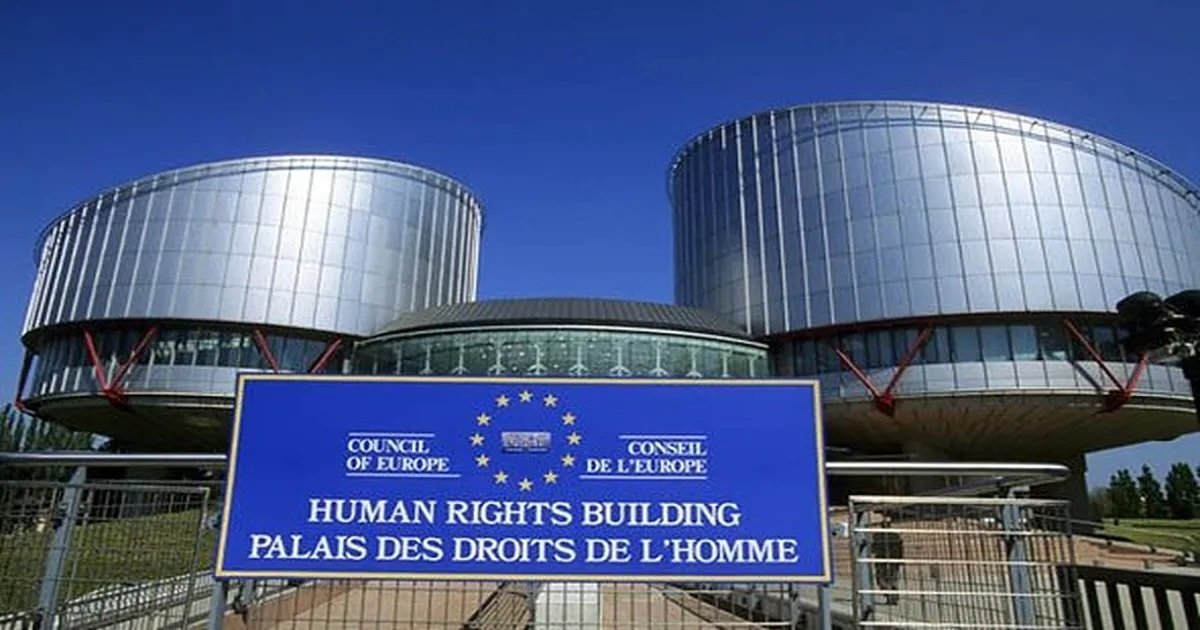
The European Court of Human Rights (ECtHR) has issued 114 judgments finding violations affecting 8,056 people in cases arising from Turkey’s crackdown after a failed coup in 2016, according to a new report by the Justice Square Foundation.
The judgments involved the right to liberty, fair-trial guarantees and freedoms of expression and association, among other protections.
The Strasbourg-based court awarded applicants a combined 20,672,440 euros in compensation, according to the report, which covers rulings issued through July 2026.
The number of applicants is far higher than the number of judgments because the court frequently combines large numbers of similar cases into a single ruling. Justice Square counted each applicant affected by the combined cases when calculating the total.
The report said the judgments documented widespread legal problems in detentions, prosecutions and trials conducted after the coup attempt. It argued that Turkish courts, including the Constitutional Court, had failed to provide effective remedies for many of those alleging violations and had increasingly operated under political influence.
Those conclusions are Justice Square’s assessment of the domestic judicial system, rather than a finding made by the European court across all 114 judgments.
The foundation said it published summaries of the rulings to assist lawyers, researchers and people seeking legal remedies for alleged abuse. The compilation includes cases involving detention without sufficient evidence, terrorism convictions, restrictions on expression and association and other alleged rights violations.
One of the most consequential rulings was the court’s 2023 Grand Chamber judgment in the case of Yüksel Yalçınkaya, a former teacher convicted of membership in an armed terrorist organization over his alleged links to the faith-based Gülen movement.
Turkish courts based Yalçınkaya’s conviction largely on his alleged use of ByLock messaging application, an encrypted messaging app that was available on Apple’s App Store and Google Play.
Turkish authorities have considered ByLock to be a secret tool of communication among supporters of the Gülen movement since the coup attempt on July 15, 2016, despite a lack of evidence that ByLock messages were related to the abortive putsch.
Turkish President Recep Tayyip Erdoğan has targeted followers of the Gülen movement, inspired by the late Muslim cleric Fethullah Gülen, since corruption investigations in December 2013 implicated him as well as some members of his family and inner circle. He dismissed the probes as a Gülenist conspiracy and designated the movement as a terrorist organization in May 2016, intensifying a sweeping crackdown after the coup attempt in July of the same year that he accused Gülen of orchestrating. The movement denies involvement in the coup attempt or any terrorist activity
The European court found violations of Yalçınkaya’s right to a fair trial, freedom of association and the principle of no punishment without law. It said the Turkish judiciary’s treatment of ByLock evidence reflected a systemic problem and called on Turkey to take broader measures to address similar cases. About 8,500 related applications were pending before the court when the judgment was issued in September 2023.
The court applied similar reasoning in later cases involving thousands of applicants. In July 2025 it found violations in a combined case involving 239 people, saying Turkish courts had treated ByLock use categorically and had failed to protect the defendants against arbitrary prosecution and punishment.
Three further judgments in December 2025 involved 2,420 applicants convicted largely on allegations that they used ByLock. The court said the application had effectively been treated as conclusive proof of all elements of membership in an armed terrorist organization, limiting the defendants’ ability to challenge the evidence against them.
Turkish authorities have rejected the European court’s criticism of the country’s handling of such cases. Justice Minister Yılmaz Tunç said after the Yalçınkaya judgment that the court had exceeded its authority by reassessing evidence examined by Turkish courts.
The government says the measures taken after the coup attempt were necessary to dismantle a clandestine organization that had infiltrated the military, judiciary and other state institutions.
The ECtHR is part of the Council of Europe, a human rights organization that is separate from the European Union. Its final judgments are legally binding on Turkey, and their implementation is supervised by the Council of Europe’s Committee of Ministers.