
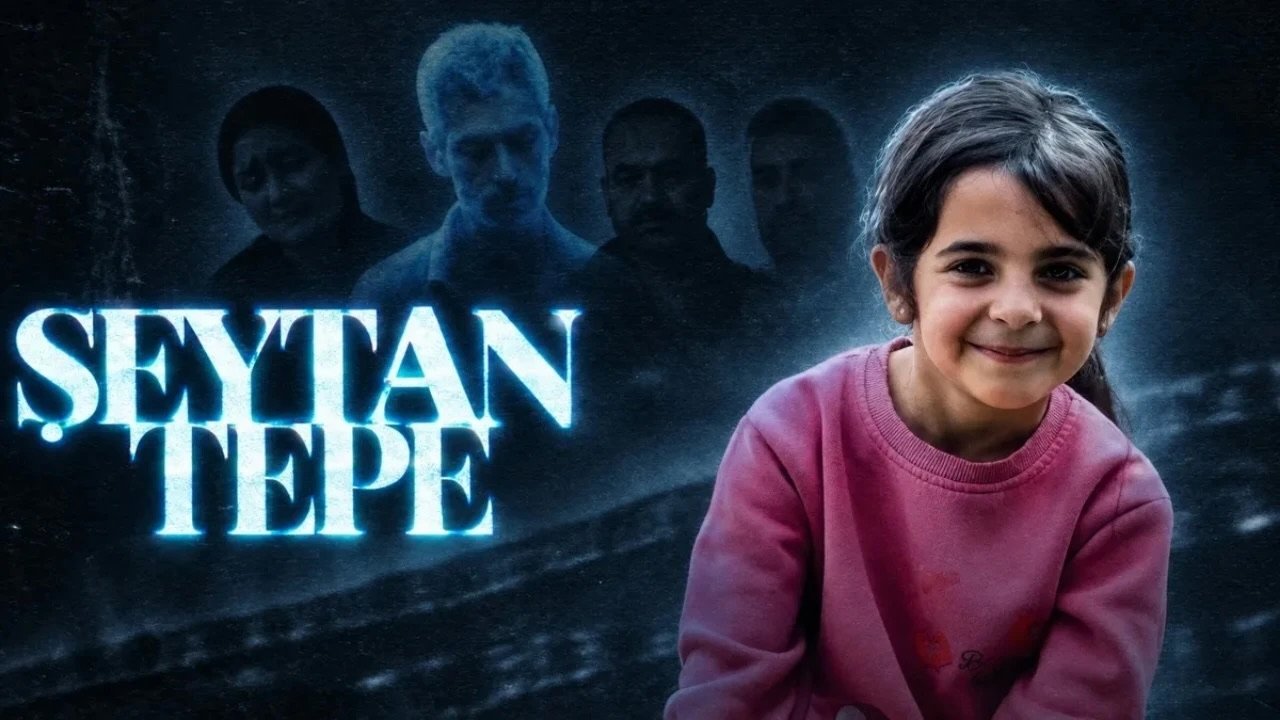
A documentary questioning the investigation and trial surrounding the murder of 8-year-old Narin Güran has been blocked in Turkey on grounds of national security and public order.
“Şeytantepe,” produced by independent digital media outlet 140journos, was also removed from YouTube after attracting 2.9 million views, the Freedom of Expression Association’s EngelliWeb censorship-monitoring project said.
Narin disappeared from the rural Tavşantepe neighborhood in the southeastern province of Diyarbakır on August 21, 2024. Her body was found 19 days later in a sack in a stream about a kilometer from her home. A forensic report concluded that she had been strangled on the day she disappeared.
Her mother, Yüksel Güran, older brother Enes Güran and uncle Salim Güran were sentenced to aggravated life imprisonment in December 2024 for jointly murdering her. Turkey’s top appeals court upheld their convictions a year later.
Neighbor Nevzat Bahtiyar admitted putting Narin’s body in the stream. His initial four-and-a-half year sentence for concealing evidence was overturned on appeal. He was sentenced to 17 years in April following a retrial for assisting in an aggravated intentional killing.
Despite the convictions no motive has been definitively established. Disputes over cell tower data, surveillance footage, changing testimony and the handling of evidence have continued to fuel public debate and calls for the case to be reopened.
Released on April 11, “Şeytantepe” examined those disputes and claimed that a harsh media campaign had portrayed the Güran family as guilty before the trial even began.
It also presented the views of relatives, lawyers and others who question the evidence and believe the convicted family members are innocent.
The documentary’s page on the 140journos website had already been ordered removed and blocked by the Diyarbakır 1st Criminal Court of Peace on August 27.
EngelliWeb also said the X account of Tuncay Beşikçi, an expert whose views were featured in the documentary, had been blocked on the same grounds and made inaccessible in Turkey.
Ömer Faruk Gergerlioğlu, a lawmaker from the pro-Kurdish Peoples’ Equality and Democracy Party (DEM Party), accused the Justice Ministry of trying to conceal the truth.
“Banning this documentary is an attempt to bury justice alongside Narin,” he said.
Gergerlioğlu also shared a statement from the Justice for Narin and Her Family Platform, which described the block as censorship.
The group said removing the documentary would not resolve questions surrounding Narin’s disappearance, the surveillance footage, conflicting evidence or the scientific methods used in the investigation.
“Trust in the Narin Güran case can be ensured not by silencing questions but by providing open, scientific and verifiable answers,” the platform said.
The block followed a criminal investigation launched by the Diyarbakır Chief Public Prosecutor’s Office on August 26 at the request of the provincial gendarmerie and its criminal investigation unit, according to the state-run Anadolu news agency.
Authorities alleged that the documentary sought to discredit the investigation and prosecution and targeted the final court ruling, gendarmerie personnel and judicial officials involved in the case.
Prosecutors subsequently asked Turkey’s Financial Crimes Investigation Board (MASAK) to examine the financial transactions of 31 people linked to the documentary’s filming, production and financing as part of an investigation into the alleged public dissemination of misleading information.
Online censorship is widespread in Turkey. İFÖD’s 2025 EngelliWeb report found that more than 1.5 million websites and domain names had been blocked by the end of that year.
The group said Article 8/A of Turkey’s internet law, which permits restrictions on national security and public order grounds, was increasingly being used against public-interest reporting, journalists, civil society groups and opposition accounts, often through decisions containing little detailed justification.
This article is republished from Turkish Minute.