The daughter of a Turkish military officer jailed over alleged links to a 2016 coup attempt was denied recognition as her school’s top student and later abandoned plans to attend Oxford University because her family believed no institution in Turkey would fund the daughter of a convicted “coup plotter,” her mother said at a rights event in Ankara.
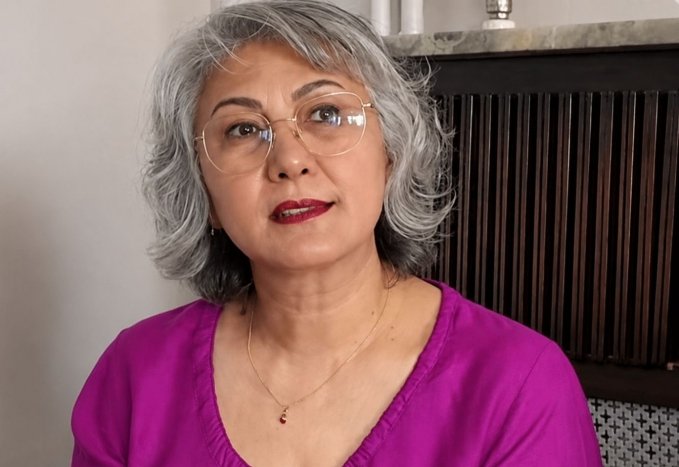
According to the TR724 news website, speaking on Sunday at a Mother’s Day program organized by the Vicdan Foundation, a Turkish civil society group focused on human rights, literature teacher Mısra Gül Özkan said her daughter faced years of discrimination linked to her father’s imprisonment on coup-related charges.
According to Özkan, school administrators initially resisted recognizing her daughter as the top middle-school graduate despite her academic ranking.
“They tried to announce another student as the top graduate,” Özkan said. “I objected strongly, and only then did they acknowledge my daughter.”
Özkan said the discrimination continued throughout her daughter’s education despite her academic success.
Özkan stated that administrators at a prestigious high school in Ankara, where her daughter studied on a scholarship, routinely publicized other students’ achievements while ignoring her daughter’s accomplishments despite her consistently high grades.
“Other students were being featured publicly even for small achievements,” Özkan said. “But they never shared my daughter’s successes.”
Her daughter was later admitted to Oxford University after applying to study nanotechnology-related engineering, according to her mother.
Özkan said the family did not seek scholarship support in Turkey because they believed her husband’s imprisonment would make any application futile.
“There was no institution in Turkey that would provide a scholarship to the daughter of a ‘coup plotter,’” Özkan said.
The daughter later enrolled at Eindhoven University of Technology in the Netherlands after receiving partial scholarship support. Before leaving Turkey, she requested a final prison meeting alone with her father.
More than a year later, after repeatedly wondering why her daughter refused to return to Turkey even for visits despite being able to travel freely, Özkan said her husband revealed what the young woman had told him during that final meeting.
“She told her father, ‘I will not return to this country until you are released from prison,’” Özkan said.
Much of Özkan’s account focused on the emotional impact her husband’s imprisonment had on their daughter, who was 12 years old when her father was detained following the failed coup in 2016.
According to Özkan, the child struggled with the separation and often slept holding her father’s clothes because they still carried his scent.
“One day I saw her crying in front of her father’s wardrobe,” Özkan said. “She told me, ‘There are no clothes left that smell like my father anymore.’”
Özkan also described the strain the imprisonment imposed on the family. She said she and her daughter regularly traveled from the capital of Ankara to the southeastern province of Diyarbakır for prison visits.
At the time of the coup attempt, Şamil Türk Özkan was serving as chief of staff of the Diyarbakır Regional Gendarmerie Command.
Özkan said her husband helped prevent unrest in Diyarbakır on the night of the coup attempt but was later sentenced to life in prison on coup-related charges. According to her account, an appeals court initially overturned the conviction before Turkey’s Supreme Court of Appeals reinstated the life sentence. He is currently imprisoned in Sincan Prison in Ankara after being transferred from Diyarbakır.
Özkan was speaking during the Vicdan Foundation’s annual “Another Mother’s Day” event, which focused on the experiences of women and children affected by imprisonment, political persecution and social stigma in Turkey.
Turkey experienced a controversial military coup attempt on the night of July 15, 2016, which, according to many, was a false flag operation aimed at entrenching the authoritarian rule of President Recep Tayyip Erdoğan by rooting out dissidents and eliminating powerful actors such as the military in his desire for absolute power.
The abortive putsch killed 251 people and wounded more than a thousand others. The next morning, after announcing that the coup had been suppressed, the Turkish government immediately started a wide-ranging purge of military officers, judges, police officers, teachers and other government officials that ultimately led to the dismissal of more than 130,000 public servants, including 150 of the Turkish Armed Forces’ 326 generals and admirals, more than 24,000 members of the armed forces and 4,156 judges and prosecutors were summarily removed from their jobs for alleged ties to “terrorist organizations” by emergency decree-laws. One hundred sixty-four media organizations, 1,058 educational institutions and close to 2,000 NGOs were shut down without any due process.
Many of those affected by the crackdown have been accused of links to the faith-based Gülen movement.
Erdoğan has targeted followers of the Gülen movement, inspired by the late Muslim cleric Fethullah Gülen, since corruption investigations in December 2013 implicated him as well as some members of his family and inner circle. He dismissed the probes as a Gülenist conspiracy and later designated the movement a terrorist organization in May 2016, intensifying a sweeping crackdown after a coup attempt in July of the same year that he accused Gülen of orchestrating. The movement denies involvement in the coup attempt or any terrorist activity.