The recent release of former Turkish family minister Fatma Betül Sayan Kaya on grounds of health has sparked widespread outrage in Turkey, with relatives of prisoners who died in custody, opposition figures and even pro-government commentators accusing the authorities of applying double standards in the administration of justice.
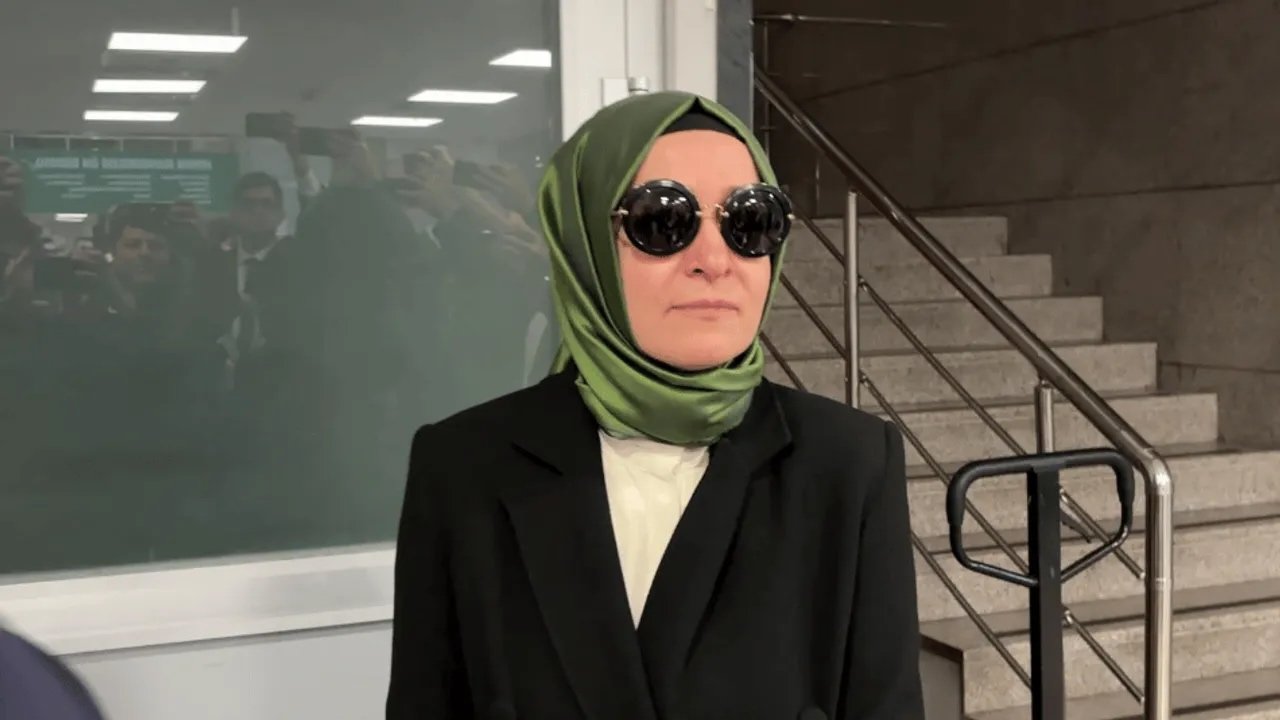
Kaya, a former deputy chair of President Recep Tayyip Erdoğan’s ruling Justice and Development Party (AKP), was released to house arrest on Tuesday after 19 days in pretrial detention as part of an investigation into Turkey’s multibillion-dollar investment fund scandal.
The ruling followed an appeal by her lawyer on health grounds. Kaya had been hospitalized after fainting in prison on November 18 and returned to prison following treatment.
Sueda Güngör, whose father, İbrahim Güngör, died in prison in September 2025 despite repeated appeals for his release on medical grounds, expressed her anger on X.
“If house arrest could be imposed on health grounds, why was my father released in a coffin?” she wrote.
Güngör, a 73-year-old Alzheimer’s patient serving a prison sentence of more than eight years over alleged links to the faith-based Gülen movement, had been deemed fit to remain incarcerated by Turkey’s Council of Forensic Medicine (ATK).
His daughter, who was herself arrested over alleged Gülen links in June 2025 after campaigning for his release, was denied permission to attend his funeral.
The Turkish government designates the Gülen movement as a terrorist organization and accuses it of orchestrating a failed coup in July 2016. The movement, which describes itself as a civil society initiative focused on education, charity and interfaith dialogue, denies involvement in the coup attempt or any terrorist activity.
Esra Tırpan Yakut, whose 73-year-old father, Abdullah Tırpan, died in October while serving a seven-and-a-half-year sentence on terrorism charges over alleged Gülen links, also condemned the decision.
“My father was deliberately killed in the prison where he had been incarcerated simply for supporting students’ education and doing charitable work. Shame on this injustice, shame on this system,” she wrote.
Tırpan died in an İstanbul hospital on October 26, four days after his left leg was partially amputated due to advanced gangrene. Medical authorities had repeatedly found him fit to remain in prison.
Independent lawmaker Mustafa Yeneroğlu, a former AKP MP who had warned that Tırpan’s condition was life-threatening, said medical release should be a right afforded to everyone, regardless of their identity.
“Yet there are so many people whose release is persistently denied despite their extremely serious condition and who are left to die,” he wrote, citing Tırpan’s death.
Cemre Birand, a writer and the widow of prominent Turkish journalist Mehmet Ali Birand, shared a post about Mustafa Özcan Çay, a former staff colonel convicted on coup-related charges who suffers from advanced multiple sclerosis (MS) and cannot meet his basic needs without assistance.
“But his name isn’t Fatma,” Birand wrote, sarcastically referencing the preferential treatment afforded to the former minister.
Turkey’s Constitutional Court denied Çay release on medical grounds in December 2020.
Erinç Sağkan, head of the Union of Turkish Bar Associations (TBB), contrasted Kaya’s release with the continued imprisonment of city planner Tayfun Kahraman, who suffers from MS and remains behind bars despite two Constitutional Court rulings finding violations of his rights.
Sağkan said practices that disregard the constitution and create the perception that justice varies from person to person undermine trust in the judiciary, describing the situation as “not the rule of law but the law of the powerful.”
Kahraman was sentenced to 18 years in prison in April 2022 over his alleged role in the 2013 Gezi Park anti-government protests.
Outrage extends to pro-government circles
The decision also drew criticism from conservative and pro-government figures, with Yusuf Kaplan, a columnist for the pro-government Yeni Şafak daily, warning of serious repercussions.
“The price of this could be very high! May God have mercy on this nation!” Kaplan wrote in a tweet.
Pro-government writer and columnist Abdurrahman Dilipak called for the release of other suspects in the fund scandal, arguing that Kaya’s release should set a precedent and alleging that more influential figures had yet to be targeted by investigators.
Pollster Mehmet Ali Kulat recounted a conversation outside a mosque on Wednesday in which a longtime supporter of Erdoğan and the AKP expressed disapproval of Kaya’s release.
“Sometimes the harshest criticism comes from the most loyal. Conscience is greater than party affiliation or belonging,” Kulat wrote on X.
Kaya, who resigned from the AKP leadership in September, was jailed on November 6 on suspicion of violating securities laws and belonging to a criminal organization.
Prosecutors allege that Kaya had access to nonpublic information when she sold shares in Turkish shipbuilder Özata Denizcilik a day before regulators ordered the liquidation of 131 investment funds, affecting nearly half a million individual investors.
Kaya and her husband allegedly received some 2.17 billion lira ($42.8 million) from share sales following an initial investment of approximately 163 million lira ($3.1 million).
Kaya denies receiving inside information.
Turkish authorities have long faced criticism from human rights groups over their treatment of seriously ill prisoners, dozens of whom die in custody or shortly after delayed medical release each year.
This article is republished from Turkish Minute.