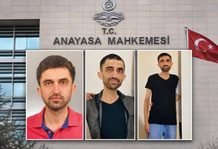

Turkish police on Tuesday detained 20 people across three provinces over alleged links to the faith-based Gülen movement, acting on information supplied by a secret witness as part of an investigation into Justice Ministry recruitment, the state-run TRT Haber news website reported.
The Ankara Chief Public Prosecutor’s Office said the raids were carried out simultaneously in three provinces, including Ankara, based on information from a secret witness code-named “Albatros.” Authorities did not identify the detainees, disclose their occupations or provide details of the allegations against them.
Prosecutors did not disclose when Albatros had supplied the information that led to Tuesday’s detentions or whether it was corroborated by other evidence.
Turkish President Recep Tayyip Erdoğan has targeted the faith-based Gülen movement, inspired by Muslim cleric Fethullah Gülen, who died in 2024, since corruption investigations in December 2013 implicated Erdoğan as well as some members of his family and inner circle. He dismissed the probes as a Gülenist conspiracy and designated the movement as a terrorist organization in May 2016, intensifying a sweeping crackdown after a coup attempt in July of the same year that he accused Gülen of orchestrating. The movement denies involvement in the attempted coup or any terrorist activity.
Information supplied by Albatros was cited as early as 2018 in an indictment against seven prison officers in Zonguldak province. The witness provided prosecutors with a list of some 6,000 public employees categorized according to their alleged links to the movement. The information was subsequently used in criminal investigations and dismissals from public service.
In one case the State of Emergency Measures Inquiry Commission denied a dismissed police employee’s request for reinstatement in 2018, citing information supplied by Albatros, despite prosecutors having declined to press charges against him due to insufficient evidence.
The commission was established in January 2017 to review dismissals, institutional closures and other measures imposed under the state of emergency declared following the attempted coup. It completed its work in January 2023, having rejected 109,332 of the 127,292 applications it received, nearly 86 percent of the total.
Since the coup attempt in 2016 Turkish authorities have conducted sweeping operations targeting real and perceived members of the Gülen movement, often relying on tenuous evidence or secret witness statements. The use of information supplied by secret witnesses in criminal and administrative proceedings has come under scrutiny from both domestic and international courts.
In a 2020 judgment, the European Court of Human Rights (ECtHR) ruled that a conviction based on decisive testimony from a secret witness whom the defense had not been given an opportunity to question violated the right to a fair trial.
In December 2025 UN experts raised concerns about the use of secret witnesses and restrictions on defense lawyers’ access to case files in investigations targeting alleged Gülen movement followers, saying many arrests lacked evidence linking individual suspects to actual criminal or terrorist activity.
In a ruling published in June 2026, Turkey’s Constitutional Court found that the dismissal of a police officer over alleged Gülen links violated his right to respect for private life because the authorities and lower courts had failed to adequately assess the reliability of digital files supplied by a secret witness code-named “Garson.” In testimony cited by the court, Garson said the files contained information on some 4,700 people.
The authenticity of signatures attributed to Garson has also been called into question. Human rights lawyer Gökhan Güneş released documents in 2023 showing significant discrepancies between signatures attributed to the witness on two statements taken nine days apart in April 2017.
In a 2017 trial in Denizli province a secret witness code-named “Aslan” who had accused defendants of collecting money for the Gülen movement said he did not recognize any of the 145 defendants when the judge read out their names.
According to figures released by Justice Minister Akın Gürlek in July 2026, more than 127,000 people have been convicted of alleged links to the movement since 2016, with 10,485 still in prison and legal proceedings ongoing against 83,404 individuals.