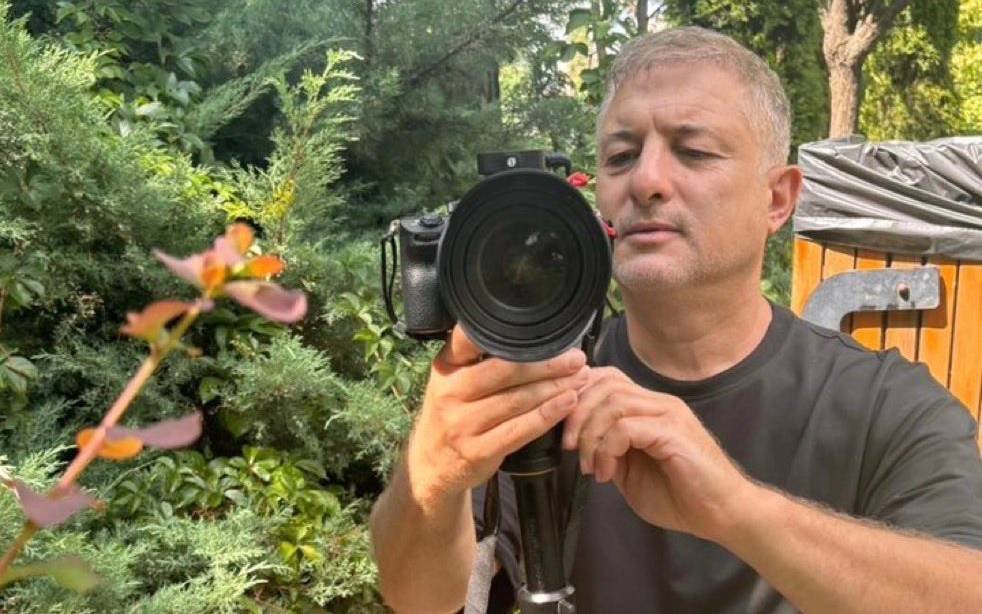
A Turkish court on Thursday ordered two journalists and an accountant jailed pending trial over allegations of financing the faith-based Gülen movement, which Ankara designates as a terrorist organization, the TR724 news website reported.
The court in the southern province of Osmaniye ordered Ahmet Erkan Yiğitsözlü, editor of KHK TV, an independent YouTube-based news outlet covering public employees dismissed under emergency government decrees; journalist Tuba Demir; and accountant Servet Topuz jailed after investigators accused them of collecting and distributing funds on behalf of the movement, according to the independent Serbestiyet news website. The investigation examined journalism revenue, financial assistance to dismissed public employees and their families, food purchases and earthquake relief payments. Dismissed workers’ rights advocate Münir Korkmaz and another person were released under judicial supervision.
Turkish President Recep Tayyip Erdoğan has targeted the faith-based Gülen movement, inspired by Muslim cleric Fethullah Gülen, who died in 2024, since corruption investigations in December 2013 implicated him as well as some members of his family and inner circle. He dismissed the probes as a Gülenist conspiracy and designated the movement as a terrorist organization in May 2016, intensifying a sweeping crackdown after a coup attempt in July of the same year that he accused Gülen of orchestrating. The movement denies involvement in the attempted coup or any terrorist activity.
In a statement issued Wednesday, the Osmaniye Chief Public Prosecutor’s Office said the detentions were based on reports from Turkey’s Financial Crimes Investigation Board (MASAK), financial analyses and digital materials seized during earlier investigations.
According to Serbestiyet, police alleged that Yiğitsözlü and others had engaged in activities involving the collection, provision and use of funds on behalf of the movement. Yiğitsözlü denied the allegations, saying the financial transactions under investigation were part of daily life.
The prosecution’s central allegation was that funds were being provided to imprisoned or convicted Gülen movement followers and their families to maintain their ties to the movement, according to independent lawmaker Mustafa Yeneroğlu, who said he had examined police interrogation records and the court’s detention decision.
Police questioned Yiğitsözlü on November 11 about bank transfers to people dismissed from public service under emergency decrees or whose relatives had faced criminal investigations, including payments described as purchases of sausage, cured meat, tomato paste and preserved grape leaves ?????.
Yiğitsözlü said the transactions involved ordinary food purchases. He was also questioned about payments made in February 2023 with descriptions referring to earthquake victims, which he said were humanitarian donations distributed to people affected by the devastating earthquakes that struck southern Turkey that month.
Investigators also examined the journalist’s income from online publishing, including more than 893,000 lira ($17,700) in YouTube advertising revenue processed through Google Ireland between 2023 and 2026, according to Yeneroğlu.
In an article published by Serbestiyet on Friday, Yeneroğlu said investigators had characterized some payments as transfers from unidentified foreign sources, although Yiğitsözlü explained that they were advertising earnings from his journalism.
Other transactions questioned included payments from Meta and Patreon, YouTube membership subscriptions and income from reporting and video production, including work for Euronews, according to Yeneroğlu.
Police also questioned messages exchanged between Yiğitsözlü and Demir about funding for a media project. Yiğitsözlü said the messages concerned a grant application submitted to the European Endowment for Democracy, an organization supporting democracy and civil society initiatives, and payments owed to people working on the project, including Demir, who served as a reporter.
Yeneroğlu said investigators had also examined support provided through Sivil Düşün, a European Union-backed program supporting civil society activities in Turkey.
The lawmaker questioned why payments associated with journalism projects, ordinary purchases and financial assistance to people affected by criminal prosecutions were being treated as potentially suspicious.
He argued that providing financial assistance to prisoners’ families could not automatically be considered financing a terrorist organization without evidence establishing a criminal purpose.
Under Turkey’s law on the prevention of terrorism financing, providing or collecting funds for terrorist purposes is punishable by five to 10 years in prison when the required knowledge or intent is established, even if the money is not linked to a specific terrorist attack.
Yeneroğlu also criticized the court’s detention decision, saying it cited MASAK reports, bank transactions and general legal grounds for detention without adequately explaining what evidence justified the imprisonment of each individual.
He said the decision failed to explain why less restrictive measures, such as judicial supervision, would have been insufficient.
The lawmaker identified a discrepancy in the detention documents, saying the alleged offense date was listed as July 15, 2016, the date of the coup attempt, although the financial transactions examined during questioning dated from 2019 onward. He questioned how authorities connected the transactions to the alleged offense.
Yeneroğlu also said investigators had relied on digital materials seized during an earlier investigation in 2022. Yiğitsözlü and his lawyer argued that some of the financial transactions and other evidence had already been examined in previous proceedings.
It remains unclear whether the latest investigation concerns separate alleged acts or overlaps with the earlier prosecution.
Yiğitsözlü’s lawyer, Günal Kurşun, questioned the need to detain his client, saying the investigation had been open since 2024 and that authorities could have summoned him for questioning. Kurşun also said he had not been given an explanation for a 24-hour restriction on his client’s access to legal counsel.
Yiğitsözlü was detained in Ankara on Monday, while Korkmaz was taken into custody in Adana. Both were transferred to Osmaniye for questioning.
KHK TV was founded by public employees dismissed under emergency government decrees following the failed coup in July 2016, many over alleged links to the Gülen movement. The outlet documents their experiences and campaigns for their rights.
Yiğitsözlü was himself dismissed from the state-run Anadolu news agency over alleged Gülen links. In October 2024 an Osmaniye court sentenced him to more than six years in prison for membership in an armed terrorist organization. He denied wrongdoing and appealed the conviction to the Supreme Court of Appeals.
The earlier case had also involved allegations of violating Turkey’s terrorism financing law, although the relationship between those allegations and the latest investigation has not been established.
Yiğitsözlü has faced repeated police detentions. In January 2025 he was briefly detained over a social media post criticizing President Erdoğan’s ruling Justice and Development Party (AKP), marking what he said was his 14th detention.
KHK TV has also faced restrictions on its online broadcasts. In March Turkish authorities again blocked its YouTube channel despite an earlier Constitutional Court ruling that a previous blocking measure violated freedom of expression.