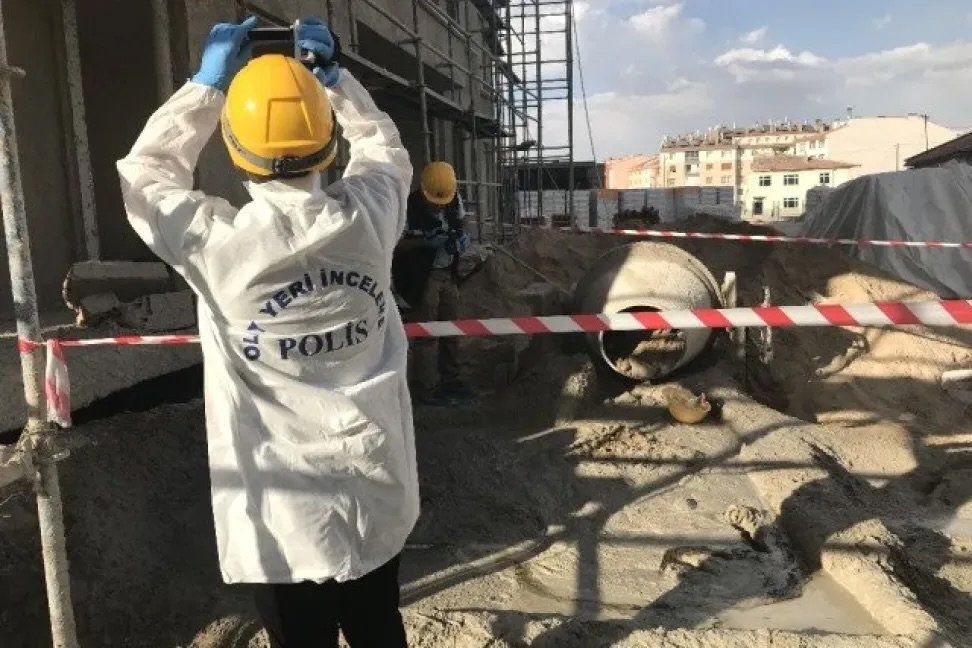
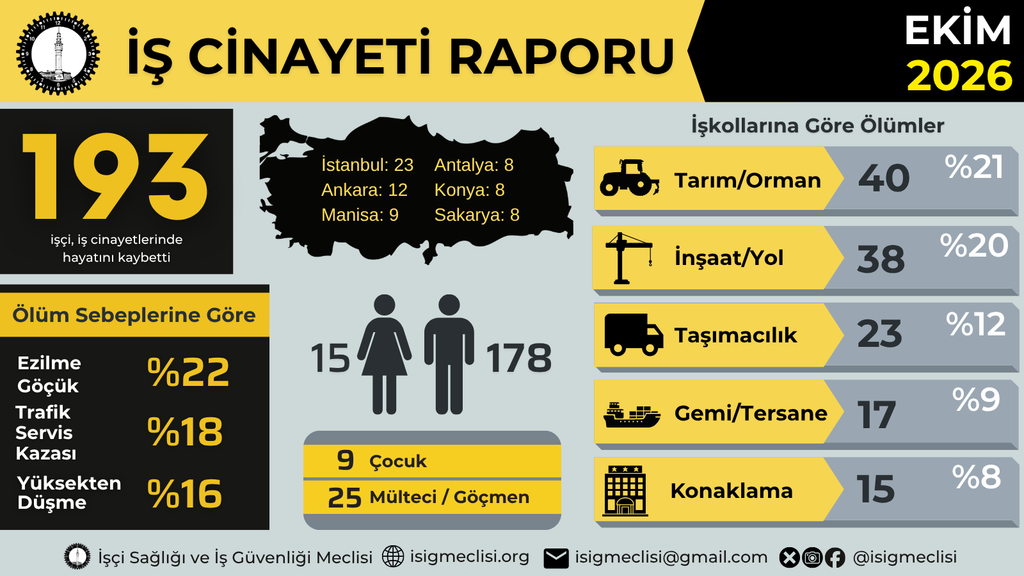
At least 193 workers died in work-related incidents in Turkey in October, bringing the death toll for the first 10 months of 2026 to 1,930, according to a monthly report by the Health and Safety Labor Watch (İSİG), an independent workplace safety watchdog.
The dead included nine minors, 15 women and 25 migrant workers.
Four of the nine minors were 14 or younger, while five were 15 to 17. Four worked in agriculture, three in construction, one in the metal industry and one in hospitality. İSİG said child labor in construction was sometimes concealed by claims that the children who died at worksites had been visiting their fathers or playing there.
The migrant workers who died included 17 Syrians, three Turkmens, two Afghans and two Azerbaijanis.
Agriculture and forestry accounted for the highest number of deaths, with 40, followed by construction and roadwork with 38, transportation with 23 and maritime and port-related work with 17. Another 15 workers died in hospitality and entertainment, while mining and the metal industry each recorded 12 deaths.
Crushing incidents and collapses were the leading cause of death, killing 43 workers, followed by traffic and shuttle-bus accidents with 35 deaths and falls from heights with 30.
The report also addressed a November 9 explosion at the HABAŞ steel plant in İzmir that killed at least 18 workers, an incident not included in the October figures. İSİG blamed the plant’s owner and relevant government ministries responsible for workplace safety, citing longstanding 12-hour shifts, two other recent worker deaths at the plant and alleging that production continued after the explosion.
The group called for the plant’s owner to be prosecuted and for ministers responsible for workplace safety, particularly the labor minister, to resign. It also criticized police for detaining labor activists outside Aliağa State Hospital after the explosion.
İSİG also recorded the death of 13 crew members in Black Sea attacks involving Russia and Ukraine aboard vessels operated by Turkey-based companies.
Only 11 of the 193 workers who died in October, or 6 percent, were union members, while 182, or 94 percent, were not.
İstanbul recorded the most deaths with 23, followed by Ankara with 12, Manisa with nine and Antalya, Konya and Sakarya with eight each. The report also documented worker deaths in seven countries outside Turkey, including 10 in Bulgaria, among people temporarily working abroad or employed by Turkey-based companies.
İSİG compiles its figures from national and local media reports and information provided by workers, their families, labor unions, workplace doctors and occupational safety experts.
The group documented 2,105 work-related deaths in 2025, the highest annual total in at least a decade. They also recorded at least 852 deaths among child workers over the past 13 years.
The International Trade Union Confederation (ITUC) ranked Turkey among the 10 worst countries in the world for workers in its 2026 Global Rights Index, citing efforts to undermine unions, restrictions on strikes and the targeting of trade union leaders.