
Academics at Turkish universities say fears of disciplinary investigations, dismissal and obstacles to promotion have led them to censor their teaching, research and social media posts, according to two studies, the Kısa Dalga news website reported.
The studies, conducted in 2024 and 2026, examined academic freedom at six universities in Ankara and the southern province of Mersin, documenting concerns about political pressure, job security, restrictions on classroom discussions and interference in scientific research.
The larger study, conducted in 2024 by Rozerin Yaşa, now an assistant professor of educational sciences at Süleyman Demirel University, as part of her doctoral research at Ankara University, surveyed 534 academics at Ankara University, Gazi University, Hacettepe University and Middle East Technical University (METU) and included in-depth interviews with 19 faculty members.
“We all practice self-censorship. We are definitely not free,” one academic said. “We censor ourselves in the classes we teach and in our publications. I can’t say I feel free or independent. I have to think three times before speaking, and sometimes I can’t speak at all.”
Participants described concerns that criticizing government policies or expressing politically sensitive opinions could expose them to investigations, dismissal or difficulties obtaining academic positions and promotions.
One academic said expressing criticism on political matters carried a significant risk of being labeled or facing disciplinary proceedings.
The research also documented concerns about interference in scientific work, particularly studies that might challenge government policies or powerful interests.
“We have problems conducting and publishing research, particularly studies that could have political consequences or upset certain people,” an academic said.
Some participants alleged that academic appointments and promotions were used to punish faculty members perceived as politically critical. One described academic positions as a tool of pressure, saying qualified academics had been denied promotions for years.
An academic at METU also complained about insufficient research funding, alleging that projects proposed by faculty members critical of the government were sometimes denied financial support.
Participants raised similar concerns about social media, describing fears of surveillance, harassment and professional consequences for expressing their opinions online.
One academic said they had avoided problems over social media posts because they already censored themselves. Another who reported having approximately 15,000 followers on X said concerns about attacks by online trolls discouraged them from fully expressing their views, even on professional matters.
A separate study by Kanarya Gaye Öner, accepted by Bahçeşehir University in April 2026, documented similar concerns. Her research involved interviews with five academics and five university administrators at two universities, one public and one privately run, in the southern province of Mersin.
The participants described avoiding controversial subjects, restricting their social media activity and modifying classroom discussions because of concerns about complaints, public criticism or administrative sanctions.
“I censor myself,” one academic said, adding that they avoided even clicking the “like” button on social media posts.
Another participant described the perceived consequences of expressing controversial views: “Either you remain silent or accept the punishment.”
The study also documented accounts of administrative investigations, teaching responsibilities being withdrawn and other professional restrictions following public controversies over academics’ statements or social media activity.
Some participants said they avoided discussing certain subjects in class because of concerns that students might complain or that their remarks could be taken out of context. One described LGBTQ issues as a major taboo, while another said statements made during lectures could be distorted and circulated in ways that exposed instructors to criticism.
The 2026 research also identified financial insecurity as a factor limiting academic expression, with one participant saying economic circumstances prevented academics from speaking freely.
Both studies raised concerns about university governance and the extent to which academics could participate in decisions affecting their institutions.
Participants in the 2024 research criticized the presidential appointment of university rectors, arguing that political control over university leadership weakened institutional independence and contributed to pressure on faculty members.
Turkey abolished university elections for rectors in 2016, replacing them with presidential appointments. Legislation adopted in July 2025 reaffirmed President Recep Tayyip Erdoğan’s authority to appoint rectors at public and private foundation universities following a Constitutional Court ruling that had invalidated provisions of the previous appointment system.
The European University Association criticized the legislation, saying it excluded public university communities from selecting their leaders and represented political interference in institutional autonomy.
The findings come amid broader concerns about academic freedom in Turkey.
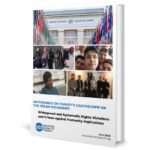
A September 2026 report by Scholars at Risk, an international network that promotes academic freedom and supports threatened scholars, documented political interference in university governance, prosecutions of academics and restrictions on student protests.
Turkey scored 0.09 on a scale of zero to one in the 2025 Academic Freedom Index cited in the report, putting it among the bottom 10 percent of countries worldwide.
More than 7,000 academics and other university personnel were dismissed during the sweeping crackdown that followed a coup attempt in July 2016, which also saw the prosecution of academics for criticizing government policies.
Participants in the two studies called for stronger legal protections for academic freedom, transparent and merit-based appointments, democratic participation in university governance and adequate funding for independent research.