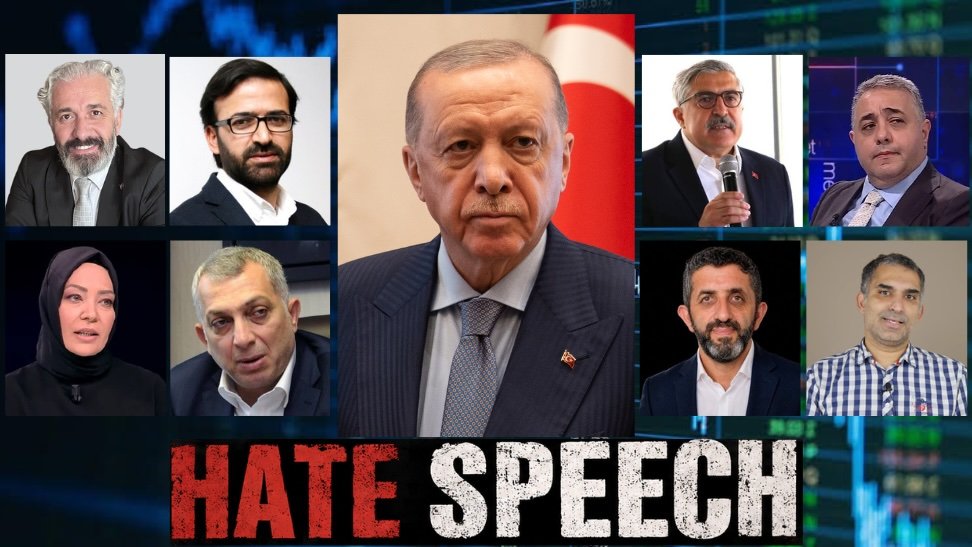
A financial scandal that has sparked public anger in Turkey has fueled a new wave of hate speech against the faith-based Gülen movement, with ruling party figures and pro-government commentators accusing the movement of sabotaging the economy and plotting against the government of President Recep Tayyip Erdoğan.
Since the scandal erupted in mid-September, figures from Erdoğan’s ruling Justice and Development Party (AKP) and the pro-government media have also portrayed journalists and opposition politicians as participants in alleged conspiracies involving the Gülen movement. Some commentators have used derogatory language against its followers and called for renewed purges and investigations.
The crisis began when investment funds failed to meet withdrawal requests amid allegations of stock-market manipulation, prompting Turkish regulators on September 17 to order the liquidation of 131 funds managed by seven companies, in which more than 450,000 people had investments. The scandal also raised questions about regulatory oversight, as officials had warned of suspected market manipulation involving investment funds as early as November 2025.
A survey conducted by the BETİMAR polling company found that 70 percent of respondents said the scandal had reduced their trust in the government and political institutions, while İhsan Aktaş, chairman of the GENAR pollster, said support for the AKP had fallen by about 3 percentage points since September.
The latest attacks reflect a longstanding pattern in which hostile rhetoric against the Gülen movement by Erdoğan and other senior government officials has been echoed and amplified by the pro-government media. On October 9 Erdoğan joined the accusations already circulating in those outlets, giving them presidential weight.
Erdoğan has targeted the faith-based Gülen movement, inspired by Muslim cleric Fethullah Gülen, who died in 2024, since corruption investigations in December 2013 implicated Erdoğan as well as some members of his family and inner circle. He dismissed the probes as a Gülenist conspiracy and designated the movement as a terrorist organization in May 2016, intensifying a sweeping crackdown after a coup attempt in July of the same year that he accused Gülen of orchestrating. The movement denies involvement in the coup attempt or any terrorist activity.
One line of attack involved Erdoğan, other ruling party figures and pro-government commentators portraying opposition politicians and journalists as using tactics they attributed to the Gülen movement or working with its supporters to undermine the government through the fund scandal.
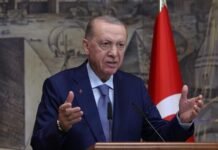
On October 9 Erdoğan accused opposition politicians of attacking his government over the fund scandal using tactics learned from what he called “FETÖ scoundrels” in their criticism of the government over the fund scandal. FETÖ, short for “Fethullahist Terrorist Organization,” is a derogatory term used by the Turkish authorities to refer to the Gülen movement. The pro-government Takvim newspaper featured his accusation the following day, under the headline “They are attacking with FETÖ tactics.”
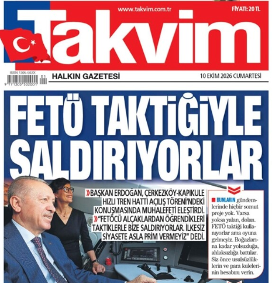
He repeated the comparison after a cabinet meeting on October 12, saying that no one’s title or profession gave them the right to attack people’s reputations using tactics he associated with the Gülen movement.
Pro-government media portrayed journalists and opposition politicians as participants in alleged operations masterminded by the Gülen movement.
Also on October 9 the pro-government A Haber broadcaster aired a segment headlined “FETÖ cooks it up, the opposition spreads it,” in which commentator Zafer Şahin described the controversy as a fifth-column operation intended to prevent Erdoğan from running for president in 2028. He said opposition politicians and journalists were spreading allegations prepared by people linked to the movement.
Kurtuluş Tayiz, a columnist for the Akşam daily, alleged in an October 2 piece that a network abroad linked to the Gülen movement had supplied opposition politicians with documents about the fund scandal. He linked the alleged leak to the infiltration of Turkey’s financial intelligence agency and suggested that it was part of an espionage operation involving Israel.
During an October 11 television appearance, Kenan Kıran, a news coordinator at the pro-government Sabah newspaper, portrayed the scandal as part of a plot to oust Erdoğan, linking journalists and opposition lawmakers to alleged operations by the movement dating back to December 2013.
In an October 7 column, Sabah journalist Hilal Kaplan also linked the scandal to what she described as previous attempts to remove Erdoğan from power, invoking the Gezi Park protests and the 2016 coup attempt while alleging the involvement of the Gülen movement.
The accusations also extended to allegations that Gülen movement supporters were helping spread criticism of the government. In an October 15 article, the ultranationalist Odatv news website linked the circulation of a statement criticizing corruption and favoritism in the fund scandal to alleged Gülen supporters, describing some of the accounts sharing the statement as spreading “FETÖ propaganda.”
A second group of commentators targeted the Gülen movement directly, using derogatory language against its followers and accusing them of financial wrongdoing and economic sabotage.
The rhetoric also included references to the possibility of Gülen movement followers being killed abroad. In an October 5 post on X, Orhan Aydın, a pro-government social media commentator, said he would not be surprised if operations targeting alleged movement followers began in several countries before the end of the year, adding that he “would not be at all surprised if a few of them were killed in the operations.”
In an October 3 column, Yeni Şafak opinion writer Hüseyin Likoğlu linked the Gülen movement with financial wrongdoing and blackmail, suggesting that the fund scandal could be part of an economic sabotage operation orchestrated by the movement.
In another column on October 14, Likoğlu referred to Gülen movement supporters as “mindless followers” and “traitors,” called for an investigation into financial transactions and property transfers dating back to 2010 and suggested that people holding assets on behalf of the movement might be involved in the fund scandal.
In an October 14 article Yeni Akit columnist Buğra Kardan described the Gülen movement as a “network of treachery.” He accused them of past stock-market manipulation and financial wrongdoing, using the allegations to discredit journalists and opposition figures criticizing the government over the fund scandal.
Türkiye columnist Yücel Koç also used stigmatizing language in his coverage of the scandal. In an October 1 piece he called for Turkey to be rid of “parasites,” while portraying the government’s crackdown on the Gülen movement as part of a larger campaign to rid the country of criminals and other threats. In another column he described alleged Gülen supporters in the judiciary as traitors and warned of covert members of the movement.
Some commentators accused the Gülen movement of conspiring with foreign powers and intelligence agencies to undermine Turkey’s economy. In a September 28 article Kardan claimed that the Gülen movement had infiltrated a financial intelligence system operated by Turkey’s Financial Crimes Investigation Board (MASAK) and was acting under the direction of the CIA and Israel’s Mossad intelligence agency to destabilize Turkey’s economy.
A third group called for renewed purges of people allegedly linked to the Gülen movement from politics, the bureaucracy and the economy, or criticized previous efforts as insufficient.
Former AKP lawmaker Metin Külünk described the scandal as an “unarmed July 15” during an October 7 appearance on Radio Sputnik, referring to Turkey’s 2016 coup attempt. Külünk alleged extensive links between the fund scandal and the Gülen movement and criticized what he said was a failure to remove people linked to the movement from politics after the coup attempt.
Following the attempted coup on July 15, 2016, the Turkish government declared a state of emergency that remained in effect until July 19, 2018. During this period the government carried out a purge of state institutions under the pretext of an anti-coup fight by issuing a number of government decrees. A total of 113,290 people were dismissed from public service under emergency decrees. A total of 4,006 judges and prosecutors were separately removed by the Supreme Board of Judges and Prosecutors (HSYK), while the Turkish Armed Forces expelled 26,206 members, including 150 of its 326 generals and admirals, through emergency decrees and administrative decisions for alleged membership in or relationships with “terrorist organizations” by emergency decree-laws subject to neither judicial nor parliamentary scrutiny.
In an October 8 column for Yeni Şafak, Mahmut Çelik described the scandal as a “financial July 15 plan.” He accused the Gülen movement, the outlawed Kurdistan Workers’ Party (PKK) and foreign financial interests of conspiring against Turkey. He called for purges in politics, the economy and the bureaucracy targeting people allegedly linked to these groups, including within the ruling party and the opposition.
Hate speech against the Gülen movement intensified after the December 2013 corruption investigations and the 2016 coup attempt, with senior government officials and pro-government media portraying its followers as terrorists, traitors and enemies of society. SCF has documented how dehumanizing rhetoric and calls for violence against movement members have often gone unpunished, contributing to discrimination and social exclusion. Fethullah Gülen’s death in October 2024 was followed by another wave of hostile rhetoric, along with restrictions on more moderate commentary.