Ten years after a coup attempt on July 15, 2016, the Turkish government’s campaign of hate speech against the faith-based Gülen movement, which began after corruption investigations in 2013 and intensified dramatically after the abortive putsch, remains a defining feature of the political order established in its aftermath.
The campaign has combined inflammatory rhetoric from President Recep Tayyip Erdoğan and senior officials with systematic amplification by pro-government media, impunity for those inciting hostility or violence against the movement and the selective use of insult, incitement and other speech-related charges against government critics.
The Gülen movement has remained the principal target of this campaign, with the government using dehumanizing language to portray its followers as an internal enemy to legitimize their persecution. Other groups, including Kurds, Alevis, Syrian refugees, LGBT people, Christians, Jews and Armenians have at times also faced hostile or discriminatory rhetoric, though not with the same sustained, state-led intensity.
Turkish President Recep Tayyip Erdoğan has targeted followers of the Gülen movement, inspired by the late Muslim cleric Fethullah Gülen, since corruption investigations in December 2013 implicated him as well as some members of his family and inner circle. He dismissed the probes as a Gülenist conspiracy and designated the movement as a terrorist organization in May 2016, intensifying a sweeping crackdown after the coup attempt in July of the same year that he accused Gülen of orchestrating. The movement denies involvement in the attempted coup or any terrorist activity.
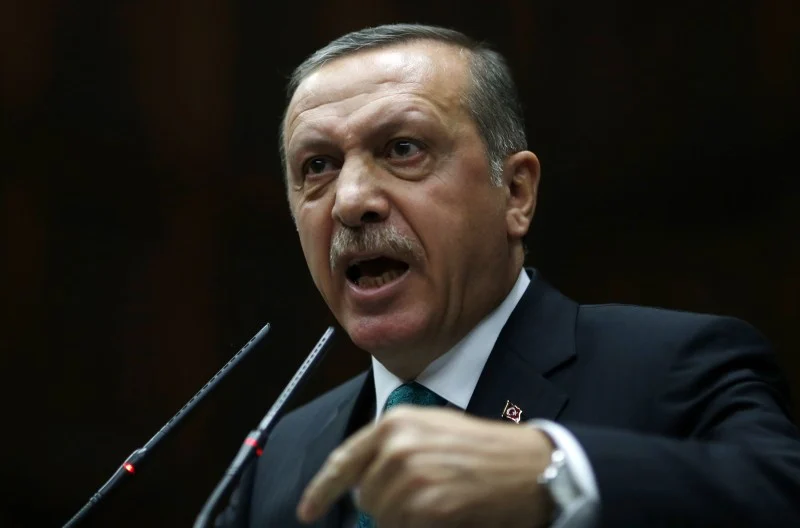
Erdoğan set the tone for the campaign. Since 2013 he has used roughly 240 slurs and insults, including “terrorists,” “traitors,” “vampires,” “leeches,” “tumor” and “virus,” and at one point declared that they had “no right to life.” As recently as July 2025, at a ceremony marking the ninth anniversary of the coup attempt, he again described the movement as a “virus” that Turkey had not yet completely removed and pledged to continue the campaign “without slack, without error.”
The rhetoric also spread among pro-government and ultranationalist figures. At a pro-government “democracy vigil” in İstanbul’s Kısıklı neighborhood on July 22, 2016, Islamist preacher Metin Balkanlıoğlu described property seized from the Gülen movement as “spoils of war” and told the crowd to use it freely. In Sakarya then-MHP lawmaker Zihni Açba said a group that gathered outside military housing on the night of the coup attempt shouted that the soldiers’ wives were “lawful” to them and demanded that the women be handed over. He said video and audio recordings of the incident existed.
In later years the campaign expanded from insults and threats to proposals for coercive treatment and calls for mass violence. Social media provided another outlet for increasingly explicit calls for violence. In a 2020 appearance on the pro-government Akit TV, communications professor Muttalip Kutluk Özgüven said followers who had committed no crime should be sent to “rehabilitation camps” for psychological treatment, adding that their bodies did not belong to them and that they were obligated to serve the state.
In an online discussion, pro-government commentator Furkan Bölükbaşı and other participants openly debated poisoning alleged Gülen followers in prisons, while another pro-Erdoğan commentator, Fatih Tezcan, said during a live broadcast that the government should massacre them all. None of the remarks resulted in prosecution.
The campaign was reinforced by state institutions and a pro-government media ecosystem that repeated official labels, presented as established fact, and marginalized dissenting accounts. An SCF report documented how government-aligned outlets launched a coordinated wave of dehumanizing coverage after Gülen’s death in October 2024, while authorities restricted more moderate voices. A December 2025 report by the Netherlands-based rights group Stichting Justice Square similarly concluded that hate speech against the movement had been institutionalized through state agencies, religious institutions and the media.
Other communities have also faced hostile or discriminatory rhetoric, though generally not with the same sustained, state-led intensity. In 2025 the Council of Europe’s anti-racism commission (ECRI) warned that hate speech and hate crimes were worsening in Turkey, citing Erdoğan’s description of LGBT people as a “virus of heresy,” spikes in anti-Armenian and anti-Greek rhetoric and a rise in antisemitic hate speech after October 2023.
The political use of hostile rhetoric has at times extended to Syrian refugees as well. An SCF report documented how inflammatory rhetoric by politicians and media contributed to hostility toward Syrians living in Turkey under temporary protection, who at the time numbered roughly 3 million.
Since the 2016 coup attempt, hate speech in Turkey has evolved from campaign rhetoric into a broader system of political control: Senior officials establish the language, pro-government media amplify it and state institutions help normalize hostility toward designated groups.
Despite repeated warnings from international organizations and human rights groups that such rhetoric fuels discrimination and violence, no meaningful corrective has emerged. Ten years after the coup attempt, dehumanizing language remains embedded in Turkey’s official discourse.