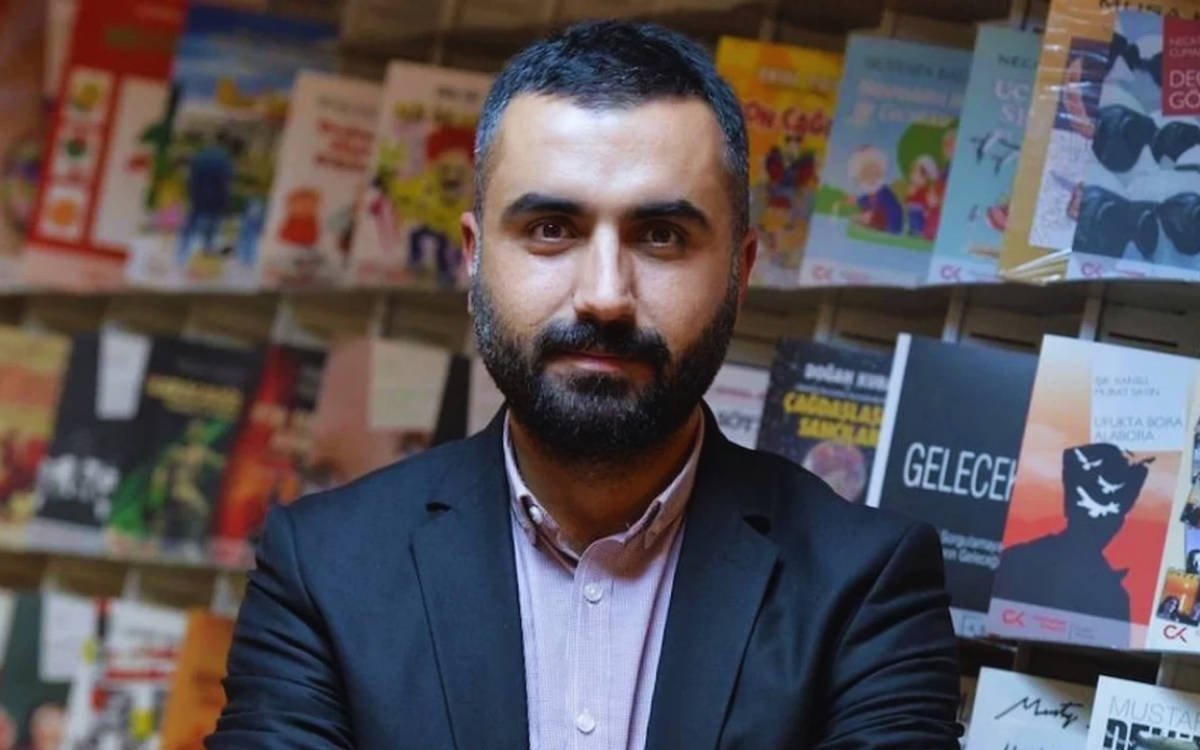
Turkish prosecutors are seeking more than five years in prison for journalist Alican Uludağ over social media posts about a deadly building collapse that authorities allege spread disinformation, the Medyascope news website reported.
The Ankara Chief Public Prosecutor’s Office filed an indictment with the Ankara 59th Criminal Court of First Instance accusing Uludağ, a reporter for Deutsche Welle’s Turkish service, of repeatedly disseminating misleading information.
The indictment cites violations of Article 217/A of the Turkish Penal Code in posts concerning the October 29, 2025, collapse of a seven-story apartment building in Kocaeli province that killed four members of the same family and seeks an increased sentence under provisions covering repeated offenses.
In posts on X on November 3, Uludağ reported information suggesting that construction of the Darıca-Gebze metro line running beneath the building may have contributed to the collapse and questioned the responsibility of the Ministry of Transport and Infrastructure.
The posts were later blocked at the request of the Gebze Chief Public Prosecutor’s Office on grounds of national security and public order, and prosecutors subsequently launched an investigation into Uludağ.
An official expert report submitted on December 20 as part of the investigation into the collapse linked the incident to the metro construction. Uludağ later obtained the report while in prison in a separate case and reported on its findings for DW Türkçe.
Uludağ denied the accusations, saying the information in his original posts had come from official sources who examined the area after the collapse. He said the subsequent expert report confirmed the information he had reported and that his reporting concerned a matter of significant public interest.
The court accepted the indictment and scheduled the first hearing for November 5.
Uludağ was arrested on February 20 on accusations of repeatedly and publicly insulting President Recep Tayyip Erdoğan in 22 social media posts and was sent to Marmara Prison in İstanbul. He was released at his first hearing on May 21 after spending 90 days in pretrial detention.
His trial on charges of insulting the president, publicly insulting the Turkish government and judiciary and disseminating misleading information is ongoing.
Introduced in 2022, Article 217/A of the Turkish Penal Code, commonly known as the disinformation law, provides for prison sentences of one to three years for publicly spreading false information in a way that causes concern, fear or panic among the public.
The law has drawn widespread criticism from press freedom and rights groups, which say its vague wording gives authorities broad powers to investigate and prosecute journalists and social media users over reporting and online commentary.
A coalition of press freedom organizations said earlier this year that at least 83 journalists had faced accusations under Article 217/A in 114 separate cases since the provision took effect in October 2022.
According to Expression Interrupted, a press freedom monitoring group, 22 journalists are currently behind bars in Turkey. The country’s deteriorating media landscape was further pointed out in the 2026 World Press Freedom Index published by Reporters Without Borders (RSF), where it was ranked 163rd out of 180 nations.