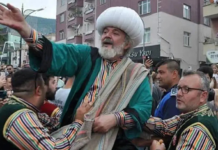

Turkey’s Directorate of Religious Affairs (Diyanet) has launched a disciplinary investigation into an imam over a message expressing supportfor jailed comedian Deniz Göktaş, the Birgün daily reported.
Yusuf Kılıç was summoned to Diyanet headquarters in Ankara on August 27 and gave a statement as part of the investigation. Diyanet has not yet announced whether any disciplinary action has been taken.
Kılıç contacted Göktaş’s family after footage of the comedian’s detention at İstanbul Airport on July 2 was released to the media. In his message, he criticized Göktaş’s treatment and expressed solidarity, saying, “As an imam, I stand with you, brother Deniz.”
Göktaş was jailed pending trial following his detention over jokes in his “Ölü Deniz” (Dead Sea) stand-up show on accusations of insulting President Erdoğan, inciting hatred and hostility and praising crime and criminals. An indictment seeks more than 12 years in prison on the three charges. His first hearing is scheduled for September 28.
Labor Party (EMEP) lawmakers Sevda Karaca and İskender Bayhan submitted a parliamentary question to Vice President Cevdet Yılmaz asking for the legal basis for the disciplinary investigation.
The lawmakers questioned which disciplinary rules Kılıç’s message had violated and whether Diyanet employees were being profiled or pressured over their political views. They also requested data on investigations and sanctions against employees over statements or actions critical of the government in the past five years.
Kılıç previously faced disciplinary proceedings after refusing a request in 2023 to take members of his congregation to an election rally for President Recep Tayyip Erdoğan in İzmir. He was sanctioned and transferred out of the city after publicly disclosing the incident. A court later overturned the sanction, but Diyanet subsequently opened another disciplinary investigation over the same incident and sanctioned him again.
The Diyanet is often criticized for its lack of independence from political influence and for instrumentalizing Friday sermons to advance government narratives. It is also criticized for excluding religious minorities such as the Alevis, despite being funded by taxpayers from all faiths.
With a budget larger than those of several government agencies, Diyanet also operates a sizeable network of mosques in Western Europe that has been accused of spying on government critics living among Turkish diaspora communities.