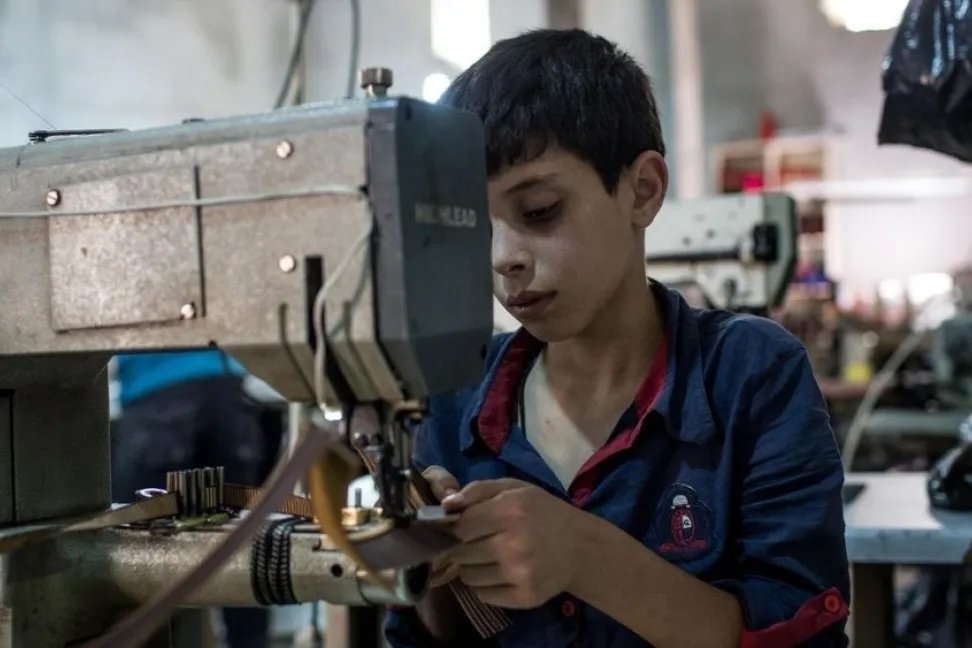
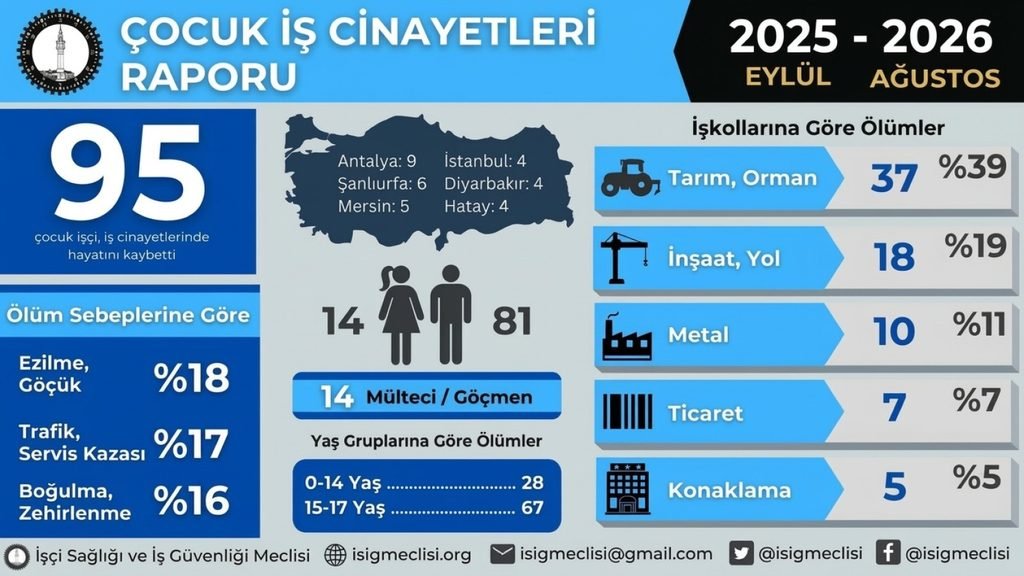
At least 95 child workers died in Turkey during the 2025–2026 school year, a 32 percent increase from the previous year, according to a new report by the Health and Safety Labor Watch (İSİG).
İSİG said the 95 deaths recorded between September 1, 2025 and August 31, 2026 compared with 72 during the previous school year and 66 in 2023–2024.
Of the 95 children, 28 were between the ages of 5 and 14, while 67 were between 15 and 17. The group included 14 girls and 81 boys, as well as 14 refugees or migrants, among them 11 Syrians, two Afghans and one Iraqi.
Under Turkish law, the minimum age for regular employment is 15, although children as young as 14 may perform certain forms of light work and participate in apprenticeship and vocational training programs.
Agriculture accounted for the largest share of the deaths, with 37 children, or 39 percent of the total, followed by the industrial sector with 27, construction with 18 and services with 13.
İSİG, which defines child workers as those under 18, cautioned that the actual number of deaths could be higher. Another 29 workers recorded as 18 years old died during the same period, but the watchdog said it could not determine whether all of them had turned 18 at the time of their deaths.
İSİG said all 28 children aged 5 to 14 were working informally, mainly in seasonal agriculture, street work and small workshops and construction. Among those aged 15 to 17, the watchdog found a shift from seasonal agriculture to industrial sector, construction and services in urban areas.
İSİG linked the shift in part to the expansion of Vocational Education Centers (MESEM), a state-run apprenticeship program under which students aged 15 to 18 to attend school one day a week and work four days in businesses for on-the-job training, while earning a portion of the minimum wage and receiving insurance coverage.
Education Minister Yusuf Tekin said earlier this month that 37 students had died and 9,950 workplace accidents had been recorded in the MESEM program since 2025. A study published earlier this year also found that 48 percent of MESEM students had suffered at least one workplace accident.
Labor unions and rights groups have long criticized the program for exposing children to hazardous working conditions while providing businesses with cheap labor. They say weak oversight has left students vulnerable to long hours, workplace accidents and abuse.
İSİG began tracking occupational fatalities in 2011 and regularly publishes data on workplace deaths in Turkey while campaigning for stricter occupational safety measures.