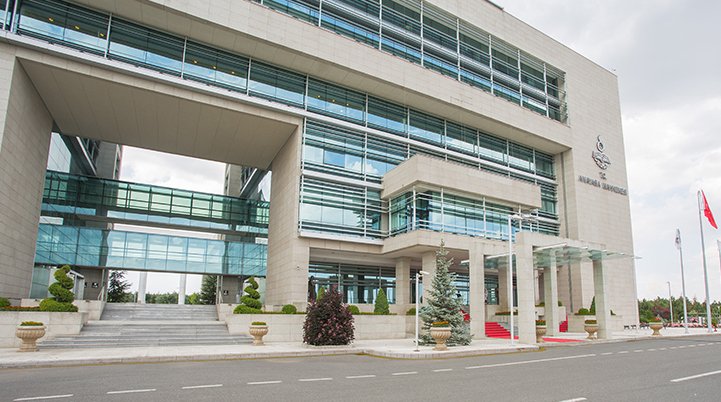
Turkey’s Constitutional Court has ruled that the right to a fair trial of a former noncommissioned officer who was sentenced to more than 12 years in prison over his alleged role in a coup attempt in 2016 was violated.
The court unanimously found that Serdar Uzel’s right to a reasoned judgment, protected as part of the right to a fair trial, had been violated because the trial court failed to address evidence and arguments that could have affected the outcome of the case. It said the lower court had also failed to explain why it had rejected them.
The Constitutional Court sent the case back to the İstanbul 24th High Criminal Court for retrial to remedy the violation.
Uzel was on duty at a Turkish military base in İstanbul on the night of the coup attempt on July 15, 2016. He was initially convicted of attempting to overthrow the constitutional order and sentenced to life in prison. The Supreme Court of Appeals later overturned the conviction, finding that his actions should instead be viewed as aiding in the commission of a crime.
Following the reversal, the İstanbul 24th High Criminal Court convicted Uzel of aiding an attempt to overthrow the constitutional order and sentenced him to more than 12 years in prison in February 2020. The conviction became final in September 2020.
Uzel then applied to the Constitutional Court, arguing, among other things, that the trial court had relied on portions of witness testimony that were used against him while failing to address other parts of the same testimony that he said supported his defense.
Turkey experienced a controversial military coup attempt on the night of July 15, 2016, which, according to many was a false flag operation aimed at entrenching the authoritarian rule of President Recep Tayyip Erdoğan by rooting out dissidents and eliminating powerful actors such as the military in his desire for absolute power.
The abortive putsch left 251 people dead and more than 2,000 wounded. The next morning the Turkish government launched a wide-ranging purge of military personnel, judges, police officers and other government officials. According to official figures, 26,206 members of the Turkish Armed Forces, including 150 of its 326 generals and admirals, were expelled from the military by emergency decree-laws and administrative decisions for alleged ties to “terrorist organizations.”
The Constitutional Court noted that witness testimony included statements supporting Uzel’s defense that he had not knowingly participated in the coup attempt and had displayed a stance against it. It said the trial court relied on parts of the testimony in convicting him but failed to adequately assess the parts in his favor or explain why they were disregarded.
The Constitutional Court rejected Uzel’s separate complaint that his presumption of innocence had been violated when he was dismissed from the military before his conviction became final, finding that he had failed to exhaust available legal remedies.
It also declared inadmissible his complaint that evidence capable of establishing his innocence had not been collected because he had failed to specify which evidence he was referring to.
Human rights lawyer Ufuk Yeşil criticized the court for limiting its finding to the right to a reasoned judgment and failing to address whether Uzel’s actions met the legal elements of aiding an attempt to overthrow the constitutional order. He argued that the case should have been examined under the principle of legality, particularly since the Supreme Court of Appeals had found no evidence that Uzel had known about the coup attempt beforehand or had been part of the organizational structure behind it.
A total of 289 coup-related trials have been concluded, with 4,891 people convicted. Of those, 1,634 received aggravated life sentences, 1,366 were sentenced to life in prison and 1,891 received sentences of varying lengths. Courts acquitted 2,870 defendants, while finding that 964 others had committed acts constituting a crime but required no sentencing. The Supreme Court of Appeals upheld 224 of the concluded trials.
A parliamentary commission established to investigate the coup attempt completed its work, but its final report was never published and its whereabouts remain unknown. Then-chief of General Staff Gen. Hulusi Akar and then-intelligence chief Hakan Fidan did not testify before the commission or in related court proceedings.