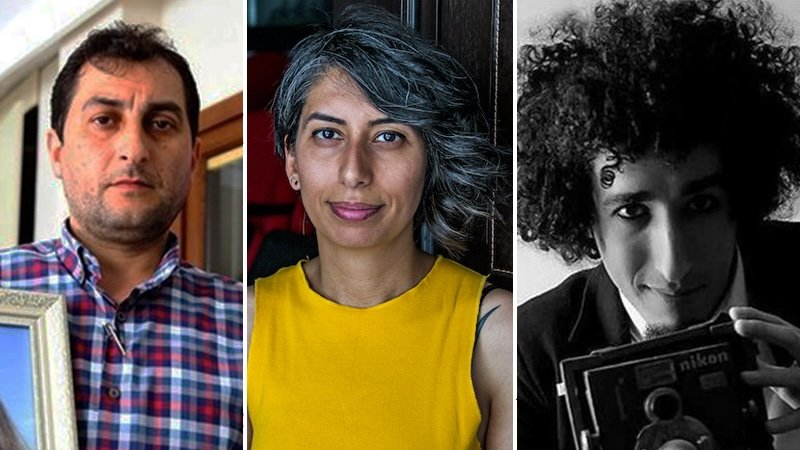
Turkish prosecutors have brought criminal charges against the father of 11-year-old Rabia Naz Vatan as well as a journalist and a documentary filmmaker over a disputed encounter with a witness during their investigation into the girl’s death seven years ago, BirGün columnist Ayça Söylemez reported.
Rabia Naz was found severely injured outside her family’s apartment building in Eynesil, a town in Turkey’s northern Giresun province, on April 12, 2018. She died after being taken to a hospital.
Prosecutors closed the case after concluding that she had died in a fall from a height. They cited a forensic report that said the pattern of her fractures was consistent with such a fall and did not support the theory that she had been struck by a vehicle.
They cited a report from Turkey’s Council of Forensic Medicine that said the pattern of fractures was consistent with landing on her feet after a fall from a height and did not support the theory that she had been struck by a vehicle.
Her father, Şaban Vatan, rejected the official account. He maintains that his daughter was hit by a car and then moved to the front of the building to make her death appear to be a suicide. He has also alleged that politically connected figures intervened to cover up the incident.
Vatan, Kısa Dalga journalist Canan Coşkun and documentary filmmaker Kazım Kızıl now face charges of jointly depriving a person of their liberty through force or threats. Kızıl is also accused of attempting to influence judicial proceedings.
Their first hearing is scheduled for October 22 at the Görele 1st Criminal Court of First Instance.
Disputed re-enactment
The charges stem from a November 11, 2019, interview with Mürsel Küçükal, a key witness who saw Rabia Naz lying injured and later testified before a parliamentary commission established to investigate her death.
Coşkun had travelled to Eynesil to interview Küçükal and other witnesses. Küçükal took her to the location where he had seen Rabia Naz and began describing what he had witnessed. Vatan and Kızıl later joined them.
Küçükal subsequently filed a complaint alleging that Vatan had forced him to crawl on the ground and mistreated him.
The indictment alleges that the three defendants pressured Küçükal to re-enact how he had seen Rabia Naz, prevented him from leaving and recorded the incident.
The case file, however, reportedly contains audio recordings showing Coşkun opposing the request that Küçükal crawl and attempting to stop it. Coşkun and Kızıl also said they left because they were uncomfortable with what was happening.
“The footage and interviews we produced while investigating Rabia Naz’s suspicious death were ultimately used to criminalize us,” Coşkun told BirGün.
She said the case had been kept open for seven years and that the material seized from the journalists during their reporting was ultimately used as evidence against them.
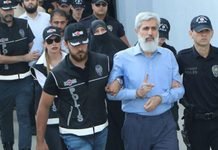
Coşkun, Kızıl, journalist Tuba Demir and Vatan were briefly detained in November 2019 over Küçükal’s complaint.
They were released under judicial supervision, with travel bans imposed on the journalists and Vatan ordered to stay away from the witness’s home.
Political cover-up allegations
Vatan said he had been told that a black Fiat Doblo van was seen leaving the area around the time of his daughter’s death.
Based on witness accounts and his own investigation, he alleged that the vehicle had been driven by a nephew of Coşkun Somuncuoğlu, the then-mayor of Eynesil from the ruling Justice and Development Party (AKP).
Vatan further alleged that Nurettin Canikli, a former minister and senior AKP politician with close ties to the Somuncuoğlu family, intervened to cover up the incident.
Authorities said they found no evidence supporting the allegations. Former interior minister Süleyman Soylu also said there was no evidence to substantiate them. Canikli responded by filing a criminal complaint against Vatan for insult and unlawfully obtaining and disseminating personal data.
The case prompted nationwide campaigns demanding an effective investigation and led parliament to establish an inquiry commission in 2019.
An opposition member of the commission said the initial crime scene investigation had been improperly conducted, resulting in the loss of evidence that might have confirmed or disproved Vatan’s allegations.
Top court finds negligent investigation
Turkey’s Constitutional Court ruled in 2025 that authorities had investigated Rabia Naz’s death negligently and had failed to examine it with the required depth and seriousness.
The court found that the scene had not been secured, evidence had not been properly collected or preserved and prosecutors had never visited the location.
Security camera recordings were requested more than a year after the death, while statements from key witnesses were taken months later. Rabia Naz’s bag, diary, socks and clothing were also mishandled, according to the ruling.
The court awarded her parents 350,000 lira in damages. According to Coşkun, however, it declined to order a new investigation on the grounds that too much time had elapsed.
Coşkun said the court’s findings could have emerged much earlier if the journalists’ work in Eynesil had not been obstructed.
Father faced detention, mental assessment and prison
Vatan’s campaign to establish what happened to his daughter has subjected him to years of legal and personal pressure.
He was briefly detained in March 2019 following a complaint from relatives. A court subsequently ordered that he be hospitalized for an assessment of his mental health.
In July 2025 Vatan was imprisoned after an appeals court upheld a sentence of almost two years for sharing Canikli’s personal data during his campaign. He was released after serving 38 days.
Vatan has continued to call for a new investigation, saying he will not abandon his efforts to establish how his daughter died.
This article is republished from Turkish Minute.