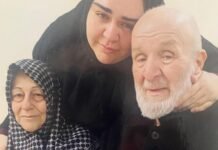
A Turkish woman says she still cannot bring herself to visit her father’s grave one year after the 72-year-old Alzheimer’s patient died in custody while serving an eight-year sentence over alleged links to the Gülen movement, after he was kept in prison despite medical reports saying he could not care for himself and needed another person’s assistance.
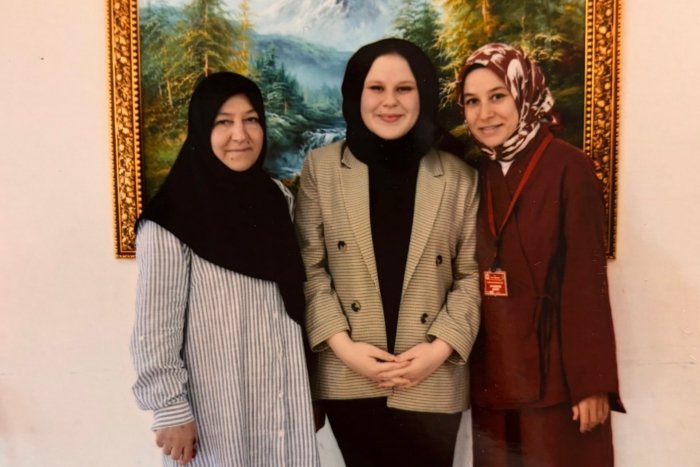
Sueda Güngör, 24, was herself in pretrial detention when her father, İbrahim Güngör, died on September 7, 2025. She had repeatedly sought permission to speak with him by phone while they were both incarcerated but was not allowed to, and authorities later denied her permission to attend his funeral.
Güngör told the TR724 news website on the first anniversary of her father’s death that she still could not visit his grave because she had been unable to come to terms with what had happened to him.
“I still can’t visit his grave,” she said, adding that she wanted to go alone but did not know whether she could. She said she would never accept what she described as the gross injustice that resulted in his death and that “so much” inside her had been destroyed.
İbrahim Güngör, a former student affairs director at Gediz University in the western province of İzmir, was first jailed in January 2019 in a case concerning alleged links to the Gülen movement. He was released about 10 months later but subsequently sentenced by the İzmir 20th High Criminal Court to eight years in prison.
Turkish President Recep Tayyip Erdoğan has targeted followers of the Gülen movement, inspired by the late Muslim cleric Fethullah Gülen, since corruption investigations in December 2013 implicated him as well as some members of his family and inner circle. He dismissed the probes as a Gülenist conspiracy and designated the movement as a terrorist organization in May 2016, intensifying a sweeping crackdown after a coup attempt in July of the same year that he accused Gülen of orchestrating. The movement denies involvement in the coup attempt or any terrorist activity.
Evidence cited in the case included his organization of religious gatherings at his home, invitations to others to attend them and efforts to collect scholarship money for students. Witness testimony also referred to gatherings where books by Fethullah Gülen were read.
After his initial release, İbrahim Güngör underwent surgery in 2022 for hydrocephalus, a buildup of fluid in the brain, and had a shunt implanted. He also suffered from Alzheimer’s disease, diabetes and prostate problems. After his conviction was upheld by Turkey’s Supreme Court of Appeals, he was returned to prison on December 14, 2024.
His condition subsequently deteriorated.
A December 25, 2024, report from the neurology clinic at İzmir Atatürk Teaching and Research Hospital said Güngör showed signs of dementia, had serious problems with orientation, attention and memory and was unable to handle his needs on his own. The report said he required another person’s assistance.
A medical board at the same hospital also concluded that he could not independently manage his life in prison and needed assistance with personal care.
A February 7, 2025, assessment by the medical unit at Menemen R-Type Prison similarly found that Güngör required care. It said that although he could eat without assistance, a caregiver handled nearly all his other needs and that he used a catheter and adult diapers.
Despite those findings, Turkey’s Council of Forensic Medicine concluded on March 11 that Güngör could remain in an R-type prison, a facility intended for prisoners requiring rehabilitation or medical assistance.
Güngör was hospitalized on July 25 after developing an infection associated with his catheter. He was discharged about 20 days later and returned to prison.
His health deteriorated again, and he was taken to the intensive care unit at İzmir City Hospital on August 29 with respiratory failure and a high fever. He died there on September 7 while still a prisoner.
By then, his youngest daughter was also behind bars in a Gülen-related investigation.
Police detained Sueda Güngör, a student in finance at Dokuz Eylül University, on June 17, 2025, as part of an investigation targeting alleged members of the movement. A court ordered her and 41 others jailed pending trial on June 20.
The allegations against the students were based on activities that included sharing apartments, attending religious gatherings and organizing events such as Ramadan dinners.
Before her detention, Güngör had publicly appealed for her father’s release because of his deteriorating health.
Once imprisoned herself, she repeatedly sought permission to speak to him by phone but said no call was arranged. In a letter written days before his death, she said she had spent more than two months trying to hear her father’s voice.
When İbrahim Güngör died, authorities did not allow his daughter to attend his funeral. She was later taken in handcuffs to the family home, where she was allowed to stay for about an hour and watched video of her father’s funeral.
Sueda Güngör was released on January 19 after about seven months in pretrial detention. At the time she said her imprisonment had prevented her even from grieving for her father.
More than seven months after her release and a year after his death, she says she has still been unable to visit his grave.