
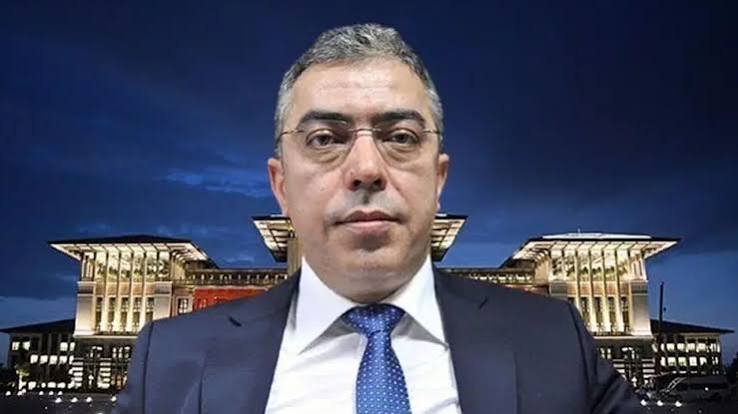
A senior adviser to Turkish President Recep Tayyip Erdoğan has suggested that Turkey could reconsider its participation in the European human rights system after Europe’s top rights court on Tuesday ordered the immediate release of jailed businessman and philanthropist Osman Kavala.
The comments came after the European Court of Human Rights’ (ECtHR) 17-judge Grand Chamber ruled on Tuesday that Kavala’s conviction resulted from a “flagrant denial of justice,” must be regarded as null and void under convention law and that he must be released at the earliest possible date.
Presidential chief adviser Mehmet Uçum accused the ECtHR of issuing a politically motivated ruling and said Turkey was being pushed to review its status as a party to the European Convention on Human Rights (ECHR) as well as the right of individual petition to the Strasbourg court.
“As the ECtHR continues to issue decisions that serve political projects, it loses all value for Turkey,” Uçum said on X.
“It is clear that Turkey is being forced to reconsider its status as a party to the ECHR and the possibility of individual applications to the ECtHR,” he said. “If decisions based on political calculations against Turkey continue, all parties concerned should know that this will become inevitable.”
Uçum added that such a development could ultimately cause “the collapse of the ECtHR system.”
Although Uçum advises Erdoğan on legal policy, his remarks do not constitute an official announcement that Turkey intends to withdraw from the ECHR.
Turkey’s Justice Ministry also denounced the judgment, describing it as the latest example of what it called the court’s biased approach toward Turkey, according to ministry sources quoted by Deutsche Welle Turkish edition.
The sources accused the ECtHR of disregarding its own established case law in its handling and resolution of Kavala’s application.
They defended Kavala’s prosecution and conviction, saying he had been found guilty by independent and impartial Turkish courts of organizing, directing and financing the 2013 anti-government Gezi Park protests, which the government refers to as an attempted coup.
The ministry sources also accused the Strasbourg court of “usurping” Turkey’s national judicial authority by saying Kavala’s final conviction should be treated as null and void.
They rejected what they described as the court’s allegation of bad faith against Turkey’s judicial and administrative bodies.
Uçum similarly claimed that the ECtHR was not a superior appellate court and that its review of national proceedings was not hierarchical.
He claimed that Turkish courts were free to decide whether to comply with ECtHR judgments and that Article 46 of the convention should not be interpreted as making the substance of those judgments conclusively binding.
However, Article 46 explicitly requires states that are parties to the convention to abide by final ECtHR judgments in cases to which they are a party. Their implementation is supervised by the Council of Europe’s Committee of Ministers.
Uçum also lashed out at Nacho Sánchez Amor, the European Parliament’s rapporteur on Turkey, who described the judgment as the clearest and harshest answer he had heard from Strasbourg to claims that Turkey’s judiciary was independent.
Following the ruling on Tuesday, Sánchez Amor called it a “crushing blow” to the credibility of Turkey’s judiciary. Writing from İstanbul’s Marmara Prison in Silivri, where he was following another trial, Sánchez Amor demanded that Kavala be freed and reunited with his wife, Ayşe Buğra.
“Precisely from infamous Silivri prison, where #OsmanKavala has been unlawfully kept for almost 9 years now, I read the latest @ECHR_CEDH ruling on his case,” Sánchez Amor wrote on X.
Referring to Sánchez Amor as the European Parliament’s “official responsible for hostility toward Turkey,” Uçum accused him and other critics of “insolence.”
“No one has the right to disparage the justice minister of the Republic of Turkey,” he said, adding that criticism of the independence of the Turkish judiciary was unacceptable.
The Grand Chamber found violations of Kavala’s rights to liberty, a fair trial, freedom of expression and freedom of assembly and association. It also ruled that his prosecution, continued detention and conviction were predominantly intended to punish and silence him over his role in the Gezi Park protests and his work as a human rights defender.
Kavala, 68, has been imprisoned since October 2017. He was sentenced in April 2022 to aggravated life imprisonment without the possibility of parole for allegedly attempting to overthrow the government by financing the Gezi protests.
The ECtHR first ordered his release in December 2019. After Turkey failed to implement that judgment, the Council of Europe initiated infringement proceedings, and the ECtHR ruled in July 2022 that Ankara had failed to fulfill its obligations under the convention.
Tuesday’s final judgment was adopted by 15 votes to two.
This article is republished from Turkish Minute.