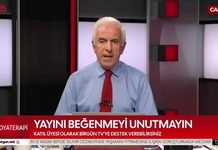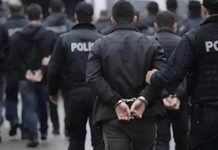
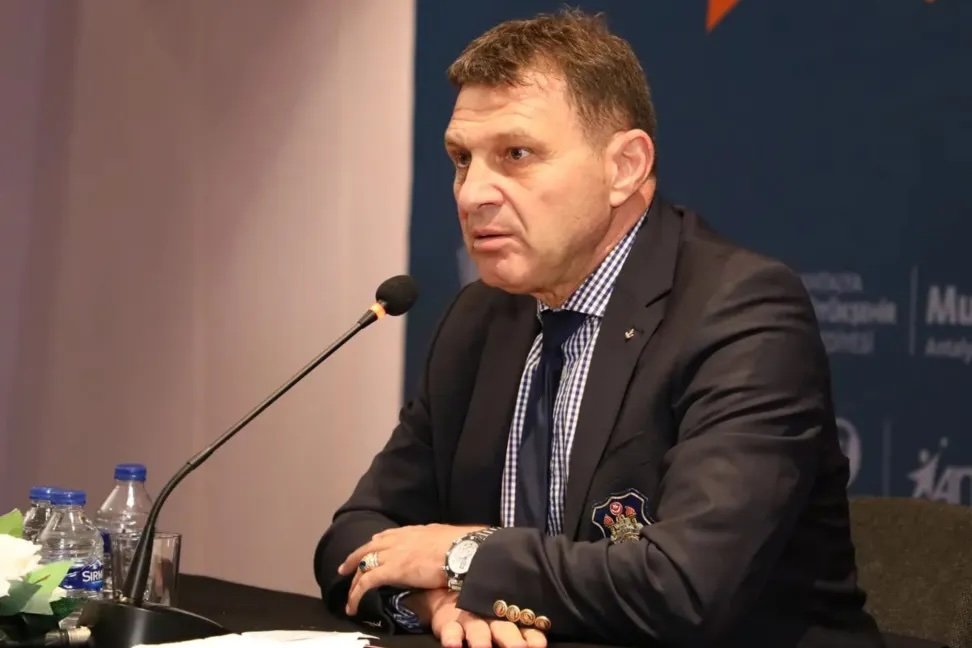
Turkish police detained retired admiral Türker Ertürk on Monday over a social media video in which he said the government would change “painfully or painlessly,” prompting an investigation into alleged threats intended to cause public fear and incitement to commit a crime.
The Bakırköy Chief Public Prosecutor’s Office in İstanbul opened the investigation on its own initiative over statements Ertürk made in the video, according to the state-run Anadolu news agency.
“Look, the government is going to change now. Painfully or painlessly, the government is going to change. That is why everyone needs to come to their senses. You, me … everyone, of course, everyone,” Ertürk said.
“That is why we expect the Supreme Election Board to make its decisions according to its conscience and the law. Otherwise, I think we as a country will face difficulties in the future,” he added.
The remarks drew attention because of their similarity to a controversial statement made by former prime minister Necmettin Erbakan that was later cited in discussions of the military pressure that brought down his Islamist-led government in 1997.
Erbakan made his “bloody or bloodless” remark at a Welfare Party (RP) parliamentary group meeting on April 13, 1994, nearly three years before the February 28 intervention.
Speaking about his party’s eventual rise to power, Erbakan said the transition to what he called a “just order” was inevitable and that whether it would be “harsh or soft, bloody or bloodless” would depend on those opposing it.
İsmail Hakkı Karadayı, chief of general staff at the time of the 1997 intervention, later told a parliamentary commission investigating military coups that Erbakan’s statement was among the developments that had alarmed military commanders.
Şevket Kazan, a senior RP figure and former justice minister, told the same commission that Erbakan had used the wording in response to secularist groups that had spoken of defending the country “at the cost of our blood.” Kazan said prosecutors did not pursue the matter at the time.
The February 28, 1997, intervention, widely described as a “postmodern coup,” did not bring the military directly to power. Instead, military commanders used the National Security Council, public statements and sustained pressure on the government to force Erbakan’s resignation four months later.
Under military pressure, Erbakan eventually signed an 18-point set of National Security Council recommendations calling for stricter enforcement of secularism, tighter supervision of religious schools and Quran courses and restrictions on religious attire in public institutions.
The appearance of tanks in Sincan, a district outside Ankara, became one of the defining images of the intervention.
Erbakan resigned in June 1997. The Constitutional Court subsequently banned the RP in January 1998 and its successor, the Virtue Party (FP), in June 2001.
Erbakan, who died in 2011, pioneered Islamist politics in Turkey and paved the way for the later success of President Recep Tayyip Erdoğan’s Justice and Development Party (AKP). Erdoğan began his political career in Erbakan’s movement and was elected mayor of İstanbul as an RP candidate in 1994.
Turkey experienced military coups in 1960 and 1980 as well as a military intervention in 1971. Erdoğan survived an attempted coup in July 2016, after which his government carried out sweeping purges of the military and other state institutions.
The political influence once exercised by Turkey’s military has declined significantly under Erdoğan.
This article is republished from Turkish Minute.