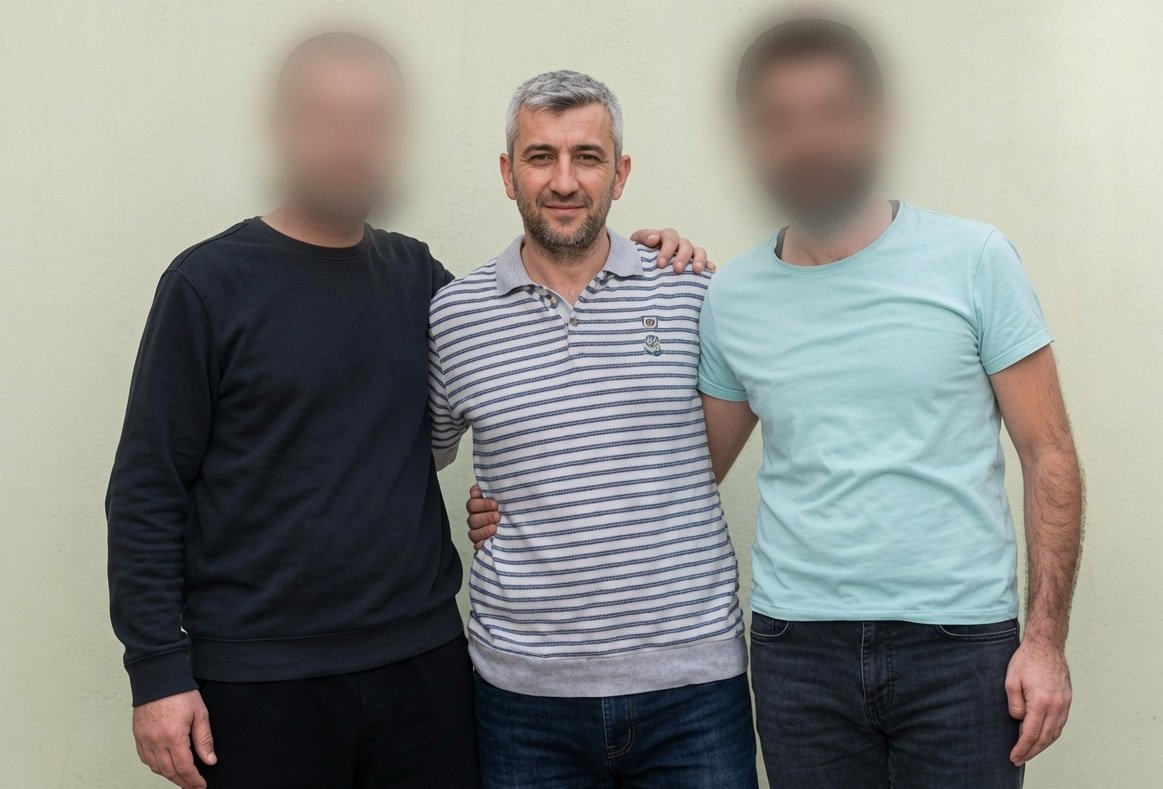
Bülent Kemik, a former police officer dismissed from his job and later imprisoned over alleged links to the faith-based Gülen movement, died of colon cancer on Tuesday in the central province of Nevşehir, the TR724 news website reported.
Kemik, 51, was dismissed from the Aydın Police Department by an emergency decree following a 2016 coup attempt. He and his wife were detained in February 2017, after which he spent a year in pretrial detention in Aydın Prison.
Turkish President Recep Tayyip Erdoğan has targeted the Gülen movement, a worldwide civic initiative inspired by the ideas of Muslim cleric Fethullah Gülen, who died in 2024, since corruption investigations in December 2013 implicated him as well as some members of his family and inner circle. He dismissed the probes as a Gülenist conspiracy and designated the movement as a terrorist organization in May 2016, intensifying a sweeping crackdown after the coup attempt in July of the same year that he accused Gülen of orchestrating. The movement denies involvement in the coup attempt or any terrorist activity.
Kemik was sentenced to more than seven years in prison but released pending appeal. His conviction was based on his alleged use of ByLock, an encrypted messaging app, once widely available on Apple’s App Store and Google Play, that Turkish authorities claim was used as a secret communication tool for Gülen supporters.
In 2023 the European Court of Human Rights ruled in a landmark case that convictions based on ByLock use and other alleged Gülen-linked activities, such as having an account at a movement-affiliated bank, violated the rights to a fair trial, no punishment without law and freedom of association.
An appeals court subsequently reduced his sentence to more than six years. His case was pending before Turkey’s Supreme Court of Appeals at the time of his death.
Kemik was diagnosed with cancer after his release from prison. He moved to Nevşehir with his family and worked at a bakery to support them but was forced to stop as his illness progressed. He had been undergoing treatment for the past three years.
He is survived by a wife and two children.
Following the coup attempt, the Turkish government declared a state of emergency that remained in effect until July 19, 2018. During this period, the government carried out a purge of state institutions under the pretext of an anti-coup fight by issuing a number of government decrees. More than 113,000 civil servants and 4,362 judges and prosecutors were dismissed over alleged links to terrorist organizations, while more than 26,000 members of the armed forces were expelled from the military for alleged membership in or relationships with “terrorist organizations” by emergency decree-laws subject to neither judicial nor parliamentary scrutiny.
According to the latest figures from the justice ministry, more than 127,000 people have been convicted of alleged links to the movement since 2016, with 10,485 still in prison and legal proceedings ongoing against 83,404 individuals.