
Ten years after a coup attempt on July 15, 2016, Turkey’s independent media has been largely dismantled through a combination of mass imprisonment, outlet closures, regulatory punishment, internet censorship and the consolidation of media ownership in pro-government hands.
The government has employed a range of methods, including terrorism prosecutions, the summary closure of media outlets by emergency decrees, the cancellation of press cards, fines and broadcast bans imposed by the state broadcast regulator, the blocking of news websites and social media accounts, criminal liability for “disinformation” and continued pressure on journalists in exile.
The crackdown initially focused on journalists and media outlets accused of links to the faith-based Gülen movement, but pro-Kurdish media, opposition-aligned broadcasters, leftist outlets and individual critical reporters have all since been targeted.
Turkish President Recep Tayyip Erdoğan has targeted followers of the Gülen movement, inspired by the late Muslim cleric Fethullah Gülen, since corruption investigations in December 2013 implicated him as well as some members of his family and inner circle. He dismissed the probes as a Gülenist conspiracy and designated the movement as a terrorist organization in May 2016, intensifying a sweeping crackdown after the coup attempt in July of the same year that he accused Gülen of orchestrating. The movement denies involvement in the attempted coup or any terrorist activity.
In the aftermath of the coup attempt, the government summarily shut down nearly 200 media outlets under emergency decrees due to their alleged links to terrorism, while dozens of journalists were jailed on terrorism or coup-related charges. The press cards of hundreds of journalists were canceled on terrorism charges, and by 2018 Turkey had become the world’s biggest jailer of journalists. The Stockholm Center for Freedom’s “Jailed and Wanted Journalists in Turkey” database has documented hundreds of journalists imprisoned, wanted, in exile or at large over the decade since the coup attempt.
Terrorism legislation has remained the principal legal instrument used against the press. Journalists have most frequently faced charges of “membership in a terrorist organization” or “disseminating terrorist propaganda,” often based on their reporting. Journalists from the pro-Kurdish Özgür Gündem daily, which was shut down by emergency decree in 2016, were still being sentenced on propaganda charges in retrials nearly a decade later, while mass police operations against pro-Kurdish media outlets, including the detention of 11 journalists from the Mezopotamya news agency and JINNEWS in 2022, recurred throughout the period.
Legal pressure has been reinforced by the concentration of media ownership in pro-government hands. Most Turkish newspapers and television stations came under the control of government-aligned business allies, and according to Reporters Without Borders (RSF), about 90 percent of the country’s national media outlets are now under government control.
The remaining independent outlets operate under constant regulatory threat. The Radio and Television Supreme Council (RTÜK), whose board is dominated by the ruling party, has repeatedly penalized critical broadcasters: In 2025 alone it imposed 99 sanctions, fined broadcasters and digital platforms approximately $5.3 million and ordered multi-day broadcast suspensions, with 87 percent of sanctions targeting the five stations most critical of the government. The pro-opposition TELE1 broadcaster was put under government trusteeship in October 2025, and its editor-in-chief was arrested on charges of espionage.
New legislation has expanded the legal tools used against journalists. Article 217/A of the penal code, known as the disinformation law, entered into force in October 2022 and calls for prison sentences of one to three years for spreading information authorities deem false. Press freedom organizations say the law has been used to charge at least 83 journalists in 114 separate cases, while the Turkish Journalists Union reported that more than 300 journalists faced prosecution between April 2025 and April 2026, describing the abuses as part of an institutionalized regime of repression.
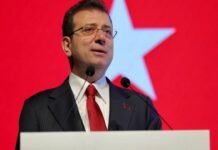
The March 2025 arrest of İstanbul Mayor Ekrem İmamoğlu, Erdoğan’s main political rival, triggered the most intense wave of media repression in years. Journalists covering the ensuing mass protests were detained and prosecuted, RTÜK threatened to revoke the licenses of networks that departed from official statements; authorities blocked social media accounts and throttled internet bandwidth; and foreign correspondents were also targeted. Swedish journalist Joakim Medin was detained upon arrival in Turkey, and BBC correspondent Mark Lowen was deported after being accused of posing a threat to public order.
Leaving the country has not put journalists beyond the government’s reach. During Sweden’s NATO accession process, Ankara made the extradition of journalists living in exile an explicit condition for ratifying membership, with Erdoğan naming journalist Bülent Keneş, the former editor-in-chief of the shuttered Today’s Zaman daily, as someone Sweden needed to hand over. Sweden’s Supreme Court blocked Keneş’s extradition in December 2022, citing the political nature of the case and the risk of persecution, and in 2025 Swedish courts rejected Turkey’s extradition request for journalist Abdullah Bozkurt, ruling that the accusations against him were based on his journalistic activities. Journalists in exile in Sweden, including Keneş, Bozkurt and Levent Kenez, have also been targeted by the pro-government Sabah daily, which published their home addresses and covertly taken photographs, while Turkish authorities have restricted access inside Turkey to the social media accounts of at least five prominent exiled journalists, including Can Dündar and Amberin Zaman.
Turkey’s international standing reflects the decade-long decline. The country was ranked 159th out of 180 in the 2025 World Press Freedom Index published by RSF, and Erdoğan has repeatedly appeared on RSF’s list of “press freedom predators.” Following a joint mission to Ankara in November 2025, eight leading international press freedom organizations, including the International Press Institute, the Committee to Protect Journalists and RSF, warned that the state of the media posed a serious threat to democracy, describing the pressure on independent journalism as a “systemic siege.”
Since the 2016 coup attempt, Ankara has transformed the suppression of independent journalism from an emergency measure into a permanent system of control, combining criminal prosecution, regulatory punishment, ownership capture and digital censorship, and adapting its methods as new outlets and platforms have emerged.
Despite repeated criticism from international press freedom organizations, the Council of Europe and rulings by Turkey’s own Constitutional Court in favor of jailed journalists, the machinery remains fully intact. Ten years after the coup attempt, journalism in Turkey continues to be treated as a crime.