
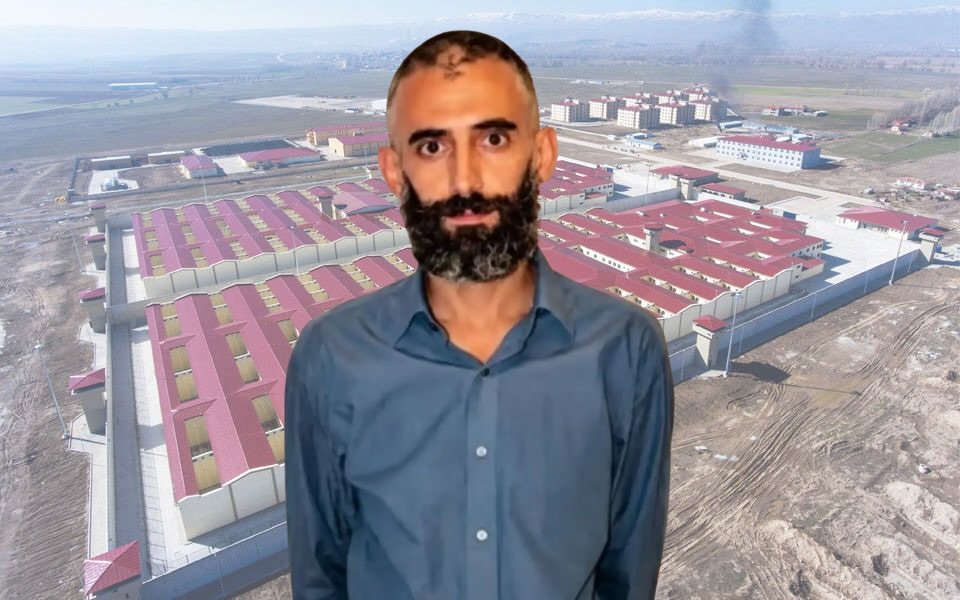
An inmate who had been on a 266-day hunger strike demanding his transfer from one of Turkey’s high security “pit-type” prisons has died at a hospital in Antalya province, according to Turkish media reports.
Gürkan Türkoğlu, an inmate at Antalya Döşemealtı Prison, was taken to Antalya City Hospital on April 13 along with fellow prisoners Tahsin Sağaltıcı and Hüseyin Özen after prison authorities intervened to end their hunger strike, according to reports. The three inmates ended their strike on April 21 after being informed that their transfer requests had been accepted.
Türkoğlu, whose condition was more serious and who had spent nearly three months in intensive care, died in the hospital.
Turkey classifies its prisons using different letter categories, including S-type, Y-type, F-type, T-type and L-type facilities, which differ in design, security level and inmate capacity. S-type and Y-type prisons, often referred to by critics as “pit-type” prisons, have long attracted criticism from human rights groups over alleged isolation practices and restrictions on inmates’ social interaction, outdoor activities and recreational facilities.
Turkey has 13 Y-type prisons, seven S-type prisons and 23 other high-security facilities, according to official figures.
Opposition parties and human rights organizations criticized Türkoğlu’s death, accusing authorities of failing to address prisoners’ concerns over conditions in high-security facilities.
The Peoples’ Equality and Democracy Party (DEM Party) said “pit-type” prisons represented “the darkest face of the system of repression,” claiming that the facilities disregard universal human rights standards and aim to cause physical and psychological deterioration among prisoners. The party blamed the Justice Ministry and the government, accusing them of insisting on maintaining such prisons, for Türkoğlu’s death.
The İstanbul branch of the Human Rights Association (İHD) said in a statement that the architectural structure of the prisons, which it described as being designed as “places of torture,” and the severe restrictions imposed on inmates amounted to human rights violations. The group called on authorities to close the facilities and approve prisoners’ transfer requests.
According to lawyer Güçlü Sevimli, a member of the Progressive Lawyers Association (ÇHD), authorities typically do not respond to the demands of prisoners on hunger strikes until the strikes extend beyond 200 days and inmates’ health seriously deteriorates. Sevimli said Türkoğlu’s transfer request was approved only after he and other inmates had continued their hunger strike for 266 days, adding that the delay had cost Türkoğlu his life.